
Arctic Resource and Infrastructure Opportunities: Navigating Geopolitical Shifts and U.S. Strategic Interest in Greenland
The Arctic has emerged as a critical frontier for global strategic competition, driven by its vast natural resources, evolving infrastructure needs, and geopolitical significance. Greenland, in particular, has become a focal point for nations seeking to secure access to critical minerals, enhance Arctic defense capabilities, and navigate the complexities of climate change. As the United States, European Union, and other powers recalibrate their Arctic strategies, investors must assess how geopolitical shifts and environmental imperatives shape the region's economic potential.
U.S. Strategic Moves in Greenland: From Diplomacy to Infrastructure
The U.S. has intensified its engagement with Greenland under President Donald Trump's "America First" agenda, framing the island as a linchpin for Arctic security and resource independence. In December 2025, the appointment of Louisiana Governor Jeff Landry as Special Representative for Greenland marked a formalization of U.S. diplomatic and military interests in the region. This move underscores Greenland's strategic value for monitoring Arctic airspace, securing trans-Arctic shipping routes, and bolstering early warning systems against emerging threats.
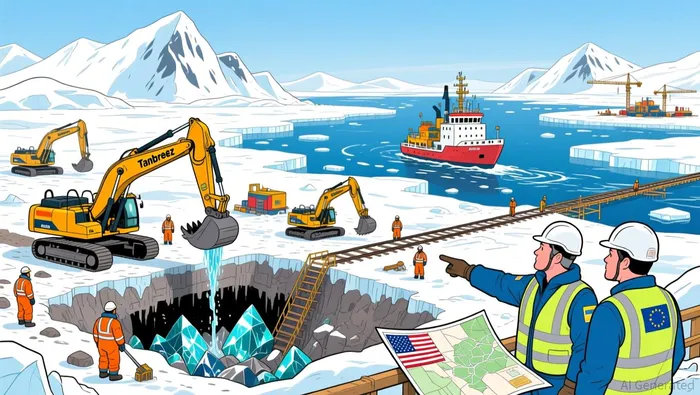
Simultaneously, the U.S. has prioritized infrastructure investments in Greenland's mining sector to reduce reliance on China for rare earth elements. The U.S. Export-Import Bank's $120 million loan to fund the Tanbreez rare earth project in southern Greenland exemplifies this strategy. The project, expected to begin production by 2026, could supply critical minerals for defense technologies and renewable energy systems. Additionally, Trump's repeated calls for acquiring Greenland-though politically contentious-highlight the administration's view of the island as a strategic asset for securing resource supply chains.
Geopolitical Competition and the EU's Rising Role
Greenland's geopolitical importance has drawn attention from multiple actors. The European Union, recognizing Greenland's role in its raw material security, opened a consulate in Nuuk in 2024 and signed a Memorandum of Understanding to develop sustainable mining value chains. This aligns with the EU's broader Arctic strategy, which emphasizes collaboration with NATO allies to counter Russian and Chinese influence. Meanwhile, China's earlier ambitions in Greenland-such as investments in uranium and rare earth projects-have waned due to local resistance and environmental concerns. By 2021, Greenland had revoked all Chinese mining licenses, prioritizing sovereignty and sustainable development.
The Arctic Council, traditionally a forum for multilateral cooperation, now faces challenges from rising nationalism and military posturing. The U.S. and EU have increasingly aligned their Arctic policies to address these shifts, with the EU calling for a more security-focused approach to counter China's "Polar Silk Road" initiatives and Russia's military buildup. For investors, this alignment suggests a growing emphasis on infrastructure projects that serve both economic and strategic goals, such as port development and Arctic logistics hubs.
Environmental Stewardship and Sustainable Development
Greenland's 2024 foreign and security strategy, "Greenland in the World – Nothing About Us Without Us," emphasizes sovereignty and sustainable resource extraction. This policy reflects a global trend toward balancing economic development with environmental protection, particularly as Arctic ice melts and opens new shipping routes. The 2021 Pact to Prevent Unregulated High Seas Fisheries in the central Arctic Ocean further illustrates the international community's commitment to responsible resource management.
However, environmental risks remain significant. Mining projects like Greenland Resources Inc.'s Malmbjerg venture, which could supply 25% of the EU's molybdenum demand, face scrutiny over their ecological impact. Investors must weigh the potential for high returns against the costs of regulatory compliance, community engagement, and climate resilience.
Investment Opportunities and Risks
The Arctic's resource and infrastructure landscape presents both opportunities and challenges. Key investment areas include:1. Critical Minerals: Rare earth elements, uranium, and molybdenum are essential for green technologies and defense systems, with Greenland's Tanbreez and Malmbjerg projects offering high-growth potential.2. Infrastructure Development: U.S. and EU funding for Arctic ports, transportation networks, and energy systems could create long-term value, particularly as shipping routes become more accessible.3. Geopolitical Stability: The U.S.-EU alignment and Greenland's strategic autonomy may reduce risks from external interference, though tensions with China and Russia could escalate.
Risks include environmental backlash, regulatory hurdles, and the volatility of global commodity markets. For instance, Greenland's 30-year exploitation license for the Malmbjerg project hinges on maintaining public support and adhering to strict environmental standards.
Conclusion
The Arctic is no longer a peripheral region but a central arena for global strategic competition. Greenland's unique position-rich in resources, strategically located, and increasingly autonomous-makes it a key player in shaping the future of Arctic economics and geopolitics. For investors, the path forward requires a nuanced understanding of how U.S. and EU policies, environmental imperatives, and geopolitical dynamics intersect. Those who navigate these complexities with foresight and adaptability will be well-positioned to capitalize on the Arctic's transformative potential.







Comentarios
Aún no hay comentarios