
Archer Aviation's Recent Stock Plunge: Opportunity or Overreaction?
In the high-stakes world of electric vertical takeoff and landing (eVTOL) aviation, Archer AviationACHR-- (NYSE: ACHR) has become both a symbol of innovation and a cautionary tale of market volatility. Over the past year, the stock has swung wildly, dropping as much as 15.56% in a single session amid a confluence of fundraising dilution, legal disputes, and geopolitical headwinds. For investors, the question is no longer whether eVTOLs can fly but whether ArcherACHR--, a key player in this nascent industry, can survive the turbulence of its own making.
The immediate catalysts for the stock's decline are clear. In June 2025, Archer raised $850 million by issuing 85 million shares at $10 each—a move that triggered an immediate 14% sell-off. While such capital raises are common for pre-revenue companies, the market interpreted the move as a sign of desperation. Shareholders, already wary of Archer's $7.7 billion market cap despite years of losses, bristled at the dilution. The company's Q4 2024 report, which showed a net loss of $198.1 million—a 77% increase from the previous year—further fueled skepticism. 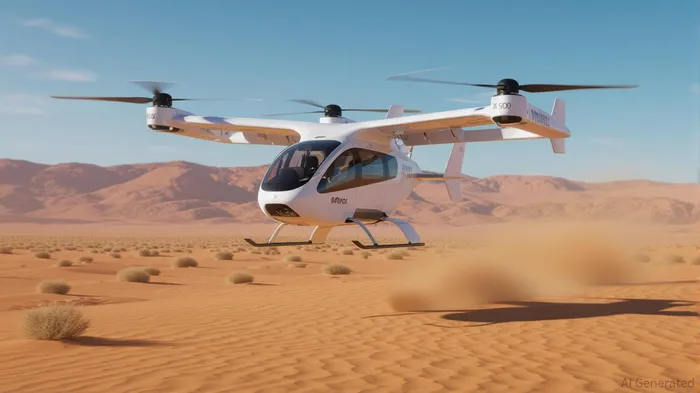
Yet these financial struggles are only part of the story. The broader context is one of regulatory uncertainty and operational scrutiny. A short-seller report from Culper Research accused Archer of misrepresenting its development timelines, including photos that contradicted public claims about the assembly status of its Midnight aircraft. The company's defensive response—attacking the short-seller rather than addressing the substance of the allegations—has done little to restore investor confidence. Meanwhile, the Federal Aviation Administration (FAA) has yet to grant the final Type Certification for the Midnight, a critical hurdle for commercial operations. Any delay could push Archer's 2025 launch goals into 2026, a timeline that investors have little patience for.
The geopolitical landscape has added to the chaos. A 13% drop in Archer's stock coincided with the Israel-Iran conflict in early 2025, as global markets retreated from high-risk, high-growth stocks. Archer's shares, already volatile, were dragged down by the broader sell-off. Similarly, Stellantis' abrupt pivot away from hydrogen-powered vehicles—a major backer of Archer—sparked fears of a reduced commitment to the eVTOL project. While StellantisSTLA-- has not formally withdrawn, the optics were damaging.
But to view these events as existential would be a mistake. The eVTOL market remains a multi-trillion-dollar opportunity, and Archer's fundamentals—while shaky—still suggest a path to growth. The company has secured high-profile partnerships with United AirlinesUAL--, Jetex, and the UAE, with a commercial launch in the Middle East expected by year-end 2025. Its Georgia-based manufacturing facility, capable of producing 48 Midnight units annually by 2026, is a tangible sign of operational progress. And despite its losses, Archer's balance sheet remains robust, with $841.3 million in cash as of December 2024.
The key question for investors is whether these near-term challenges are a buying opportunity or a warning sign. History offers parallels. TeslaTSLA--, for example, faced similar skepticism in its early years, with critics citing “unrealistic” valuations and regulatory hurdles. Yet it managed to turn skeptics into believers by executing on its vision. Archer's path is no less fraught, but the potential rewards are significant.
For those willing to take the long view, Archer's recent struggles could be a discount on its future potential. The company is still a leader in a sector that is on the cusp of transforming urban transportation. Its partnerships with global aviation giants and its role in the 2028 Los Angeles Olympics provide credibility and a clear use case. Moreover, the recent capital raises, while dilutive, have provided a financial runway to navigate the final regulatory hurdles.
However, caution is warranted. The eVTOL market is crowded, with rivals like Joby AviationJOBY-- and Wisk Aviation also racing toward certification. Archer's ability to scale production, maintain quality control, and secure regulatory approvals will determine its fate. A delay in FAA certification by even a few months could disrupt its 2025 launch and test investor patience.
In the end, Archer's story is one of ambition clashing with reality. The stock's recent plunge reflects a market that is punishing the company for its missteps and uncertainties. But for investors with a multi-year horizon, this volatility could represent an opportunity to buy into a transformative industry at a discount. The question is whether Archer can prove that its vision is more than just a flight of fancy.
Investment Takeaway: Archer Aviation remains a high-risk, high-reward proposition. The stock's short-term volatility is justified by its financial and operational challenges, but the company's long-term potential in the eVTOL sector cannot be ignored. Investors should monitor key milestones—FAA certification, production scaling, and global partnerships—before committing capital. For now, a cautious, measured approach is advisable.





Comentarios
Aún no hay comentarios