
Archer Aviation vs. Joby Aviation: Which eVTOL Stock Offers a Stronger Path to Profitability in 2025?
The electric vertical takeoff and landing (eVTOL) industry is on the cusp of a transformative era, with companies like Archer AviationACHR-- and Joby AviationJOBY-- leading the charge. Both firms are vying to redefine urban air mobility, but their divergent strategies and commercialization timelines paint a compelling picture for investors. As the sector edges closer to mainstream adoption, the question arises: Which company—Archer or Joby—offers a stronger path to profitability in 2025?
Strategic Differentiation: Partnerships vs. Manufacturing Mastery
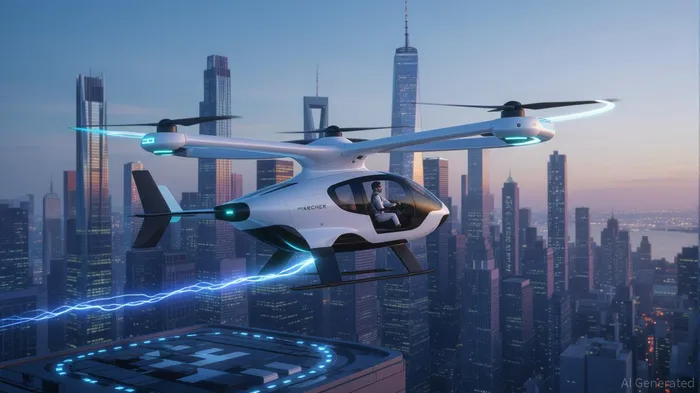
Archer Aviation has carved a niche by prioritizing infrastructure integration and global partnerships. Its collaboration with Jetex, a leader in private aviation services, exemplifies this approach. By retrofitting 40 private terminals across 30 countries, ArcherACHR-- avoids the costly and time-consuming need to build new vertiports, enabling faster deployment of its Midnight eVTOL. This strategy aligns with its “Launch Edition” program, which targets early adopter markets in the UAE, Ethiopia, and Indonesia. Archer's alliances with United AirlinesUAL-- and PT. IKN in Indonesia further underscore its focus on scaling through existing aviation networks.
In contrast, JobyJOBY-- Aviation has leaned heavily on manufacturing scalability and technological rigor. Its partnership with Toyota—a $500 million investment—has been pivotal in streamlining production processes. Toyota's expertise in automotive manufacturing has allowed Joby to triple its Marina, California, facility to 435,500 square feet, with plans to produce 24 eVTOLs annually by 2026. Joby's emphasis on test flights (over 800 in Q2 2025 alone) and FAA certification progress (62% of Stage 4 work completed) highlights a methodical, engineering-driven approach.
Commercialization Readiness: Regulatory Hurdles and Timelines
Archer is in the final stretch of FAA certification, having secured three of four critical approvals (Part 135, 145, and 141). The company expects FAA Type Certification for the Midnight aircraft by late 2025, a prerequisite for commercial passenger operations. Its participation in a five-country certification alliance (U.S., U.K., Australia, Canada, New Zealand) further accelerates global deployment. Archer's production roadmap is equally aggressive: two units per month by year-end 2025, with 48 units annually by 2026.
Joby, meanwhile, has a more conservative timeline. While it has completed 62% of its FAA Stage 4 certification work (43% of requirements met), the company projects commercial readiness by 2026. Its focus on test flights and regulatory alignment with the NAA Network (a global regulatory alliance) suggests a cautious but methodical approach. Joby's Marina facility will also serve as an FAA production certification hub, adding a layer of regulatory credibility.
Financial Strength and Risk Profiles
Archer's $1.4 billion liquidity—bolstered by an $850 million strategic funding round and a $1 billion order from United Airlines—provides a buffer against regulatory delays. Its partnerships with StellantisSTLA-- and PalantirPLTR-- Technologies (for AI-driven aviation software) further diversify its revenue streams. However, its stock valuation ($6.3 billion market cap for a pre-revenue company) hinges on the success of FAA certification and production scaling.
Joby's financial runway is tighter, relying on Toyota's continued investment. While Toyota's $500 million stake and manufacturing expertise are assets, any disruption in funding could stall progress. Joby's stock, trading at a lower valuation ($4.8 billion as of July 15, 2025), reflects a more measured investor outlook, with a focus on long-term execution rather than speculative hype.
Investment Implications: Balancing Speed and Sustainability
For investors seeking immediate commercialization, Archer's aggressive production timelines and global partnerships make it the more compelling bet. Its retrofitted infrastructure model reduces capital intensity, and its $1 billion United Airlines order validates market demand. However, delays in FAA certification could erode momentum, as the stock's 45.97% six-month gain is tied to regulatory progress.
Joby, on the other hand, appeals to those prioritizing long-term stability. Its robust test flight program, Toyota-backed manufacturing, and NAA Network alignment position it as a durable player in the eVTOL sector. While its commercialization timeline is slower, the company's focus on certification and production discipline reduces execution risk.
Final Verdict: A Toss-Up, But With Nuances
Both companies are well-positioned for 2025, but their strengths differ. Archer's speed and global partnerships could deliver quicker returns, particularly if the FAA meets its certification deadlines. Joby's manufacturing rigor and Toyota alliance offer a more sustainable path for long-term growth.
For investors with a high-risk tolerance and a focus on near-term milestones, Archer may be the better choice. For those prioritizing regulatory and operational discipline, Joby presents a safer, albeit slower, trajectory. Either way, the eVTOL sector's $1.5 trillion potential by 2040 ensures that both companies remain critical players in the race to the skies.





Comentarios
Aún no hay comentarios