
Archer Aviation's 2026: Scaling Production and Capturing Market Share
The investment question for Archer AviationACHR-- in 2026 is no longer about the promise of flying taxis. It is about execution. The company has bought time with a strengthened balance sheet and continued testing, but 2026 is the year it must prove it can convert that promise into a credible, scalable business. The market will stop judging the vision and start judging the conversion.
This shift is critical because peers are advancing. The regulatory and commercial timeline for eVTOLs is converging, narrowing the window for ArcherACHR-- to establish a leading position. If the company fails to demonstrate decisive progress in certification, production, and partnerships this year, the market will begin to discount it as a trailing contender rather than a late bloomer. Clear wins in 2026 could re-rate the stock meaningfully, while delays may prompt investors to shift toward better-positioned rivals.
The first major catalyst is the FAA's eVTOL Integration Pilot Program (eIPP). Applications for this White House-led initiative are due in early-to-mid 2026, and Archer is actively partnering with cities across the country to submit multiple bids. Success here would be a tangible step toward commercial operations, providing a real-world testbed for its Midnight aircraft and a powerful validation of its strategy. The program's selection is a key milestone that could supercharge operations and investor confidence.
Simultaneously, the company must show it can scale beyond the prototype. Engineering success is proven; manufacturing success is the next hurdle. Investors will demand proof of a reliable production cadence at its Georgia facility, with tighter build timelines and fewer surprises. This is where execution risk concentrates, and it will matter as much as flight performance.
Capital efficiency will also be scrutinized. While Archer enters 2026 with over $2 billion in liquidity, the focus will shift from the cash balance to how effectively it is used. Burn rate trends and the alignment of spending with tangible milestones will become signals of management quality. A capital raise in 2026 would be viewed differently depending on context-after visible wins, it looks strategic; as a lifeline, it raises questions.
The bottom line is that 2026 is a decisive conversion year. For Archer to move from a speculative concept to a developing aviation business, it must deliver certification clarity, demonstrate scalable manufacturing, convert partnerships into economic substance, and maintain capital discipline. The market will begin to price it as a company, not a story.
Market Penetration and Scalability: Production as the Key Metric
The transition from a visionary concept to a scalable business hinges on execution, and for Archer, that means shifting focus from engineering milestones to manufacturing discipline. The company has bought time with its 2025 progress, but 2026 is the year it must prove it can convert that progress into irreversible, tangible results. The critical metric here is production.
The first hurdle is certification. Investors will no longer accept vague "progress updates." They demand clear, binary milestones that signal the path to final type certification is narrowing. Ambiguity will be punished as peers close in, turning Archer from a potential leader into a trailing contender. The goal is to move from steady advancement to definitive closure on regulatory sign-offs.
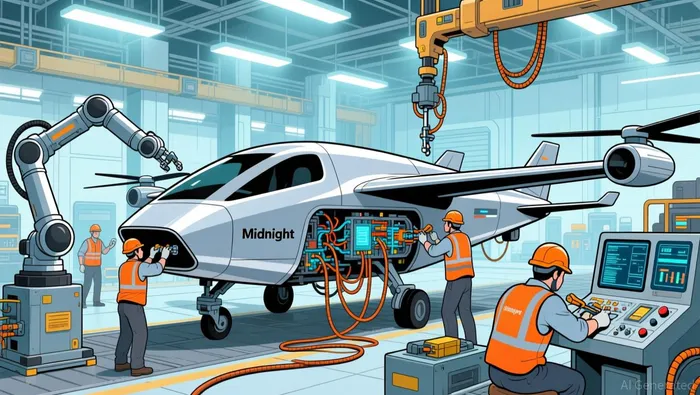
More importantly, engineering success must now be matched by manufacturing success. The company has shown the Midnight can fly; the test now is whether it can be built repeatedly, predictably, and on schedule. This requires compressing build timelines and establishing a reliable cadence at its Georgia facility. Scaling even modest volumes introduces immense stress across the supply chain and labor force, a common pitfall in aerospace. If Archer can demonstrate that production timelines tighten rather than slip, it will signal the aircraft is transitioning from a prototype to a true product.
A visible test of this manufacturing discipline is the current state of the assembly line. The company has six Midnight eVTOL aircraft on the assembly line. This number is a tangible benchmark. It shows the company is moving beyond single prototypes into a production flow. The key will be how quickly these aircraft progress through the line and whether the company can consistently add new units to the queue, proving it has the operational control to scale.
Finally, partnerships must start showing economic substance. While logos reduced narrative risk earlier, they must now minimize valuation risk. The most immediate test is revenue visibility from Middle East launch agreements, which could materialize as early as the first quarter of 2026. This early cash flow would be a crucial signal that customers are not just interested in the technology but are willing to pay for it. Without such tangible outcomes, partnerships remain aspirational.
The bottom line is that for Archer, scalability is a production problem. The company must prove it can build its aircraft efficiently and reliably, turning its assembly line from a symbol of potential into a factory of execution.
Financial Runway and Valuation: Assessing the Path to Profitability
For a company like Archer Aviation, financial health is measured in runway and potential, not current profits. The path to profitability is long, but the valuation suggests the market is pricing in a high degree of risk and uncertainty. The company's last quarter ended with a net loss of $130 million, a stark reminder of the capital intensity required to build a new industry. This loss, coupled with an adjusted EBITDA deficit, underscores the critical need for revenue growth to improve financials. The company's strategy hinges on generating that revenue from new streams, including Middle East launch agreements and technology licensing, to extend its cash runway.
On a relative valuation basis, the stock offers a slight margin of safety. Archer trades at a price-to-book ratio of 3.8x, which is modestly cheaper than the US Aerospace & Defense industry average of 3.9x. For an early-stage aerospace company investing heavily in assets and technology, this P/B multiple suggests the market is assigning a lower premium to its book value than peers. It points to a valuation that, on this metric, is not fully pricing in the transformative potential of the eVTOL market.
Yet the most telling figure is the gap between current price and expectations for future cash generation. The SWS discounted cash flow model suggests a fair value of US$83.24 per share, a figure that dwarfs the current trading price. This enormous discrepancy-over 870%-is the core of the investment thesis. It indicates that the market is not currently valuing Archer for the massive future cash flows that could be generated if the company achieves commercialization, regulatory approval, and scales operations. The current price reflects the high probability of continued losses and dilution, while the DCF model embeds the optimistic scenario of a successful launch.
The bottom line is a stock priced for near-term risk but potentially undervalued on a long-term, cash-flow basis. Archer's more than $2 billion in liquidity provides a multi-quarter runway, but the path to profitability remains distant. The valuation tells a story of two companies: one struggling to build a business today, and another that could dominate a trillion-dollar market in the future. For a growth investor, the opportunity lies in betting on the latter, accepting the current losses as the cost of entry into a nascent, high-growth industry.
Catalysts, Risks, and What to Watch
The path for Archer Aviation in 2026 is defined by a series of high-stakes milestones that will determine whether the company transitions from a promising concept to a credible business. The near-term catalyst is the Federal Aviation Administration's selection from the eVTOL Integration Pilot Program. Announcements of early operational activity are likely to become available in early-to-mid 2026. This program is a critical test of the company's ability to move beyond testing and into real-world operations. Success here, particularly with exclusive city partnerships like the one in Huntington Beach, would provide tangible proof of progress and could supercharge investor sentiment.
The primary risk, however, is falling behind peers in certification and commercialization. The market is narrowing, and timelines are converging. As one analysis notes, clear wins in 2026 could re-rate Archer meaningfully, while delays may prompt investors to shift toward better-positioned rivals. The company has bought itself time, but 2026 is the year that time must be judged. Investors will demand certification move from steady progress to closure, with clear, irreversible milestones toward final type certification for its Midnight aircraft. Ambiguity will no longer be rewarded.
Ongoing monitoring must focus on two key financial metrics. First, burn rate trends and capital raise context are paramount. A capital raise from strength, following visible execution wins, signals confidence. But a raise to buy time, especially if it comes amid operational delays, raises concerns about the company's runway and management's ability to execute efficiently. Second, investors must watch for tangible outcomes from partnerships. Memoranda of understanding are no longer enough; the market will demand proof of economic substance through defined pricing, contracted volumes, and early revenue visibility.
The bottom line is one of decisive conversion. In 2026, execution matters more than vision. Archer must demonstrate scalable manufacturing, convert its impressive partner roster into revenue-backed activity, and maintain capital discipline. The company has the potential for a first big revenue breakthrough, but it must prove it can turn that potential into reality before the window for leadership closes.





Comentarios
Aún no hay comentarios