
Arab-Israeli Normalization and Regional Stability: Geopolitical Risks and Investment Implications in Energy and Defense Sectors
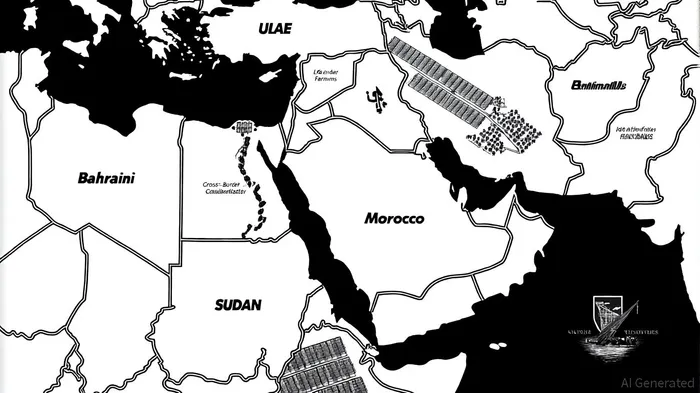
The Abraham Accords, signed between 2020 and 2025, have redefined the geopolitical landscape of the Middle East by normalizing relations between Israel and several Arab states. These agreements, mediated by the U.S., have unlocked strategic, economic, and technological synergies, particularly in energy and defense sectors. However, the ongoing Israel-Gaza conflict and shifting public sentiment have introduced volatility, complicating long-term investment prospects. This analysis examines how geopolitical risks—rooted in regional instability and diplomatic tensions—are reshaping energy and defense equities in signatory countries.
Energy Sector: A Dual-Edged Sword of Opportunity and Risk
The Abraham Accords have catalyzed cross-border energy partnerships, driven by shared goals of sustainability and energy security. For instance, the UAE and Israel have collaborated on solar energy and desalination technologies, leveraging Israel's innovation and the UAE's financial muscle to address regional water and power shortages [1]. Additionally, the U.S. and Israel are exploring a regional energy forum under the Accords to formalize cooperation on infrastructure and innovation [2].
However, the October 7 Hamas attacks and the subsequent Gaza war have disrupted energy projects. The UAE temporarily suspended joint gas field developments with Israel, such as the Tamar field, due to heightened tensions and public backlash [3]. Meanwhile, Mauritania's Greater Tortue Ahmeyim LNG project—set to produce 2.3 million tons annually—has become a focal point for energy diversification, with potential inclusion in the Accords signaling broader regional integration [4]. Yet, geopolitical risks, including Iran's influence and Red Sea security concerns, threaten to destabilize these investments [5].
Defense Equity Performance: Strategic Alliances Amid Volatility
Defense collaborations under the Accords have surged, with Israeli firms like Elbit SystemsESLT-- and UAE's EDGE Group partnering on advanced systems such as the Hermes 900 UAV. These projects include technology transfer and localized production, enabling the UAE to transition from an importer to a defense manufacturer [6]. In 2023, joint naval exercises and the deployment of Israeli air-defense systems in the UAE underscored the deepening security alignment [7].
Yet, the Gaza conflict has introduced uncertainty. Israeli arms exports to Accords signatories plummeted from 24% of $15 billion in 2022 to just 3% in 2023, as public protests and diplomatic friction strained military cooperation [8]. Despite this, U.S. arms sales to Gulf states—such as the Barak missile system—remain robust, reflecting shared strategic interests in countering Iran [9]. Defense stocks, including RTXRTX-- Corp. and Lockheed MartinLMT--, have benefited from heightened regional tensions, with the iShares Aerospace & Defense ETF rising 0.1% in 2025 amid Israel-Iran standoffs [10].
Geopolitical Risk Assessment: Balancing Pragmatism and Sentiment
The sustainability of the Accords hinges on balancing geopolitical pragmatism with regional sensitivities. While Saudi Arabia's conditional normalization—tied to a Palestinian state—remains stalled, its insistence on linking peace to the two-state solution highlights the unresolved Israeli-Palestinian conflict as a critical risk [11]. Public opinion in signatory states, such as Morocco and Sudan, has also shifted, with declining support for normalization amid Gaza-related humanitarian crises [12].
For investors, the key lies in hedging against volatility while capitalizing on long-term trends. Energy investments in renewable projects and LNG infrastructure offer resilience, whereas defense equities tied to U.S.-backed security architectures (e.g., I2U2 collaborations) present growth opportunities. However, geopolitical shocks—such as spillover from the Gaza war or Iran's retaliatory actions—could disrupt both sectors.
Conclusion: Navigating a Complex but Rewarding Landscape
The Abraham Accords represent a transformative framework for Middle Eastern stability, but their success remains contingent on managing geopolitical risks. Energy and defense investments in this region require a nuanced approach, balancing strategic alignment with the realities of shifting public sentiment and regional conflicts. As the U.S. adopts an “offshore balancing” strategy and Gulf states prioritize economic diversification, the interplay between normalization and instability will continue to shape investment outcomes.





Comentarios
Aún no hay comentarios