
Apple's Tariff Dilemma: Strategic Shifts in Global Manufacturing and Market Implications
The escalating U.S.-China trade war has thrust AppleAAPL-- (AAPL) into the crosshairs of a geopolitical crisis, exposing its reliance on offshore manufacturing and sparking a race to re-engineer global supply chains. With tariffs on Chinese imports averaging 51.1% and U.S. threats to expand levies to 145%, Apple's $900 million tariff-driven headwind in Q1 2025 underscores a broader market reckoning: supply chain fragility is now a systemic risk for tech equities. This article dissects Apple's vulnerabilities, maps cascading sector-wide contagion, and argues for urgent hedging strategies to navigate the storm.
The Supply Chain Vulnerability: Apple's China Dependency
Apple's iPhone production remains a poster child for globalized manufacturing: 80-90% of iPhones are assembled in China, primarily by Foxconn in Zhengzhou and other hubs. Even as the company shifts 25% of iPhone assembly to India by 2025 (see 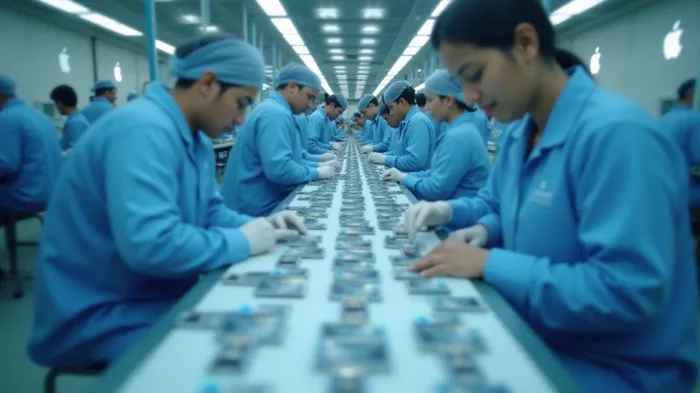 ), China's dominance in component manufacturing—semiconductors, displays, and batteries—ensures its centrality to Apple's supply chain.
The risks are clear:
- Tariff Escalation: U.S. levies on Chinese imports average 30%, but “Liberation Day” reciprocal tariffs could spike to 34% by August 2025 if negotiations fail. For Apple, this means $10 billion in annual tariffs on iPhones alone.
- Component Squeeze: China's retaliatory tariffs (15-25%) on U.S. exports and restrictions on rare earth minerals threaten critical inputs, from lithium for batteries to optical sensors.
Note: AAPL's underperformance vs. the NASDAQ since March 2025 reflects tariff-related earnings pressure.
Cascading Contagion: Tech Sector Vulnerabilities
Apple's plight is not isolated. The tech sector faces three waves of contagion:
- Direct Exposure: Companies like Samsung (SSNLF), Qualcomm (QCOM), and Taiwan Semiconductor (TSM) rely on Chinese manufacturing and face similar tariff-driven margin pressures.
- Indirect Supply Chain Risks: Even firms with U.S.-based operations (e.g., NVIDIA NVDA) depend on Chinese-made components, making them susceptible to disruptions.
- Market Sentiment: Rising trade tensions have already caused a 20% rotation out of tech ETFs (XLK) in 2025, as investors flee volatility.
The ripple effects are stark:
- Production Costs: Shifting manufacturing to India or Vietnam could add $50-$100 per iPhone, squeezing margins.
- Inventory Risks: Apple's Q1 2025 $900M tariff hit highlights the financial whiplash of sudden policy shifts.
Hedging Strategies: Defensives and Utilities for Uncertain Times
Investors must prepare for prolonged volatility. Here's how to hedge:
1. Defensive Sectors: Utilities and Staples
- Utilities (XLU): Low-volatility, dividend-rich stocks like NextEra Energy (NEE) or Duke Energy (DUK) offer stability in a tariff-driven downturn.
- Consumer Staples (XLP): Companies like Procter & Gamble (PG) or Coca-Cola (KO) have recession-resistant demand and minimal supply chain exposure.
2. Short-Term Plays: Inverse ETFs and Currency Hedges
- Inverse Tech ETFs: Consider SWIX (short XLK) to bet against tech underperformance.
- Currency Hedges: The U.S. dollar's strength (USD/CNY at 7.15) could be reversed if China devalues its currency—a risk mitigated by FXE (Euro ETF).
3. Long-Term Solutions: Diversified Supply Chains
While Apple's India push is a mitigant, investors should favor companies with geographically diversified operations (e.g., Microsoft's global data centers) or domestic manufacturing plays (e.g., Caterpillar's U.S. factories).
Conclusion: Act Now—The Tariff Tsunami Is Coming
Apple's tariff dilemma is a microcosm of a macro crisis: global supply chains are unraveling, and tech equities are the first casualties. With U.S.-China talks teetering on a 90-day cliff, investors must act decisively:
- Trim Tech Exposure: Rotate out of high-beta names like AAPL and NVDA.
- Build a Defensive Core: Allocate 30-40% to utilities, staples, or inverse ETFs.
- Monitor Trade Policy: Track the U.S.-China tariff rate tracker (CFIUS) for pivot points.
The era of “just-in-time” globalization is over. The time to hedge—and rethink your portfolio—is now.
Note: The widening asymmetry in tariffs highlights the escalating stakes for multinational firms.





Comentarios
Aún no hay comentarios