
Apple Stock's Dominance in Portfolios: Balancing Growth and Concentration Risk
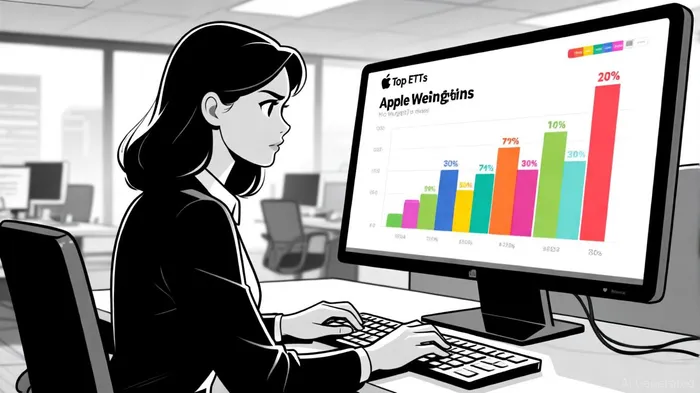
In the ever-evolving landscape of modern investing, the tension between growth and diversification remains a central challenge. Apple Inc.AAPL-- (AAPL), with its $3 trillion market capitalization, has become a linchpin in many diversified portfolios. However, its outsized influence raises critical questions about concentration risk. According to a report by Morningstar, over 750 U.S. stock funds hold AppleAAPL-- stock, with nearly 500 of them allocating 5% or more to the tech giant[1]. The iShares Top 20 US Stocks ETF, for instance, dedicates 14.9% of its portfolio to Apple, while the Vanguard Growth ETF allocates 13%[1]. These figures underscore Apple's dominance but also highlight the potential vulnerabilities of overreliance on a single stock.
The Allure of Apple: Growth and Resilience
Apple's financial performance in Q3 2025 reinforces its appeal. The company reported $94.04 billion in revenue, a 10% year-over-year increase, driven by robust sales in the iPhone, Mac, and Services segments[2]. Its Services division, contributing over 25% of revenue with gross margins exceeding 70%, has become a cash flow engine[1]. Analysts project Apple's revenue to grow at 5-7% annually over the next three years as new product cycles and service expansion offset maturing iPhone sales[1].
Moreover, Apple's strategic investments, such as a $500 billion U.S. initiative including AI-driven server production and semiconductor training programs, signal long-term growth potential[3]. Wedbush analyst Dan Ives has even raised his price target for Apple shares to $325, anticipating a "golden era of growth" in 2025[1]. These developments make Apple a compelling asset for investors seeking both stability and innovation.
The Risks of Overconcentration
Yet, the concentration of Apple in portfolios is not without peril. Data from Investopedia reveals that the Vanguard Total Stock Market Index Fund holds 3.02% of Apple's outstanding shares, while the SPDR S&P 500 ETF Trust (SPY) holds 1.15%[2]. Collectively, these funds—and others like them—expose portfolios to sector-specific risks. A downturn in the tech sector, regulatory scrutiny, or geopolitical disruptions (e.g., reliance on Chinese manufacturing) could disproportionately impact Apple-heavy portfolios[4].
For example, Apple's accumulated deficit of $11.2 billion as of December 2024, driven by aggressive share repurchases and dividends, raises questions about long-term financial sustainability[5]. While strong cash flow mitigates immediate concerns, investors must weigh these factors against the company's growth narrative.
Strategies for Balancing Apple's Role
To harness Apple's growth potential while mitigating risk, investors should adopt a multi-pronged approach:
Asset Allocation Discipline: Limit Apple's weighting to a percentage aligned with portfolio goals. For conservative investors, a 5-7% cap may be prudent, while aggressive growth portfolios might tolerate 10-15%[4]. Regular rebalancing ensures alignment with risk tolerance.
Sector Diversification: Counterbalance tech exposure by allocating to underrepresented sectors. For instance, pairing Apple with energy or healthcare stocks can reduce sector-specific volatility[4].
Geographic Diversification: Mitigate geopolitical risks by investing in international markets. Apple's reliance on China for manufacturing and sales necessitates hedging through global equities or emerging-market ETFs[4].
Active Monitoring: Track Apple's performance relative to benchmarks. If the stock outperforms, consider trimming gains to reinvest in undervalued sectors; conversely, if it underperforms, reassess its role in the portfolio[4].
Conclusion: A Delicate Equilibrium
Apple's position in diversified portfolios reflects its unparalleled market influence and financial resilience. However, its concentration demands careful management. As BlackRock notes in its 2025 Fall Investment Directions, "The key to navigating today's markets lies in balancing high-conviction positions with strategic diversification"[5]. By adhering to disciplined allocation, sector balance, and proactive rebalancing, investors can harness Apple's growth while safeguarding against overconcentration. In an era of volatility and innovation, this equilibrium is not just prudent—it is essential.







Comentarios
Aún no hay comentarios