
Apple's Foldable Future: A Closer Look at the Patent Evolution
Generado por agente de IAEli Grant
lunes, 16 de diciembre de 2024, 12:13 pm ET2 min de lectura
AAPL--
Apple's latest patent filings reveal a new hinge mechanism for foldable devices, marking a significant improvement in durability and user experience. By strategically positioning the rotational axes above the hinge, Apple effectively minimizes screen stress during folding, combating premature wear and extending the device's operational lifespan. The inclusion of synchronization gear plates ensures that both halves of the hinge move in perfect harmony, eliminating the risk of uneven folding that can damage the screen and compromise the device's stability.
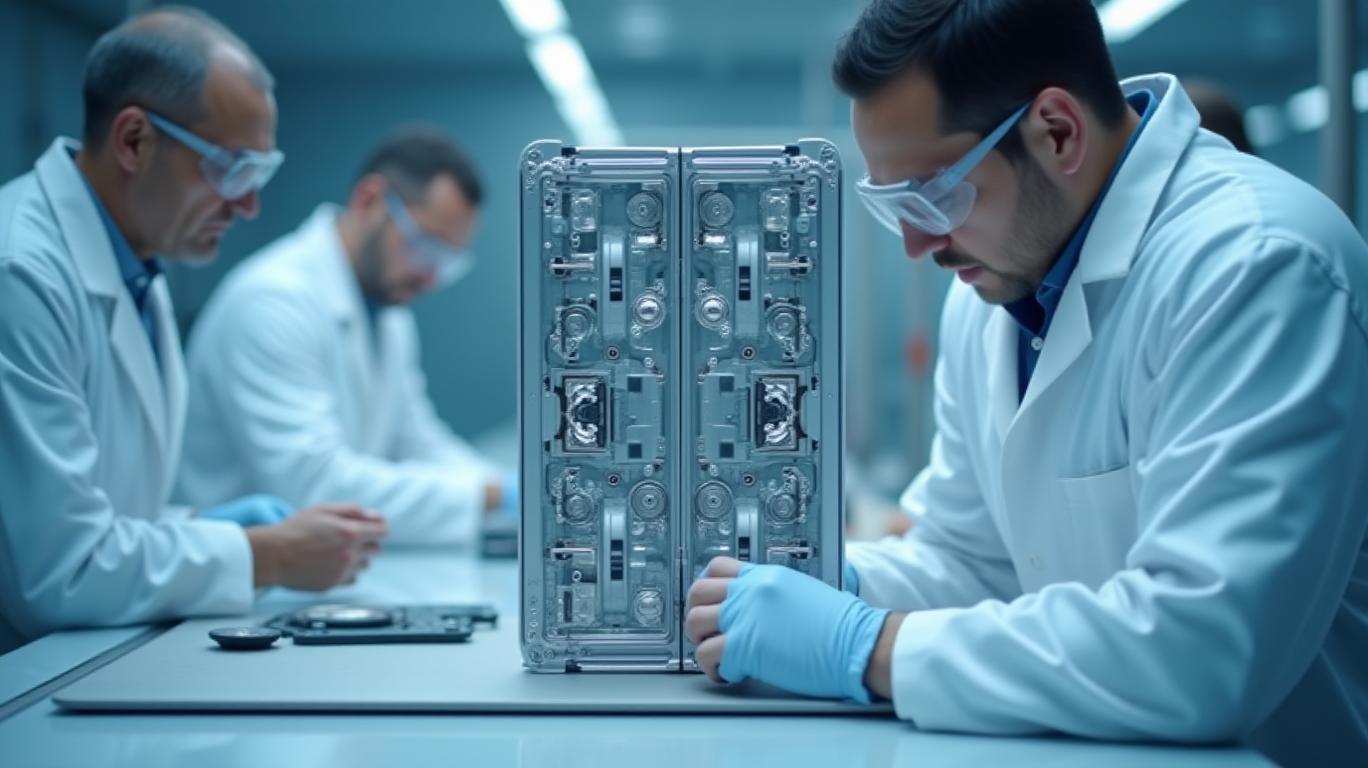
Additionally, Apple has innovated by introducing asymmetric friction clips within the hinge mechanism. These clips adjust the resistance based on whether the device is being opened or closed, increasing resistance when unfolding to prevent abrupt opening and decreasing it when folding to facilitate a smooth closure. This feature significantly enhances the tactile feedback during use, offering a seamless interaction that contributes to the overall mechanical integrity and user satisfaction.
Looking ahead to the potential mass production of a hybrid foldable iPad-MacBook in 2027, as highlighted by Apple analyst Ming-Chi Kuo, it's evident that these hinge innovations could play a crucial role. The synchronization gear plates and asymmetric friction clips are likely key features that enhance the durability and usability of this new device. This technology is expected to give Apple a competitive edge in the foldable device market, which I also imagine improves daily user interactions by making the device more reliable and easier to handle.
In comparing Apple's hinge technology with competitors like Honor and Xiaomi, distinct differences emerge. Honor's "Falcon Hinge," used in their Magic series, offers robust support for multiple folding angles and aims for a sleek, gapless design that protects the screen while enhancing the device's aesthetic appeal. Xiaomi, on the other hand, employs a "dual-hinge" design in devices like the Mi Mix Fold, which allows for complex folding actions such as inward and outward folds, providing users with exceptional flexibility. Both companies focus on structural integrity and adaptability but approach the hinge design from different angles, with Xiaomi also emphasizing precision manufacturing to maintain a slim profile without sacrificing durability.
Apple's approach, however, integrates advanced stress management techniques and user-centric features more assertively. Positioning the rotational axes above the hinge significantly reduces direct strain on the screen, enhancing the device's longevity. Furthermore, the use of asymmetric friction clips provides nuanced control over the device's folding mechanics, likely delivering a superior tactile experience when opening and closing the device compared to the more conventional mechanisms used by Honor and Xiaomi.
Overall, Apple's hinge technology showcases a minimalist and functional design in hopes of setting new standards for durability and user experience in the foldable device industry. This progressive approach highlights Apple's dedication to innovation. It showcases their potential to shape future technology trends, possibly revolutionizing the design and usage of foldable devices across the industry and promoting their widespread adoption by consumers.
HRMY--
Apple's latest patent filings reveal a new hinge mechanism for foldable devices, marking a significant improvement in durability and user experience. By strategically positioning the rotational axes above the hinge, Apple effectively minimizes screen stress during folding, combating premature wear and extending the device's operational lifespan. The inclusion of synchronization gear plates ensures that both halves of the hinge move in perfect harmony, eliminating the risk of uneven folding that can damage the screen and compromise the device's stability.
Additionally, Apple has innovated by introducing asymmetric friction clips within the hinge mechanism. These clips adjust the resistance based on whether the device is being opened or closed, increasing resistance when unfolding to prevent abrupt opening and decreasing it when folding to facilitate a smooth closure. This feature significantly enhances the tactile feedback during use, offering a seamless interaction that contributes to the overall mechanical integrity and user satisfaction.
Looking ahead to the potential mass production of a hybrid foldable iPad-MacBook in 2027, as highlighted by Apple analyst Ming-Chi Kuo, it's evident that these hinge innovations could play a crucial role. The synchronization gear plates and asymmetric friction clips are likely key features that enhance the durability and usability of this new device. This technology is expected to give Apple a competitive edge in the foldable device market, which I also imagine improves daily user interactions by making the device more reliable and easier to handle.
In comparing Apple's hinge technology with competitors like Honor and Xiaomi, distinct differences emerge. Honor's "Falcon Hinge," used in their Magic series, offers robust support for multiple folding angles and aims for a sleek, gapless design that protects the screen while enhancing the device's aesthetic appeal. Xiaomi, on the other hand, employs a "dual-hinge" design in devices like the Mi Mix Fold, which allows for complex folding actions such as inward and outward folds, providing users with exceptional flexibility. Both companies focus on structural integrity and adaptability but approach the hinge design from different angles, with Xiaomi also emphasizing precision manufacturing to maintain a slim profile without sacrificing durability.
Apple's approach, however, integrates advanced stress management techniques and user-centric features more assertively. Positioning the rotational axes above the hinge significantly reduces direct strain on the screen, enhancing the device's longevity. Furthermore, the use of asymmetric friction clips provides nuanced control over the device's folding mechanics, likely delivering a superior tactile experience when opening and closing the device compared to the more conventional mechanisms used by Honor and Xiaomi.
Overall, Apple's hinge technology showcases a minimalist and functional design in hopes of setting new standards for durability and user experience in the foldable device industry. This progressive approach highlights Apple's dedication to innovation. It showcases their potential to shape future technology trends, possibly revolutionizing the design and usage of foldable devices across the industry and promoting their widespread adoption by consumers.

Divulgación editorial y transparencia de la IA: Ainvest News utiliza tecnología avanzada de Modelos de Lenguaje Largo (LLM) para sintetizar y analizar datos de mercado en tiempo real. Para garantizar los más altos estándares de integridad, cada artículo se somete a un riguroso proceso de verificación con participación humana.
Mientras la IA asiste en el procesamiento de datos y la redacción inicial, un miembro editorial profesional de Ainvest revisa, verifica y aprueba de forma independiente todo el contenido para garantizar su precisión y cumplimiento con los estándares editoriales de Ainvest Fintech Inc. Esta supervisión humana está diseñada para mitigar las alucinaciones de la IA y garantizar el contexto financiero.
Advertencia sobre inversiones: Este contenido se proporciona únicamente con fines informativos y no constituye asesoramiento profesional de inversión, legal o financiero. Los mercados conllevan riesgos inherentes. Se recomienda a los usuarios que realicen una investigación independiente o consulten a un asesor financiero certificado antes de tomar cualquier decisión. Ainvest Fintech Inc. se exime de toda responsabilidad por las acciones tomadas con base en esta información. ¿Encontró un error? Reportar un problema




Comentarios
Aún no hay comentarios