
Apple's iPhone Air: A Strategic Design Win with Long-Term Investment Potential
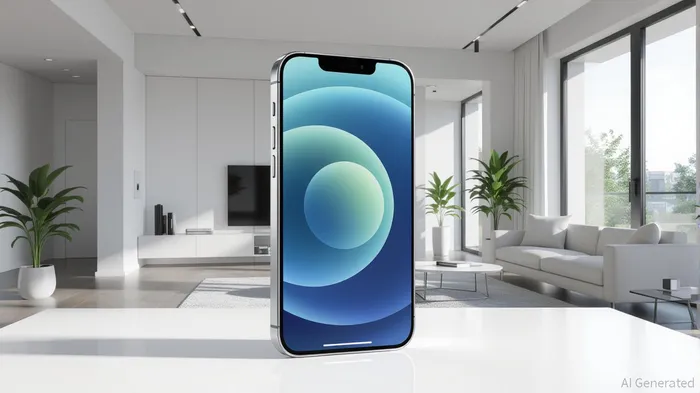
In the ever-evolving smartphone market, Apple's 2025 iPhone 17 lineup has sparked renewed debate about the company's ability to balance design innovation with cutting-edge AI integration. Among the new models, the iPhone Air stands out as a bold reimagining of form and function, positioning AppleAAPL-- to reclaim its premium brand identity while navigating the challenges of an AI-driven competitive landscape. This analysis explores how the iPhone Air's design and Apple's strategic approach to AI could shape the company's long-term investment potential.
Design Innovation: A Bridge to the Future
The iPhone Air's introduction marks Apple's most significant design shift since 2017, with a titanium frame and a record-breaking 5.6mm thickness [4]. This ultra-thin profile is not merely an aesthetic triumph but a calculated move to address consumer demand for lightweight, durable devices. According to a report by Reuters, the iPhone Air's titanium construction and Ceramic Shield 2 technology offer 3x better scratch resistance and 4x improved crack resistance compared to previous models [4]. These advancements align with Apple's historical strength in premium design, a differentiator that has historically justified its high price points.
The iPhone Air's design also hints at Apple's long-term roadmap. Analysts at Economic Times suggest that the ultra-thin form factor could serve as a precursor to foldable devices, a market currently dominated by Samsung and Huawei [2]. By refining thinness and durability, Apple is laying the groundwork for a foldable iPhone launch in 2026, which could redefine the smartphone category and attract tech-savvy consumers [2]. This strategic pivot to form factor innovation signals Apple's intent to stay ahead of industry trends, even as competitors like GoogleGOOGL-- and Samsung accelerate AI integration.
AI Integration: Privacy-First Progress Amid Delays
While the iPhone 17 lineup lacks the AI-driven features promised in earlier announcements, Apple's approach to AI remains distinct. The company has emphasized on-device processing for AI tasks such as Visual Intelligence and image generation, prioritizing privacy and reducing reliance on cloud connectivity [1]. According to a deep dive by Medium, Apple's privacy-first architecture—leveraging differential privacy and federated learning—aligns with global regulatory trends like GDPR and CCPA, potentially giving it an edge in markets where data security is a growing concern [5].
However, delays in AI features like the AI-powered Siri have raised questions about Apple's ability to compete with rivals. Lynx Equity Strategies notes that Apple may be ceding AI leadership to Google by integrating third-party models like Gemini, a move that could accelerate its AI capabilities without overextending internal resources [5]. While this hybrid strategy risks diluting Apple's brand identity as a self-reliant innovator, it also reflects pragmatism in a rapidly evolving field. For investors, the key question is whether Apple's incremental AI progress—focused on hardware readiness and ecosystem integration—can justify its premium valuation.
Market Leadership and Financial Implications
The iPhone Air's competitive pricing in markets like India (starting at ₹89,990) and its ultra-thin design have been hailed as a “total game changer” by CEO Tim Cook [1]. However, analysts remain cautious. HSBC's Erwan Rambourg reiterated a “Hold” rating for Apple, citing concerns about stagnant growth in 2025 and the need for more disruptive AI features to justify long-term upside [1]. Meanwhile, Ming-Chi Kuo's report highlights that iPhone shipments in 2025 could fall short of expectations by 8–10%, partly due to a challenging Chinese market and consumer fatigue with incremental upgrades [1].
Despite these challenges, Apple's ecosystem strategy—bolstered by the iPhone Air's design and upcoming foldable innovations—positions it to maintain premium pricing power. The company's ability to absorb tariff-related costs without raising prices further underscores its financial resilience [3]. For investors, the iPhone Air represents a bridge to more transformative products, such as the foldable iPhone in 2026 and the all-glass 20th-anniversary model in 2027 [2]. These redesigns, if executed successfully, could reinvigorate consumer demand and solidify Apple's leadership in premium design.
Conclusion: A Calculated Bet on Design and Ecosystem
Apple's iPhone Air is more than a design win—it is a strategic recalibration in a market where AI and form factor innovation are increasingly intertwined. While the company's AI roadmap remains unproven, its focus on privacy-preserving technologies and hardware readiness provides a foundation for future breakthroughs. For long-term investors, the iPhone Air's success hinges on Apple's ability to leverage its ecosystem advantages, execute on its foldable roadmap, and deliver AI features that align with its premium brand. In a competitive landscape dominated by Samsung and Google, Apple's design-led approach may yet prove to be its most enduring strength.





Comentarios
Aún no hay comentarios