
Apple's iPhone 17 and the Tech Sector in a Trump-Era Macro Shift
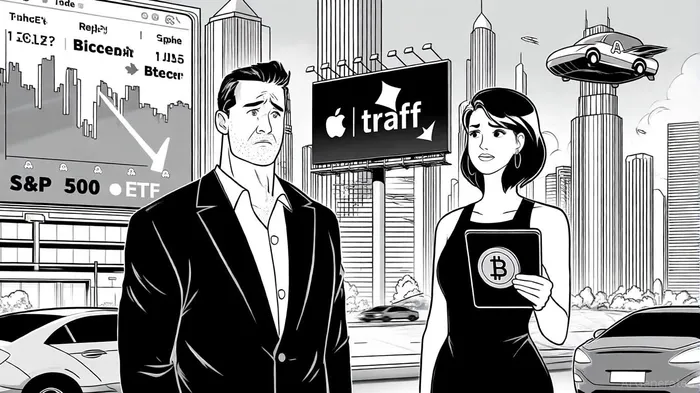
The tech sector in 2025 is navigating a complex web of macroeconomic forces, from Trump-era trade policies to Federal Reserve rate-cut speculation and a crypto resurgence. At the center of this storm is Apple's iPhone 17 launch—a product that, despite its engineering prowess, has struggled to ignite investor enthusiasm. This article dissects how these forces intersect, offering a roadmap for investors navigating a market defined by duality: tightening trade policies versus loosening crypto regulations, and the lingering shadow of inflation against the promise of rate cuts.
The iPhone 17: Innovation vs. Investor Sentiment
Apple's September 10, 2025, launch of the iPhone 17 lineup—featuring the slimmest Air model yet, enhanced Pro variants, and a $100 price hike for the Air—was met with muted reactions. While the iPhone 15 series accounted for 53% of Apple's Q1 2025 revenue[4], the latest iteration failed to deliver the “wow” factor investors crave. Shares of AppleAAPL-- fell over 3% post-launch, dragging down the Dow Jones Industrial Average[1]. This disconnect highlights a critical truth: even in a market hungry for AI-driven innovation, consumer and investor expectations are increasingly fickle.
Analysts argue that Apple's pricing strategy, though modest, risks alienating price-sensitive buyers in a weak job market[5]. Yet, the company's U.S. market dominance (58.03% share in July 2025[2]) suggests that ecosystem loyalty and premium features will sustain demand. The challenge lies in translating hardware sales into stock performance—a task complicated by broader macroeconomic headwinds.
Revised Jobs Data and the Fed's Dilemma
The U.S. jobs market has become a wildcard. Revised data showing 911,000 fewer jobs added through March 2025[3] has intensified expectations for a Fed rate cut. Traders now price in a near-certainty of a 25-basis-point reduction, with speculation growing about a 50-basis-point cut. This has fueled a rally in tech stocks, with the S&P 500 and Nasdaq hitting records[1], driven by AI-driven earnings and semiconductor stocks like NvidiaNVDA--.
However, Apple's stock has lagged. The company's inability to generate excitement around the iPhone 17—despite its technical upgrades—has left investors questioning whether its growth story remains intact. This divergence underscores a key risk: while rate cuts may broadly benefit tech, individual stocks will depend on execution. For Apple, the iPhone 17's success hinges not just on hardware but on its ability to integrate AI and software ecosystems in ways that justify premium pricing.
Trump's Crypto Push: A Macro Hedge
Meanwhile, Trump's pro-crypto agenda has reshaped the digital asset landscape. The replacement of SEC Chair Gary Gensler with Paul Atkins—a crypto advocate—and the establishment of a Strategic BitcoinBTC-- Reserve[1] have normalized Bitcoin as a macro hedge. By banning a U.S. CBDC and approving spot Bitcoin ETFs, the administration has created a regulatory environment where Bitcoin's fixed supply and inflation-hedging appeal thrive[1].
This shift has had tangible effects. Bitcoin surged to $124,000 by August 2025[1], buoyed by institutional adoption and a pro-crypto task force. For the tech sector, this means a new class of investors—crypto-native and risk-on—are allocating capital to both digital assets and tech stocks. However, the duality of Trump's policies—tighter trade tariffs creating a “risk-off” environment while crypto-friendly regulations attract liquidity—has created a fragmented market. Investors must now balance the risks of trade wars with the opportunities in crypto-driven capital flows.
The Interplay of Forces
The tech sector's momentum in 2025 is defined by these competing forces:
1. Trade Uncertainty: Trump's reciprocal tariffs have disrupted global supply chains, weighing on tech stocks like Apple[3].
2. Rate-Cut Optimism: A weaker labor market has boosted expectations for Fed easing, supporting risk-on assets[1].
3. Crypto Synergy: Pro-crypto policies have legitimized digital assets, attracting capital that could spill over into tech[1].
For Apple, the iPhone 17's fate may hinge on how these forces resolve. If the Fed cuts rates and consumer confidence stabilizes, the iPhone 17's AI features and ecosystem loyalty could drive sales. Conversely, if trade tensions escalate or crypto adoption stalls, the stock may continue to underperform.
Conclusion: Navigating the Duality
Investors in 2025 must embrace a nuanced approach. The tech sector is not a monolith: while rate cuts and crypto growth offer tailwinds, trade policies and product execution create headwinds. For Apple, the iPhone 17 represents both a test of innovation and a barometer of macroeconomic resilience. Those who bet on the company's ability to adapt—leveraging AI, software integration, and ecosystem loyalty—may find opportunities in a market where duality reigns.





Comentarios
Aún no hay comentarios