
Apple's iOS 26 and Liquid Glass: A Catalyst for Hardware-Software-AI Convergence in Consumer Tech
The tech sector is on the cusp of a paradigm shift as Apple's iOS 26 and its new Liquid Glass software design language signal a bold move toward hardware-software-AI convergence. While the term “liquid glass (SiO₂)” has sparked speculation about material innovation in Apple's hardware, the immediate focus lies on Apple's software advancements—specifically, its AI-driven visual intelligence and the design overhaul that could reshape the competitive landscape. This article examines how these innovations may disrupt supply chains, favor material science firms, and create investment opportunities in AI chip manufacturers.
The Liquid Glass Software Overhaul: More Than Aesthetic Flair
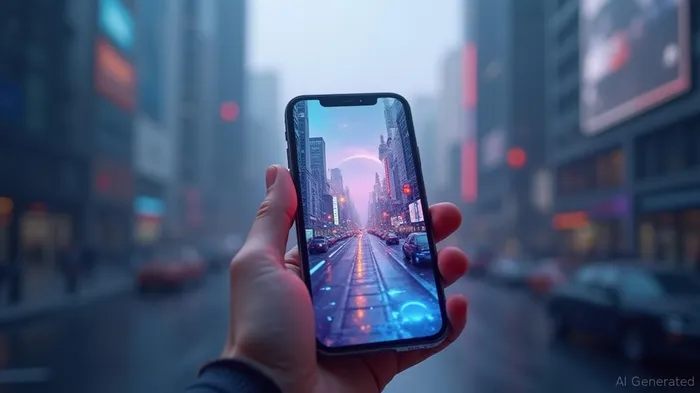
Apple's Liquid Glass, announced at WWDC 2025, is a translucent, dynamic interface material that adapts to context and content. It enhances focus on core functions by shrinking controls (e.g., tab bars) when not in use and leveraging real-time rendering for specular highlights. While not a physical material, the design's emphasis on depth and interactivity hints at future hardware innovations, such as Apple's rumored 2027 “Glasswing” iPhone with curved glass sides.
The software's AI integration—including Visual Intelligence for on-screen search, calendar event recognition, and Live Translation—relies on on-device processing. This demands advanced silicon, pushing demand for AI chips capable of handling spatial computing and low-latency tasks.
Supply Chain Dynamics: Winners and Losers in the AI-Driven Ecosystem
Winners:
1. AI Chip Manufacturers: Companies like NVIDIA (NVDA) and AMD (AMD), which supply AI accelerators for data centers and edge devices, stand to benefit as Apple's AI features (e.g., Image Playground, Writing Tools) drive demand for high-performance compute.
2. Material Science Firms: While Apple's Liquid Glass is software-based, its design philosophy prioritizes glass-like aesthetics and durability. Suppliers like Corning (GLW), a leader in Gorilla Glass, may see renewed interest if AppleAAPL-- shifts toward advanced glass composites for future hardware.
3. Software Developers: Firms aligned with Apple's ecosystem, such as Epic Games (via Unreal Engine for spatial computing) or Adobe, could see increased demand for tools compatible with Liquid Glass's 3D effects and AI workflows.
Losers:
- Traditional Hardware Firms: Companies relying on outdated manufacturing processes (e.g., LCD screens) may struggle as Apple's focus on thin, glass-centric designs and AI-driven interfaces accelerates.
- Non-AI-Adapted Tech Players: Firms not investing in AI chips or software integration risk falling behind Apple's vision of seamless hardware-software experiences.
Valuation Gaps and Strategic Moves
Apple's push for on-device AI (e.g., Visual Intelligence running entirely offline) highlights a strategic shift toward privacy-focused, decentralized tech. This favors chipmakers with edge-compute expertise and material suppliers enabling ultra-slim, durable devices.
- Undervalued Sectors:
- AI Chip Stocks: NVIDIA and AMD's valuations may lag their potential in Apple's ecosystem, given their leadership in GPU architecture.
Material Science: Corning's stock, down 15% YTD, could rebound if Apple's design language translates to hardware partnerships.
Risks:
- Competition: Google and Samsung's AI advancements (e.g., generative AI in Android) may pressure Apple's dominance.
- Supply Chain Hurdles: Apple's reliance on Asia for manufacturing (e.g., Vietnam for AirPods, India for iPhones) poses geopolitical risks.
Investment Thesis: Bet on the Convergence Play
Investors should prioritize companies at the intersection of AI, materials science, and hardware-software integration:
1. Buy AI Chip Leaders: NVIDIA and AMD are core to enabling Apple's AI vision.
2. Look for Material Innovators: Corning's glass tech and TSMC's (TSM) advanced semiconductor packaging could underpin future hardware designs.
3. Underweight Laggards: Avoid firms not adapting to AI-driven interfaces or sustainable materials.
Conclusion
Apple's iOS 26 and Liquid Glass represent more than iterative upgrades—they signal a new era of tech leadership where hardware, software, and AI converge to redefine user experiences. While physical liquid glass (SiO₂) adoption remains speculative, the software-driven revolution is already reshaping supply chains and creating opportunities for agile firms. Investors who align with this trend may capture gains as the sector pivots toward intelligent, intuitive, and durable electronics.





Comentarios
Aún no hay comentarios