
Apple's Gemini Deal: A Tactical Win with Regulatory Risk
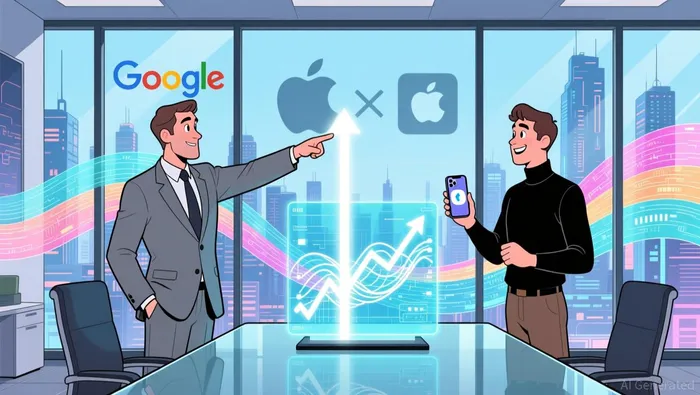
The core event is a multi-year, capability-driven partnership. AppleAAPL-- has chosen Google's Gemini models and cloud technology to power its next-generation AI features, including a major Siri overhaul. This decision follows a period of testing competitors like OpenAI and Anthropic, and it arrives just weeks after a significant regulatory shift. The deal is explicitly not exclusive, but Apple's choice to use a direct competitor's foundational tech signals a pragmatic pivot away from its traditional vertical integration model.
For GoogleGOOGL--, the partnership secures a major, long-term revenue stream from a key tech partner. For Apple, it's a tactical win to catch up in AI, leveraging Google's massive infrastructure and advanced models to finally deliver the the Siri upgrade users have waited for. The companies frame it as a strategic alliance to unlock new user experiences, with Apple maintaining its on-device privacy standards.
Yet the timing introduces a clear regulatory liability. The deal lands just after a federal judge issued final remedies in the DOJ's antitrust case, banning Google from entering into exclusive, default agreements with partners like Apple. While this specific partnership is non-exclusive, its existence as a major, multi-year contract with a core competitor now sits in the spotlight of ongoing antitrust scrutiny. This creates a near-term vulnerability for both parties, as regulators may view the deal as a potential workaround to the new restrictions.
The Catalyst: Musk's Outrage and the Competitive Spark
The immediate catalyst for regulatory scrutiny is Elon Musk's public reaction. Just hours after the partnership was announced, Musk took to X to call it "an unreasonable concentration of power for Google", citing its control of Android and Chrome. This framing is a direct echo of the DOJ's antitrust arguments, which recently concluded that Google maintains a monopoly in general search. Musk's legalistic language aligns with the court's remedy, which banned Google from paying for exclusive default status. By highlighting Google's existing platform dominance, Musk is effectively arguing that this new deal creates a backdoor to that same dominance, undermining the spirit of the court's ban.
Yet Musk's motive is not purely ideological. His opposition is deeply competitive. He is the CEO of xAIXAI--, the company behind the competing Grok chatbot. The deal leaves Grok on the outside of the world's most lucrative hardware ecosystem. This is a significant blow to xAI's growth strategy, as Apple's devices represent a primary distribution channel for AI services. Musk's recent history supports this view: in August 2025, his company filed a lawsuit against Apple and OpenAI, alleging the tech giant behaved in a manner that makes it impossible for any AI company besides OpenAI to reach #1 in the App Store. That legal action, which survived dismissal attempts, was about securing a fair shot for Grok.
The bottom line is that Musk's outrage serves a dual purpose. It frames the deal as a regulatory risk, potentially inviting scrutiny from the same DOJ that just ruled against Google. At the same time, it's a competitive warning shot aimed at Apple and Google, signaling that a major rival is watching and may act. For investors, this creates a volatile near-term dynamic. The partnership is now a political football, with a powerful figure using legal and public pressure to challenge its legitimacy. The setup is clear: a deal that was a tactical win for Apple and Google now faces a direct, high-profile challenge from a competitor who has both the legal tools and the public platform to disrupt it.
Immediate Financial and Competitive Impact
The partnership delivers a clear, near-term financial payoff for Google. While the exact price tag remains undisclosed, previous reports cited a potential $1 billion for Apple's access to its AI technology. That figure, if accurate, represents a significant, multi-year revenue stream secured from a key competitor. For Apple, the cost is a pragmatic trade-off: it mitigates the risk of further lagging behind in AI, where rivals have spent tens of billions, by leveraging Google's massive infrastructure and advanced models. This allows Apple to focus its own resources on integration and privacy-centric features, rather than the costly, foundational model development.
The competitive impact is a direct cession of control. Apple is now relying on a core competitor's technology to power its most personal user interface-the next-generation Siri. This is a stark departure from its traditional vertical integration model. While the deal is non-exclusive, Apple's choice to use Google's Gemini models and cloud services for its foundational AI creates a dependency that could limit its long-term differentiation. It also leaves Apple's own AI development efforts, which have faced delays and internal leadership changes, in a more defensive posture.
The primary near-term risk is regulatory scrutiny. The deal lands just after the DOJ secured final remedies in its antitrust case, which explicitly bar Google from entering or maintaining exclusive contracts for key products like Google Assistant and the Gemini app. While this partnership is not exclusive, its existence as a major, multi-year contract with a core competitor now sits squarely in the crosshairs of the new antitrust regime. Regulators may investigate whether this arrangement circumvents the spirit of the ban, especially given the competitive tension highlighted by Elon Musk's public challenge. For investors, this creates a volatile setup: a financially beneficial deal for Google and a necessary step for Apple, but one that introduces a tangible legal and political risk that could disrupt the partnership or lead to costly concessions.
Catalysts and What to Watch
The partnership is now live, but its fate hinges on a few key catalysts. For Apple, the immediate test is execution. The revamped Siri, powered by Google's Gemini, is set to launch as part of iOS 26.4 in March or April. Its performance and user reception will validate Apple's choice to outsource its core AI foundation. A clunky or underwhelming rollout would undermine the entire rationale for the deal, suggesting Apple's own integration efforts are lagging. Conversely, a smooth, well-received launch would prove the partnership's tactical value.
The most significant near-term risk is regulatory. The deal lands just after the DOJ secured final remedies in its antitrust case, which bar Google from entering or maintaining exclusive contracts for key products like Google Assistant and the Gemini app. While this partnership is non-exclusive, its existence as a major, multi-year contract with a core competitor now sits squarely in the crosshairs. Watch for any probes from the DOJ or FTC into the partnership's specific terms or Google's broader market power. Elon Musk's public challenge, framing the deal as an "unreasonable concentration of power", provides a clear political and legal opening for regulators to investigate whether this arrangement circumvents the spirit of the new antitrust ban.
Finally, monitor the competitive response. Apple already works with OpenAI, and the partnership leaves Anthropic and other rivals outside the ecosystem. How these companies position themselves against Apple's new AI features will reveal the deal's strategic impact. A coordinated push from OpenAI and Anthropic to highlight their own capabilities could pressure Apple to deepen its reliance on them, creating friction. For now, the setup is clear: a deal that delivers a near-term financial win for Google and a necessary step for Apple, but one that introduces a tangible legal and political risk that could disrupt the partnership or lead to costly concessions.





Comentarios
Aún no hay comentarios