
Apple's Design Innovation and Its Impact on Future iPhone Demand
The iPhone Air: A Design-Driven Differentiator
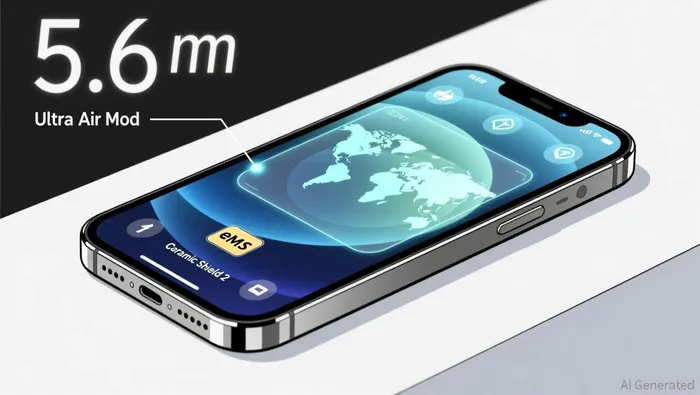
The iPhone Air, Apple's thinnest and lightest model to date, embodies Chowdhury's design ethos. Weighing just 165 grams and featuring a 5.6mm profile, the device challenges conventional smartphone design norms while maintaining premium performance. Its titanium frame and Ceramic Shield 2 display durability underscore Apple's commitment to material innovation, while the elimination of the physical SIM slot in favor of eSIM-only connectivity reflects a forward-looking approach to user convenience and global connectivity trends. According to a report by Bloomberg, the iPhone Air is not merely a consumer product but a "testbed for future foldable designs," with its 2-nanometer chip and component integration strategies paving the way for next-generation form factors.
Chowdhury's work has also reinforced Apple's brand identity as a creator of "irreplaceable" products. By prioritizing portability and tactile elegance-qualities that resonate with users who prioritize aesthetics over camera versatility-the iPhone Air caters to a niche yet loyal segment of the market. This aligns with Apple's broader strategy of leveraging design to foster emotional attachment, a factor that contributes to its 94% brand loyalty index, one of the highest in the industry.
Market Impact and Investor Sentiment
While the iPhone Air accounts for only 6% to 8% of new iPhone sales, its strategic value extends beyond immediate revenue. As noted by financial analysts, the device's role in Apple's product roadmap is to "validate design concepts and component efficiency" for future models, including foldables. This approach mirrors Samsung's staggered launch strategy for flagship and foldable devices, positioning Apple to compete more effectively in a market where innovation cycles are accelerating.
Investor reactions, however, remain nuanced. Apple's stock, trading at a P/E ratio of ~29 in 2025, reflects investor confidence in its ecosystem-driven loyalty and predictable revenue streams. In contrast, Samsung's lower P/E (~14) and higher market share (24.7% vs. Apple's 18.9%) highlight divergent risk profiles: Apple's premium pricing and design-centric strategy appeal to stability-seekers, while Samsung's aggressive hardware experimentation attracts growth-oriented investors according to market analysis.
Leadership Transitions and Long-Term Prospects
Apple's leadership landscape adds another layer to this analysis. With CEO Tim Cook potentially stepping down as early as 2026 and key executives like CFO Luca Maestri departing, investor scrutiny of Apple's succession planning has intensified. Yet, the iPhone Air's design innovations-rooted in the work of figures like Chowdhury-suggest that Apple's innovation engine remains robust, even amid leadership shifts. This is critical for maintaining investor trust in a sector where R&D continuity is paramount.
Moreover, the iPhone Air's focus on design experimentation aligns with Apple's broader goal of reducing reliance on annual upgrade cycles. By introducing non-annual models like the iPhone Air, Apple can sustain demand without over-saturating the market, a tactic that could stabilize revenue growth amid slowing smartphone adoption rates.
Conclusion: Design as a Strategic Asset
In the premium smartphone market, where margins are razor-thin and competition is fierce, Apple's design-led approach offers a unique value proposition. Abidur Chowdhury's work on the iPhone Air not only showcases the company's technical prowess but also reinforces its ability to create products that transcend utility-becoming symbols of status and innovation. For investors, this translates to a long-term competitive advantage: a brand that consistently redefines expectations, even as it navigates leadership transitions and legal challenges.
As Apple prepares to unveil foldable iPhones and further refine its design language, the lessons from the iPhone Air will likely shape its trajectory. In a world where "thin" is no longer enough, Apple's design philosophy-anchored by visionaries like Chowdhury-remains its most enduring differentiator.







Comentarios
Aún no hay comentarios