
Apple's (AAPL) Valuation and Growth Potential: Navigating the iPhone 17 Cycle Through Supply Chain and Demand Dynamics
Apple's upcoming iPhone 17 cycle has ignited a wave of optimism among investors, with the company's stock surging to record highs in late September 2025. This momentum is driven by a confluence of robust consumer demand and strategic supply chain adjustments, though challenges such as material shortages and geopolitical risks remain. For investors, the interplay between these factors offers critical insights into Apple's (AAPL) valuation and long-term growth potential.
Supply Chain Readiness: A Mixed Bag of Progress and Hurdles
Apple has taken decisive steps to bolster production readiness for the iPhone 17, particularly for the entry-level model. Suppliers like Luxshare Precision and Foxconn have been instructed to increase daily output by 40% and 30%, respectively, to meet unexpectedly strong pre-order demand [1]. This surge reflects the model's competitive pricing ($799) and its inclusion of Pro-level features such as a 120Hz ProMotion display and a 48MP camera system, which have narrowed the gap between base and premium offerings [4].
The company's supply chain diversification efforts are also noteworthy. AppleAAPL-- has expanded its supplier base for critical components like DRAM and NAND memory, involving up to five manufacturers—including Samsung, SK hynix, and Micron—to mitigate rising costs and geopolitical risks [6]. However, a critical bottleneck persists: a shortage of low thermal expansion coefficient (low-CTE) fiberglass cloth, essential for heat management in the iPhone 17. This material, produced by only two global manufacturers (with Grace Fabric Technology as Apple's primary supplier), threatens to delay the September 2025 launch window [4]. CEO Tim Cook has reportedly pushed suppliers daily to resolve the issue, underscoring the gravity of the situation [2].
India's Strategic Role and Geopolitical Calculus
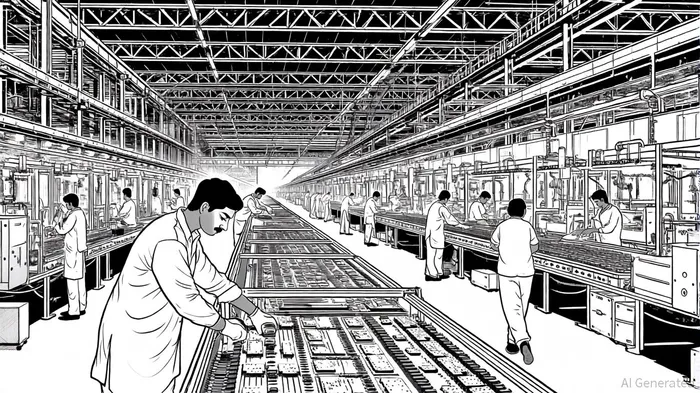
Apple's shift to manufacturing all iPhone 17 models in India marks a pivotal moment in its global supply chain strategy. For the first time, the company is producing the entire lineup, including Pro models, across five Indian factories operated by Tata Group and Foxconn. This move is driven by a desire to reduce reliance on China, hedge against U.S. tariffs, and capitalize on India's growing manufacturing ecosystem. Between April and July 2025, $7.5 billion worth of iPhones were shipped from India—a stark increase compared to the previous fiscal year [1].
Despite progress, challenges remain. China's efforts to disrupt technology transfers to India have led to the recall of hundreds of Chinese engineers from Indian facilities, forcing Apple to replace them with more expensive talent from Taiwan and Japan [1]. Additionally, the Trump administration's 50% tariffs on India (though not yet applied to electronics) create uncertainty. To secure exemptions, Apple's CEO Tim Cook pledged $600 billion in U.S. investments over four years, signaling a long-term commitment to balancing global manufacturing risks [1].
Consumer Demand Dynamics: A Tailwind for Growth
Pre-order data for the iPhone 17 has exceeded expectations, with global demand surging 25% higher than the iPhone 16 cycle. In key markets like China and India, delivery times have extended to 18 days—a clear indicator of outpacing initial supply [2]. Analysts attribute this to the iPhone 17's premium pricing strategy, which maintains high average selling prices (ASPs) and margins. The base model's $799 price point, combined with the introduction of the slimmer iPhone 17 Air variant, has broadened appeal across price-sensitive and design-conscious consumers [3].
However, China remains a wildcard. While Apple's 15% government subsidy has boosted local demand, fierce competition from Huawei and Xiaomi in the high-end segment, coupled with regulatory hurdles, could temper long-term growth. Analysts at Wedbush and JPMorgan note that a sustained recovery in China could add $75–$100 per share to Apple's valuation through 2026 [5].
Stock Valuation and Analyst Projections
Apple's stock has surged to $256–$257 in late September 2025, fueled by the iPhone 17's strong demand and production ramp-up. Wedbush analyst Dan Ives has raised his price target to $310—the highest among tracked analysts—citing the “supercycle” potential of the iPhone 17 and Apple's AI-driven innovation [4]. Bank of America and JPMorgan have similarly upgraded their targets, with the latter projecting a $280 price point based on extended production plans and AI integration [5].
Yet, risks linger. The low-CTE shortage and rising component costs could pressure margins, while U.S. tariffs on China may force further supply chain reconfigurations. Additionally, Apple's AI ambitions, though promising, require time to materialize into revenue-generating products.
Conclusion: A Calculated Bet on Resilience and Innovation
Apple's iPhone 17 cycle presents a compelling case for growth, underpinned by strategic supply chain diversification, strong consumer demand, and a renewed focus on India. While material shortages and geopolitical tensions pose near-term risks, the company's ability to adapt—through supplier expansion, design adjustments, and aggressive production increases—demonstrates its resilience. For investors, the key lies in balancing optimism about the iPhone 17's potential with caution regarding execution risks. If Apple can navigate these challenges, its valuation could continue to climb, supported by a product lineup that redefines smartphone innovation.





Comentarios
Aún no hay comentarios