
Apparel Rally Snaps: The Holiday Profit Test and What to Watch
The recent rebound in apparel and luxury stocks is now facing its first real test. After a weak stretch earlier in 2025, parts of the sector have snapped back, led by European luxury names like LVMH and Kering, which saw shares up about 42% and 49% over three months by mid-November. This rally was a speculative bet on a consumer upcycle, but the holiday quarter is the critical profit test that will determine if the rebound holds. For some luxury houses, this period can account for up to 30% of annual sales, making it a decisive moment to prove demand and pricing are steady.
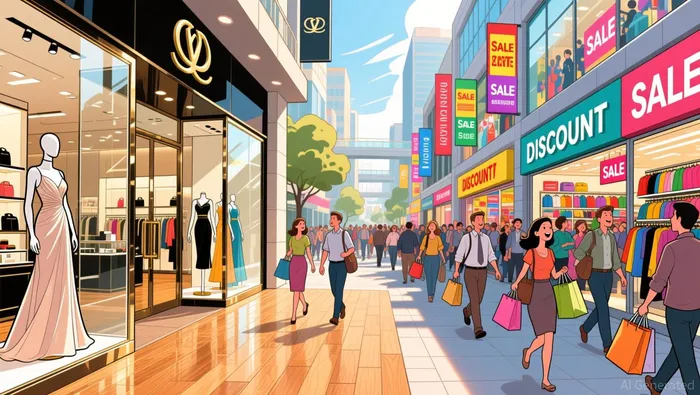
Yet the rally is already snapping amid signs of soft performance. The immediate catalyst for a potential fade is the shift in consumer spending toward value and discount retailers. Data shows shoppers are prioritizing bargains and stretching budgets, with Cyber Week and Black Friday driving a key portion of the surge. This trend points to solid, but highly price-sensitive, demand. While luxury purchases have stayed resilient, the broader pattern is a clear trade-down, which pressures margins and threatens the full-price selling that fuels the sector's profitability.
The setup is now a split test. Strong brands with operational discipline, like Inditex, are seen as stable compounders, while fragile turnarounds like Burberry remain jumpy on any hint of heavier discounting. The rally is not a rising tide; it's a return to a few trusted brands first, leaving the rest of the sector vulnerable. If promotions roar back in January, the rebound often fades just as quickly. For now, the holiday quarter's results will separate the genuine recovery from the speculative pop.
The Holiday Profit Test: Full-Price vs. Volume
The rally's fate hinges on a simple but critical metric: full-price selling. For luxury and premium apparel, long-term value is driven by margins, not just top-line growth. If brands are forced back into promotions in January, the rebound often fades just as quickly. The market is looking for evidence that demand is steady enough to support pricing power, not just volume.
This pressure is already visible in consumer behavior. Cyber Week and Black Friday data show shoppers are prioritizing bargains and stretching budgets, shifting demand toward discount-oriented retailers. This pattern points to solid, but highly price-sensitive, demand that benefits chains like Ocado but pressures the margins of traditional apparel retailers. The holiday quarter is the proving ground for whether this trade-down is temporary or a new baseline.
Marks & Spencer's recent results offer a concrete example of the split. In its third quarter, the company saw like-for-like food sales grow 5.6%, but fashion sales declined 2.9%. Management cited a cyberattack and reduced footfall as key drivers of the fashion slump. This divergence underscores the vulnerability of the apparel segment; even a stable food business cannot fully offset weakness in its core fashion division. For the broader sector, the test is whether fashion sales can stabilize or grow without a heavy discounting push. The bottom line is that the rally is a bet on operational discipline and pricing power. If the holiday results show a return to promotions, that bet is likely to unravel.
Catalysts and Risks: What to Watch Next
The rally's immediate fate rests on two clear signals: the holiday quarter's actual results and the promotional tone in January. The market is looking for confirmation that demand and pricing are steady, not just volume. Positive sales and margin guidance would validate the consumer upcycle thesis, while weak outlooks would signal continued softness. The key catalyst is the holiday quarter's actual sales and margin guidance; positive results would confirm a consumer upcycle, while weak guidance would signal continued softness.
A major risk is a return to aggressive promotions in January, which would undermine the pricing power retailers have been rebuilding. The sector's rebound often fades just as quickly if brands revert to discounting to clear inventory. This pressure is already visible in consumer behavior, where shoppers are prioritizing bargains and stretching budgets, shifting demand toward discount-oriented retailers. For the broader sector, the test is whether fashion sales can stabilize or grow without a heavy discounting push.
Broader economic data provides context but does not guarantee a sustained rally. The latest unemployment rate of 4.4% offers some support for consumer spending power, but it is a lagging indicator. The market is focused on the forward-looking levers of discounting, inventory, and China demand. For now, the setup is a split test between brands that can command full price and those that cannot.







Comentarios
Aún no hay comentarios