
APEMARS: The Next 100x Crypto Play Beyond Bitcoin, Powered by Token Burn Mechanics and Market Phase Transitions
The cryptocurrency market has long been dominated by BitcoinBTC-- and a handful of legacy assets, but the rise of narrative-driven tokens with engineered scarcity is reshaping the landscape. APEMARS ($APRZ), a space-themed memeMEME-- coin, has emerged as a compelling case study in how token burn mechanics and structured market phase transitions can create exponential value for early adopters. With a projected ROI of over 32,000% for Stage 1 participants and a deflationary model hardcoded into its 23-stage presale, APEMARS is positioning itself as a potential 100x play in 2026.
Token Burn Mechanics: A Deflationary Engine for Scarcity
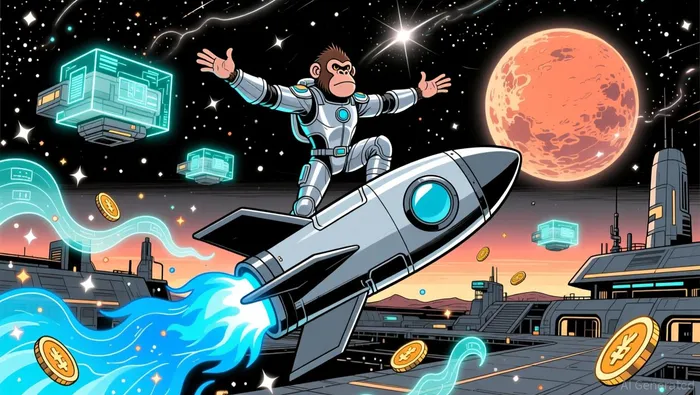
At the core of APEMARS' value proposition is its Thermal Disposal Protocol, a quarterly token burn mechanism executed at Stages 6, 12, 18, and 23 of its presale. These burns permanently remove unsold tokens from circulation, reducing the total supply from the initial 70 billion tokens. By mirroring Commander Ape's symbolic journey to Mars, the project ties each burn to a narrative milestone, creating psychological and economic incentives for holders to anticipate and capitalize on scarcity-driven price surges.
For example, Stage 1 of the presale sold out in under three hours at a price of $0.00001699, with the projected listing price of $0.0055 implying a theoretical ROI of 32,269% for early investors. The burn events at Stages 6 and 12 are expected to amplify this scarcity effect, as unsold tokens from earlier stages are systematically removed. This structured approach ensures that supply tightens predictably, rewarding early participants while creating a sense of urgency for later-stage buyers.
Market Phase Transitions: Staged Price Surges and Investor Behavior
APEMARS' 23-stage presale is designed to engineer market phase transitions through progressive price increases and referral-driven growth. Each stage raises the token price, with Stage 2 currently priced at $0.00002066-offering a 26,500% return potential if the listing price of $0.0055 is achieved. The Orbital Boost System, a 9.34% referral bonus, further accelerates adoption by incentivizing community members to expand the token's holder base.
Historical data from similar presales suggests that such structured models often trigger FOMO (fear of missing out) as stages advance. For instance, Stage 2 of APEMARS' presale has already raised over $45,000 with 228 holders, and tokens are 92% sold. The combination of scheduled burns and staged price hikes creates a flywheel effect: as supply dwindles and prices rise, demand intensifies, driving further appreciation.
Staking and Liquidity: Reinforcing Long-Term Value
Beyond burns, APEMARS' tokenomics include a high-yield staking system offering 63% APY for post-launch holders, with rewards locked for two months to stabilize early liquidity. This mechanism not only rewards loyalty but also discourages short-term dumping, aligning incentives between the project and its ecosystem. Additionally, 20% of the total supply is allocated to liquidity and ecosystem development, ensuring sustained growth and utility for $APRZ.
Narrative-Driven Momentum: The Mars Mission as a Catalyst
APEMARS' success is not solely rooted in mechanics but also in its narrative-driven engagement. By framing the token's journey as Commander Ape's voyage to Mars, the project taps into the meme coin community's affinity for storytelling and symbolism. This narrative is amplified by the burn events, which are marketed as "mission milestones", creating a shared sense of purpose among holders.
Conclusion: A 100x Play Beyond Bitcoin
While Bitcoin remains the dominant asset, tokens like APEMARS demonstrate how engineered scarcity and structured market dynamics can create outsized returns. With a deflationary model, high APY staking, and a community-driven narrative, APEMARS is poised to capitalize on the 2026 crypto cycle. For investors seeking exposure to the next 100x opportunity, the combination of token burn mechanics and market phase transitions in APEMARS' model offers a compelling case for early participation.






Comentarios
Aún no hay comentarios