
Why Apeing is Positioned to Outperform Other Altcoins in 2026
The cryptocurrency market in 2026 is witnessing a paradigm shift, with institutional adoption and memeMEME-- coin innovation reshaping the competitive landscape. Amid this evolution, Apeing ($APEING) has emerged as a standout project, leveraging a strategic rollout, scarcity-driven tokenomics, and community-centric design to position itself as a potential outperformer against established altcoins like EthereumETH-- (ETH), SolanaSOL-- (SOL), and Binance Coin (BNB). This analysis explores how Apeing's early whitelist access and structured pricing model align with broader market trends, while contrasting its approach with the tokenomics and institutional trajectories of its peers.
Strategic Rollout and Scarcity-Driven Tokenomics
Apeing's 2026 launch strategy is anchored in a whitelist-only model for its Stage 1 presale, offering tokens at $0.0001-a price point projected to rise to $0.001 upon public listing. This 10x price differential creates immediate ROI potential for early adopters, incentivizing prompt participation. The scarcity model is further reinforced by capped allocations in early stages, ensuring limited supply and reducing the risk of oversubscription. Unlike speculative meme coins that often lack structured frameworks, Apeing's phased rollout introduces a sense of order, mitigating the volatility typically associated with unregulated launches.
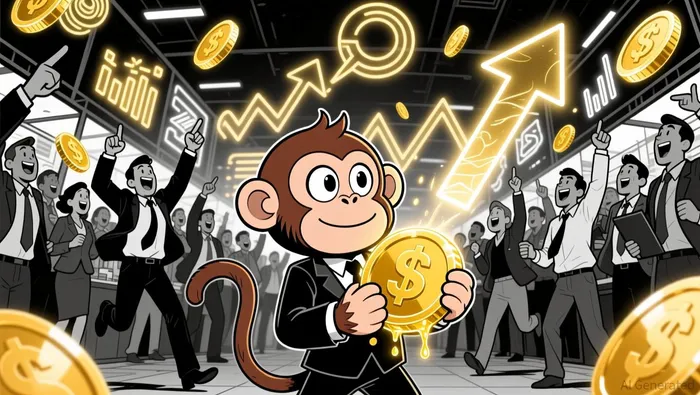
The project's tokenomics also emphasize community-driven growth. Whitelist participants receive exclusive updates on project milestones, fostering a sense of ownership and alignment with the project's long-term vision. This approach contrasts sharply with the utility-focused tokenomics of Ethereum and Binance Coin, which prioritize institutional utility over grassroots engagement. By embedding scarcity and community incentives into its core design, Apeing taps into the psychological drivers of early-stage adoption, a strategy validated by historical success stories.
Contrasting Tokenomics: Apeing vs. Ethereum, Solana, and Binance Coin
Ethereum's 2026 tokenomics revolve around fee-burning mechanisms and a transition to a proof-of-stake model, aiming to manage supply dynamics while supporting DeFi and real-world asset (RWA) adoption. However, its lack of a fixed supply cap and reliance on institutional-grade infrastructure position it as a stable asset. Solana, meanwhile, leverages high throughput and low costs to attract DeFi and consumer applications, with tokenomics that balance issuance for network security against fee-based burns during high-activity periods. Binance Coin (BNB) maintains its dominance through ecosystem integration, with periodic token burns reducing supply and reinforcing utility.
Apeing's model diverges from these approaches by prioritizing early-stage exclusivity and narrative-driven growth. While Ethereum and Solana focus on institutional scalability, Apeing's structured pricing and whitelist access create a flywheel effect: limited supply drives demand, and community engagement amplifies virality. This aligns with 2026 trends in meme coin innovation, where projects adopt controlled allocation frameworks to stabilize initial market behavior.
Institutional Adoption and Meme Coin Innovation in 2026
Institutional adoption in 2026 is being driven by regulatory clarity and the maturation of spot ETFs, with Ethereum and Solana leading in DeFi applications. Binance Coin benefits from its deep integration with the Binance ecosystem, but its value remains tied to centralized exchange dynamics. Apeing, however, is carving a niche in the meme coin sector by combining institutional-grade security with retail-friendly incentives. Its whitelist model mirrors controlled access strategies of traditional venture capital, attracting both retail and institutional investors seeking early-stage opportunities.
The broader meme coin landscape in 2026 is also evolving. Solana's infrastructure has become the go-to platform for meme coin creation, with tools like Pump.fun enabling rapid deployment. Apeing's alignment with this trend-while maintaining a structured rollout-positions it to capture both speculative and utility-driven demand. Analysts note that projects with clear entry frameworks and community alignment, like Apeing, are more likely to sustain momentum in a crowded market.
Conclusion: Apeing's Unique Growth Potential
Apeing's strategic rollout, scarcity model, and community-driven tokenomics create a compelling case for outperformance in 2026. By offering a 10x price differential in its early stages and fostering a sense of exclusivity, the project taps into the psychological and economic drivers of meme coin success. While Ethereum, Solana, and Binance Coin dominate institutional and utility-focused sectors, Apeing's focus on early access and narrative-driven growth aligns with the evolving dynamics of the meme coin market. As institutional adoption and speculative demand converge, Apeing is uniquely positioned to capitalize on both, making it a high-conviction investment for 2026.






Comentarios
Aún no hay comentarios