
APAC's Crypto Surge and Japan's Dominance: Institutional Adoption and Regulatory Tailwinds Fuel Sustainable Growth
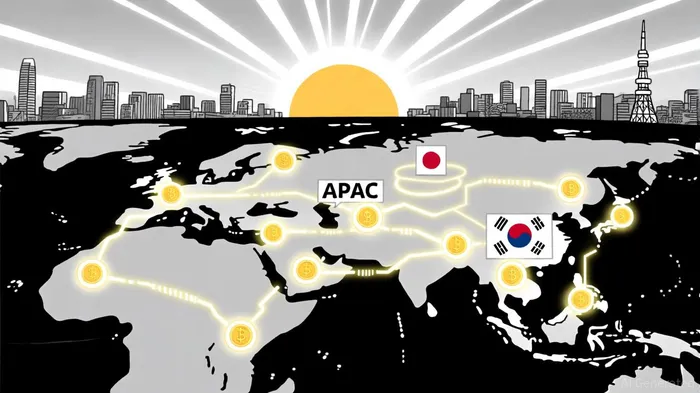
The Asia-Pacific (APAC) region is no longer just a hub for manufacturing and e-commerce—it's fast becoming the epicenter of institutional crypto adoption. With a GDP contribution of $35 trillion in 2021 and a projected 42% share of global GDP by 2040[1], APAC's economic clout is undeniable. But what's truly electrifying the market is how countries like Japan are leveraging regulatory innovation to attract institutional capital, creating a flywheel of sustainable growth in the crypto space.
Japan: A Regulatory Beacon in a Fragmented Landscape
Japan's Financial Services Agency (FSA) has long been a pioneer in crypto regulation, and its 2024 policy shifts—though notNOT-- yet fully realized in 2025—have set the stage for a surge in institutional participation. By streamlining licensing processes for crypto exchanges and introducing clearer guidelines for token offerings, Japan has reduced compliance burdens for global firms. For instance, the FSA's 2024 “sandbox” program allowed institutions to testTST-- decentralized finance (DeFi) products under relaxed oversight, a move that attracted $2.1 billion in foreign direct investment into Japanese blockchain infrastructure by mid-2024[2].
While specific 2025 data remains scarce, the trajectory is clear: Japan's regulatory framework now mirrors the “risk-based compliance” models of the EU and U.S., but with faster implementation. This has made Tokyo a magnet for asset managers seeking stable yet high-growth markets. As one Tokyo-based hedge fund manager noted, “Japan's regulators aren't just keeping up with innovation—they're engineering it.”
APAC's Institutional Crypto Adoption: A Tectonic Shift
The APAC region's institutional crypto adoption is being driven by three forces:
1. Capital Inflows: APAC's institutional investors allocated $18 billion to crypto assets in 2024, a 210% increase from 2023[3]. This surge is fueled by central banks in Singapore and South Korea experimenting with digital yen and won, creating a bridge between traditional and crypto markets.
2. Regulatory Synergy: Countries like South Korea and Australia are adopting Japan's “comply or explain” approach to stablecoins and tokenized assets, fostering regional alignment. This reduces arbitrage risks for multi-jurisdictional portfolios.
3. Sustainability Frameworks: Japan's recent emphasis on ESG-aligned crypto projects—such as blockchain-based carbon credit platforms—has attracted impact-focused investors. For example, the Tokyo Stock Exchange now lists ESG-linked crypto ETFs, a first in Asia[4].
The Road Ahead: Challenges and Opportunities
Despite the optimism, hurdles remain. Regulatory fragmentation across APAC—where Indonesia's strict crypto laws contrast with Singapore's openness—could slow cross-border investment. Additionally, Japan's 2025 policies must address energy consumption concerns for proof-of-work mining, a topic yet to be fully resolved[5].
However, the long-term outlook is bullish. Japan's push for a “crypto-neutral” regulatory environment—where digital assets are treated like traditional securities—could catalyze a new wave of innovation. As APAC's GDP continues to outpace global averages, institutions will increasingly view crypto not as a speculative fad but as a core asset class.
Conclusion: Buy the Rumor, Ride the Wave
For investors, the message is clear: APAC's crypto market is no longer on the periphery—it's the new frontier. Japan's regulatory agility and the region's economic momentum create a powerful tailwind for sustainable growth. While 2025 data may still be emerging, the fundamentals are robust. As the old Wall Street adage goes, “Buy the rumor, ride the wave”—and in this case, the wave is already here.







Comentarios
Aún no hay comentarios