
Antitrust Turmoil in Live Entertainment: Regulatory Risks and Market Consolidation Opportunities
The live entertainment industry is undergoing a seismic shift as antitrust enforcement intensifies against Live Nation EntertainmentLYV-- and its subsidiary Ticketmaster. With the U.S. Department of Justice (DOJ) and Federal Trade Commission (FTC) pursuing parallel legal actions, the sector faces a critical juncture that could redefine market dynamics, regulatory risks, and investment opportunities.
Regulatory Risks: A Dual Front of Enforcement
The DOJ's landmark antitrust lawsuit, filed in May 2024, alleges that Live NationLYV-- and Ticketmaster have monopolized 80% of primary ticketing at major U.S. venues and 70% of amphitheater promotions through exclusionary contracts and retaliatory practices. A federal judge's March 2025 denial of Live Nation's motion to dismiss has accelerated the case toward a potential 2026 trial, with structural remedies-such as a forced breakup-on the table, according to a Bloomberg Law report. Meanwhile, the FTC has separately sued Ticketmaster for enabling scalpers via deceptive pricing tactics, including a "bait-and-switch" strategy where advertised prices exclude mandatory fees that can add up to 44% at checkout, as detailed by CNBC.
Compounding these pressures, President Trump's April 2025 executive order targeting "exploitative ticket scalping" and enforcing the BOTS Act signals a regulatory paradox: while the administration has signaled a broader shift toward deregulation, it remains committed to cracking down on consumer harm in live entertainment. This duality creates uncertainty for companies navigating compliance with both antitrust and consumer protection mandates.
Market Consolidation: Who Benefits from a Breakup?
If the DOJ succeeds in dismantling Live Nation's vertically integrated empire, the market could see a surge in competition. Ticketmaster's 70–80% primary ticketing dominance and Live Nation's 60% concert promotion share have long stifled rivals, according to a recent study. However, platforms like Eventbrite, StubHub, SeatGeek, and Vivid Seats are positioned to capitalize on a more open landscape. For instance, Eventbrite's event management and ticketing services, which have historically struggled with post-IPO volatility, could gain traction as venues seek alternatives to Ticketmaster's exclusive contracts, according to a competitor roundup. Similarly, StubHub's 2025 IPO has drawn attention to its ability to navigate regulatory risks, such as the FTC's all-inclusive pricing rules, while competing with legacy players, as noted in a Forbes piece.
The National Independent Venue Association (NIVA) has already called for structural reforms, including a 20% cap on ticket resale prices and federal oversight to prevent deceptive practices. Such measures could level the playing field for smaller platforms, though they also introduce regulatory hurdles for emerging competitors.
Investment Implications: Balancing Opportunity and Uncertainty
For investors, the antitrust saga presents a dual-edged sword. A forced breakup of Live Nation and Ticketmaster could reduce compliance costs for smaller firms by eliminating exclusive contracts, potentially boosting margins in a more competitive market, a point raised in a Free Markets Report post. However, the same regulatory scrutiny that targets Live Nation could extend to newer platforms, particularly if the FTC's focus on pricing transparency and resale caps becomes the norm, as Reuters reported.
The financial stakes are enormous: Ticketmaster collected $3.7 billion in resale fees between 2019 and 2024, while mandatory fees totaled $16.4 billion in the same period, according to TicketNews. A structural shift could disrupt these revenue streams, but it may also unlock innovation in ticketing models, such as blockchain-based platforms or dynamic pricing tools that prioritize consumer affordability.
Conclusion
The antitrust actions against Live Nation and Ticketmaster represent a pivotal moment for the live entertainment industry. While regulatory risks remain high-particularly for companies reliant on opaque pricing or resale tactics-the potential for market consolidation offers a unique opportunity for investors to back platforms that prioritize transparency and innovation. As the DOJ and FTC continue to reshape the sector, the coming years will test the resilience of both legacy firms and emerging competitors in a landscape defined by regulatory scrutiny and consumer demand for fairness.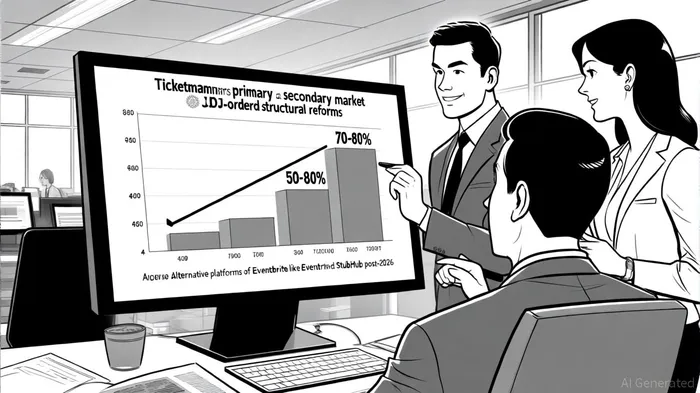





Comentarios
Aún no hay comentarios