
Antitrust Scrutiny and Market Implications for Central Japan Railway Company
Central Japan Railway Company (JR Central) stands at the intersection of Japan's high-speed rail revolution and a tightening regulatory landscape. As the operator of the Tokaido Shinkansen-the lifeblood of intercity travel between Tokyo, Nagoya, and Osaka-JR Central commands a pivotal role in Japan's transportation infrastructure. However, recent antitrust investigations and evolving sector dynamics have introduced new layers of complexity for investors evaluating its strategic and financial health.
Regulatory Risk: A Closer Look at the JFTC's Clampdown
In October 2024, the Japan Fair Trade Commission (JFTC) launched on-site inspections of JR Central and five construction consultants, uncovering allegations of bid-rigging in railway bridge maintenance contracts[4]. According to a report by Mlex, the companies are accused of colluding to predetermine winners for 10 of JR Central's lines, with the railway giant acting as a coordinator despite not participating in the bidding process[1]. The JFTC's findings are expected to result in cease-and-desist orders and fines totaling approximately ¥100 million ($677,000) for the consultants[1].
This case underscores the JFTC's 2025 enforcement priorities, which have shifted toward aggressive action against cartels and abuse of superior bargaining position (ASBP) in public procurement[2]. For JR Central, the reputational and financial fallout could be significant. While the company has not yet faced criminal charges, the incident highlights vulnerabilities in its procurement processes and raises questions about its compliance culture. As noted in the Japan Compliance analysis, the JFTC's use of leniency programs and administrative surcharges-up to 10% of sales proceeds-adds further pressure on firms to self-report violations[2].
Strategic Resilience: Investments and Market Position
Despite these challenges, JR Central remains a cornerstone of Japan's railroad sector. In 2025, the company allocated ¥674 billion for consolidated group investments and ¥630 billion for non-consolidated projects, focusing on high-speed rail expansion and sustainability initiatives[3]. These include the development of the Superconducting Maglev system and the installation of solar cells on noise barriers along the Tokaido Shinkansen Line[3].
Market dynamics further bolster JR Central's strategic position. The Japan railroad market, valued at $19.9 billion in 2024, is projected to grow at a 4.8% CAGR, reaching $30.3 billion by 2033[3]. JR Central's dominance in the passenger rail segment-driven by the Shinkansen's efficiency and Japan's urban density-positions it to capitalize on this growth. Its alignment with ESG goals, including TCFD recommendations and carbon-neutral infrastructure, also aligns with global investment trends[1].
Sector-Wide Implications and Investment Considerations
The JFTC's 2024-2025 enforcement spree, which included fines against nonlife insurance cartels and a cease-and-desist order against Google, signals a broader regulatory shift[5]. For railway companies, this means heightened scrutiny of supplier negotiations and procurement practices to avoid ASBP claims[2]. While JR Central's bid-rigging case is not an isolated incident, its scale and the JFTC's public emphasis on accountability could deter similar behavior across the sector.
Investors must weigh these risks against JR Central's long-term growth drivers. The company's focus on technological innovation-such as maglev and renewable energy integration-aligns with Japan's infrastructure modernization agenda. However, the antitrust fallout may temporarily strain its operating margins and divert management attention. A balanced approach would involve monitoring the JFTC's enforcement trajectory while assessing JR Central's capacity to adapt its compliance frameworks.
Conclusion: Navigating Risk in a High-Stakes Sector
Central Japan Railway Company's antitrust challenges are a microcosm of Japan's evolving regulatory environment. While the JFTC's actions introduce near-term uncertainties, they also reinforce a competitive landscape that favors transparent, innovation-driven players. For investors, the key lies in evaluating how JR Central navigates these pressures while maintaining its leadership in a sector poised for sustained growth.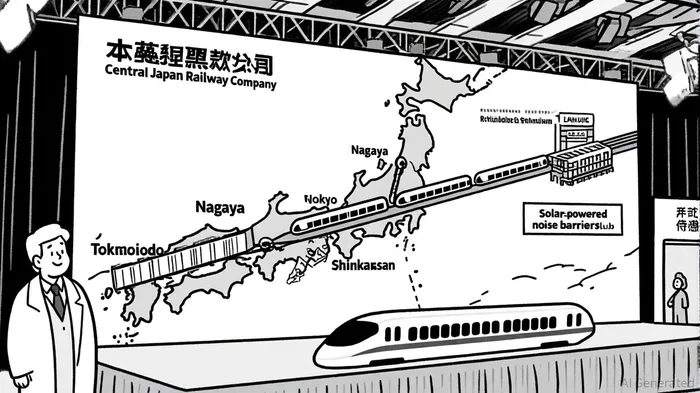







Comentarios
Aún no hay comentarios