
Antitrust Enforcement and Energy Sector Valuations: Assessing Long-Term Risks for Oil Majors Like Eni
The energy sector's susceptibility to antitrust enforcement has intensified in 2025, with Italy's recent actions against Eni serving as a case study for broader regulatory trends. As global regulators recalibrate competition policies to address market concentration and environmental goals, oil majors face mounting risks to profitability and valuation. This analysis examines Eni's recent antitrust penalties, contextualizes them within evolving regulatory frameworks, and evaluates their long-term implications for energy sector valuations.
Eni's Dual Antitrust Challenges: A Microcosm of Sector-Wide Scrutiny
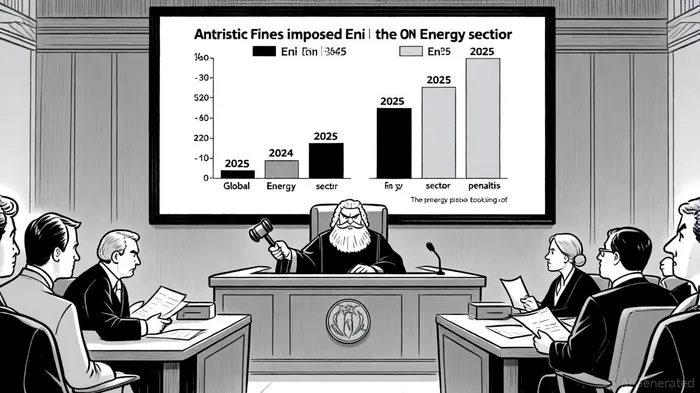
In 2025, Eni and its subsidiaries faced two landmark antitrust fines from Italy's competition authority. First, the company was penalized €32 million for Novamont's exclusionary practices in the bioplastics market, where Mater-Bi contracts allegedly stifled competition for degradable materials [1]. Separately, Eni was hit with a €936 million fine for colluding with five other oil giants to inflate biofuel component prices in diesel, a cartel that artificially raised costs for consumers and transport operators [2]. These penalties reflect a regulatory shift toward scrutinizing both traditional energy markets and emerging sustainability-linked sectors.
While Eni's Q1 2025 financials showed resilience—net profit surged 60% year-on-year—such fines could erode margins over time. The €936 million penalty alone represents ~6.5% of Eni's proforma adjusted EBIT of €14.3 billion for the first half of 2025 [3]. Moreover, reputational damage from these cases may deter investors, particularly as ESG-focused stakeholders demand stricter compliance.
Global Antitrust Trends: A Harsher Regulatory Climate for Energy Firms
Italy's actions align with a global surge in antitrust enforcement. In 2024, global penalties for antitrust violations reached $6.7 billion, more than double the previous year's total, driven by abuse-of-dominance cases in energy and digital markets [4]. The European Commission, under new Competition Commissioner Teresa Ribera, has prioritized aligning antitrust rules with the EU's clean energy transition, targeting practices that hinder renewable energy innovation [5]. Meanwhile, U.S. regulators under a potential Trump administration may refocus on traditional antitrust metrics, such as consumer price impacts, rather than Biden-era scrutiny of global oil mergers [6].
For oil majors, the risks are twofold:
1. Operational Constraints: Fines and compliance costs divert capital from core operations. For example, the FTC's record $5.6 million gun-jumping fine against U.S. oil firms for pre-merger coordination illustrates how regulatory hurdles can delay strategic transactions [7].
2. Reputational and Market Risks: Antitrust violations signal governance weaknesses, deterring institutional investors. Academic studies show that firms under antitrust scrutiny experience 5–10% declines in market valuation due to reputational harm and increased compliance costs [8].
Historical Precedents: Antitrust's Long-Term Impact on Energy Valuations
Historical cases underscore the durability of antitrust penalties' effects. The 1911 breakup of Standard Oil into 37 firms reshaped the industry, while modern penalties—such as the EU's €4.34 billion fine against Google—demonstrate how regulators can curtail market dominance [9]. For energy firms, the stakes are higher due to sector-specific dynamics:
- High Barriers to Entry: Infrastructure-heavy energy markets are prone to monopolistic behaviors, making antitrust enforcement critical for maintaining competition [10].
- ESG Pressures: As climate activists push to hold oil majors accountable for suppressing renewables, antitrust laws may be weaponized to challenge anti-competitive practices in green energy transitions [11].
Eni's recent fines, while significant, may pale against future enforcement actions if regulators expand scrutiny to ESG-linked collusion or algorithmic pricing in energy trading [12].
Strategic Implications for Investors
For investors, the key risks to oil majors like Eni include:
- Margin Compression: Repeated fines and compliance costs could erode profitability, particularly if regulatory trends persist.
- Capital Allocation Shifts: Companies may prioritize compliance over innovation, slowing the energy transition and long-term growth.
- Geopolitical Exposure: Divergent regulatory approaches (e.g., EU's green antitrust focus vs. U.S. policy shifts) could fragment markets, complicating global operations.
However, proactive compliance programs—such as Eni's Antitrust Compliance Programme—can mitigate these risks. The company's resilience in Q1 2025, driven by strong upstream performance and strategic investments like the KKR-backed Enilive deal, suggests it has the financial flexibility to absorb penalties [13].
Conclusion: Navigating a Regulated Future
Antitrust enforcement in the energy sector is no longer a peripheral risk but a central determinant of valuation. For Eni, the recent fines highlight vulnerabilities in both traditional and emerging markets, while global trends indicate a regulatory environment that will prioritize competition and sustainability. Investors must weigh these factors against the company's operational strengths and compliance efforts. As regulators continue to adapt antitrust frameworks to the energy transition, oil majors that fail to align with these priorities may find their long-term profitability—and market valuations—under sustained pressure.







Comentarios
Aún no hay comentarios