
Anticipating Market Volatility: Positioning for the Fed's November Beige Book Release
The Beige Book as a Strategic Signal
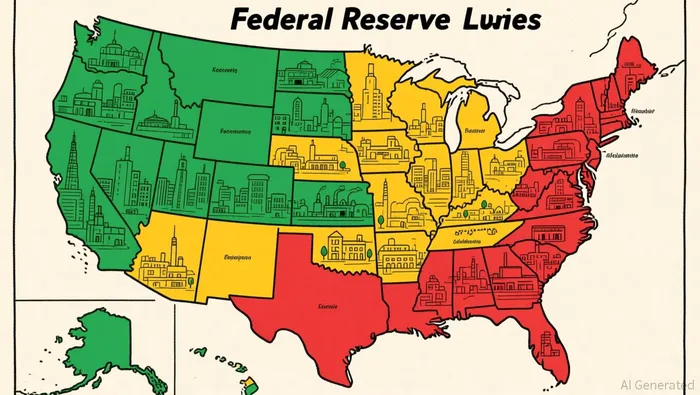
The Beige Book's value extends beyond its traditional role as a snapshot of regional economic activity. Recent studies highlight its utility in short-term recession forecasting, with quantitative sentiment analysis of its text improving predictive accuracy. While long-term forecasting remains limited, the report's insights into inflationary pressures, employment dynamics, and industrial activity offer actionable intelligence for tactical asset allocation. For instance, uneven growth across sectors-such as the insurance industry's robust performance evidenced by Vienna Insurance Group's 31% profit surge in Q3 2025-signals opportunities to overweight resilient sectors while hedging against vulnerable ones.
Diversification and Defensive Positioning
Historical precedents from past Beige Book events underscore the importance of diversification and defensive positioning. Experts recommend reducing exposure to trade-sensitive sectors like manufacturing and services, which face heightened risks from policy shifts and global economic fragility. Instead, allocations should tilt toward cash equivalents, short-term fixed income, and defensive equities (e.g., healthcare, consumer staples) to cushion against downside risks. This approach mirrors strategies employed during the last decade of trade uncertainty, where liquidity preservation and sectoral balance proved critical.
Sector Rotations and Duration Adjustments
The November Beige Book's mixed economic signals-such as the insurance sector's outperformance versus weaker industrial activity-warrant strategic sector rotations. Investors may consider overweighting sectors demonstrating operational efficiency and digital innovation, as exemplified by Vienna Insurance Group's improved net combined ratio of 92.1%. Conversely, underweighting cyclical sectors exposed to tightening monetary policy or trade disruptions aligns with risk mitigation goals.
Bond duration strategies also merit recalibration. With inflationary pressures and policy uncertainty persisting, shortening duration to minimize interest rate risk becomes prudent. This aligns with historical recommendations to prioritize liquidity and downside protection during periods of macroeconomic volatility.
Proactive Rebalancing and Liquidity Management
The Beige Book's release underscores the need for proactive portfolio rebalancing. Investors are advised to avoid over-leveraging and maintain flexibility to adjust allocations rapidly based on the report's findings. For example, if the Beige Book highlights regional labor market tightening, a shift toward growth-oriented equities in resilient sectors could capitalize on emerging trends. Conversely, signs of broad-based economic slowdown would justify increasing allocations to fixed income and cash.
Conclusion: Navigating Uncertainty with Precision
The November 2025 Beige Book represents more than a routine Fed publication-it is a barometer of economic fragility and opportunity. By integrating its insights with historical strategies and sector-specific performance data, investors can craft portfolios that balance growth potential with defensive resilience. As markets await the report, the key lies in agility: leveraging the Beige Book's signals to refine sector exposure, adjust duration, and prioritize liquidity, all while remaining attuned to the Fed's evolving policy calculus.







Comentarios
Aún no hay comentarios