
Anticipating Market Volatility: How CPI Data Could Reshape Equity Futures and Sector Rotation
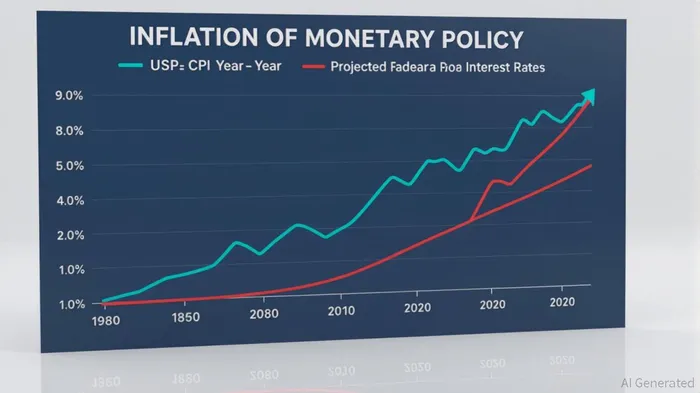
The U.S. inflation landscape in 2025 remains a tightrope walk for policymakers and investors alike. With the latest Consumer Price Index (CPI) data revealing a 12-month core PCE price index of 2.5% in April 2025—down from 2.9% in December but still above the Federal Reserve's 2% target—the market is bracing for a prolonged period of macroeconomic recalibration. This dynamic environment, shaped by sticky services inflation, tariff-driven price pressures, and divergent global monetary policies, is poised to reshape equity futures and sector rotation strategies in the coming months.
The Fed's Delicate Balancing Act
The Federal Reserve's policy path hinges on reconciling two conflicting signals: moderating headline inflation and persistent core inflation. According to the June 2025 Monetary Policy Report, energy prices have declined by nearly 6% over the past year, while food prices have risen modestly due to supply chain disruptions[1]. However, core goods inflation remains elevated at an annualized 4%, driven by tariffs and services inflation—particularly in housing and healthcare—that has proven resistant to cooling[5].
Vanguard's projections underscore this tension, forecasting core inflation to settle at 3.1% by year-end 2025, with the unemployment rate rising to 4.5% as the labor market moderates[2]. This scenario suggests a cautious Fed approach, with a 25-basis-point rate cut anticipated in September 2025. Yet, as SchwabSCHW-- analysts note, any inflation data exceeding expectations—especially in services or shelter—could delay further easing, creating volatility in equity markets[1].
Equity Futures and Sector Rotation: A Tale of Two Sectors
The interplay between inflation expectations and rate policy is already reshaping sector dynamics. Post-CPI data releases in August 2025, equity markets have shown heightened sensitivity to shifting monetary signals. For instance, the S&P 500 and Nasdaq, which had priced in a 90% probability of a September rate cut[5], face downside risks if the Fed signals a slower pace of easing or if services inflation surprises on the upside[6].
This environment favors a rotation toward defensive and undervalued sectors. Morningstar's September 2025 analysis highlights small-cap and value stocks as compelling opportunities, with small caps trading at a 15% discount to fair value[6]. Defensive sectors like healthcare and consumer staples have also demonstrated resilience amid geopolitical and economic uncertainties[3]. Conversely, growth stocks—particularly in technology—remain vulnerable to higher-for-longer rates and geopolitical headwinds[3].
The real estate and energy sectors, meanwhile, appear undervalued and well-positioned to benefit from lower interest rates and potential inflationary pressures[6]. This aligns with JPMorgan's global asset allocation views, which emphasize relative value opportunities in credit and targeted equity overweights[5].
Tactical Asset Allocation: Navigating Divergent Global Policies
Macroeconomic positioning for Q2 2025 reveals a fragmented global landscape. While the U.S. Federal Reserve is expected to deliver only two rate cuts in 2025, the European Central Bank and Bank of England are adopting more dovish stances, with the ECB projected to lower its deposit rate to 1.75% by year-end[1]. This divergence has amplified the appeal of shorter-to-mid-duration assets in the U.S., where yield curves are anticipated to steepen as short-end rates decline[1].
In fixed income, carry strategies favoring longer-duration assets are gaining traction, while credit spreads remain rangebound[1]. For equities, tactical allocations are tilting toward U.S. small-cap and mid-cap companies, as well as developed markets outside the U.S., with an overweight in tech and communication services[4]. This reflects a broader shift toward sectors with pricing power and resilience to inflationary shocks.
Conclusion: Preparing for a Volatile Autumn
As the Fed navigates the dual challenges of inflation persistence and a softening labor market, investors must remain agile. The August 2025 CPI data—showing core inflation at 3.1% year-on-year[2]—has reinforced the likelihood of a September rate cut but also highlighted the fragility of the Fed's inflation-fighting progress.
For equity portfolios, this means prioritizing sectors with defensive characteristics, such as healthcare and consumer staples, while selectively positioning in undervalued small-cap and value stocks. Fixed-income strategies should emphasize duration management and credit quality, particularly as global growth slows and central bank policies diverge.
In this environment, tactical asset allocation is not just a strategy—it is a necessity. By aligning portfolios with macroeconomic signals and sector-specific dynamics, investors can mitigate volatility and capitalize on emerging opportunities in the second half of 2025.







Comentarios
Aún no hay comentarios