
Anticipating the December Rate Cut: Strategic Asset Positioning for a Shifting Monetary Policy Landscape
The Fed's Tightrope: Inflation Hawks vs. Employment Doves
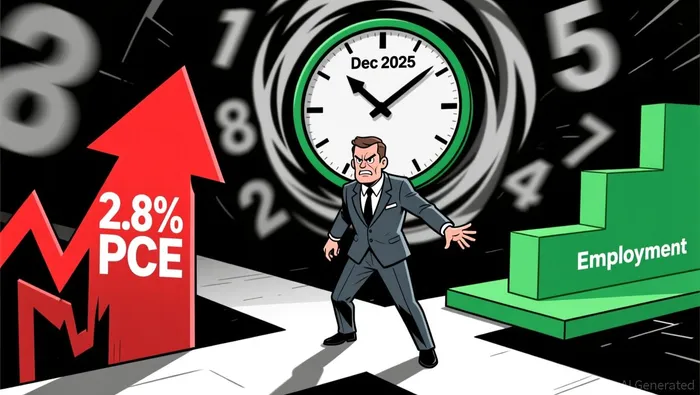
The latest FOMC meeting minutes, released on November 19, 2025, underscored a stark internal divide. While a 10-2 vote in October supported a 25-basis-point rate cut, many officials argued against further easing, citing persistent inflation risks. Core PCE inflation remains at 2.8%, above the 2% target, with upside pressures from potential trade tariffs according to analysis. This has caused the probability of a December cut to fluctuate dramatically-from as low as 35% post-minutes to a resurgent 70% following dovish comments from officials like John Williams and Christopher Waller. The Fed's balancing act-supporting a cooling labor market (128,000 October payrolls, 4.3% unemployment) while curbing inflation-has created a volatile environment according to reports.
Market Reactions: A Risk Rally Amid Uncertainty
The shifting odds of a rate cut have already triggered a risk rally. U.S. stock benchmarks, including the S&P 500 and Nasdaq, have surged as investors price in Fed easing. Cryptocurrencies like BitcoinBTC-- and EthereumETH-- have also gained traction, while gold prices climbed 1.7% as a hedge against macroeconomic uncertainty according to market data. Asian markets have mirrored this optimism, with stocks advancing in response to Wall Street's rebound according to analysts. However, geopolitical tensions-such as those between China and Japan-remain a cautionary tailwind according to recent assessments.
Strategic Asset Positioning: Sectors and Asset Classes to Watch
- Technology and AI-Driven Sectors: Historically, lower interest rates favor growth-oriented equities. Asian markets have already shown strength in tech and AI, suggesting a potential spillover into U.S. markets if the Fed cuts rates.
- Safe-Haven Assets: Gold's 1.7% rise highlights its role as a hedge against inflation and trade uncertainties according to market analysis. Similarly, Treasury bonds and defensive equities could benefit from a rate-cut environment.
ESG and Regulatory Tailwinds: Sectors with regulatory tailwinds, such as vapor recovery units in the oil and chemical industries, offer long-term growth potential amid shifting monetary policy according to market reports.
Cybersecurity Resilience: Strengthening defenses in critical sectors like finance and healthcare is essential to mitigate emerging cyber threats, which could exacerbate market volatility according to security experts.
Risk Mitigation: Diversification and Hedging Strategies
Given the Fed's internal divide, investors must adopt a dual approach:
- Diversification: Balancing portfolios across equities, fixed income, and alternative assets (e.g., gold, real estate) can cushion against divergent policy outcomes.
- Dynamic Hedging: Short-term options strategies or sector rotation can help capitalize on volatility while limiting downside risk. For instance, overweights in inflation-sensitive sectors (e.g., energy) could hedge against persistent price pressures according to economic forecasts.
- Scenario Planning: Preparing for both a December cut and a pause allows investors to pivot quickly based on evolving data, such as core services inflation trends or tariff developments according to analysts.
Conclusion: Navigating the Crossroads of Policy and Markets
The December 2025 rate decision represents a pivotal moment in the Fed's decelerating tightening cycle. While the path forward remains uncertain, strategic positioning in growth sectors, safe-haven assets, and ESG-driven industries-coupled with robust hedging-can help investors navigate the turbulence. As the Fed's internal debate unfolds, staying attuned to both data and sentiment will be key to capitalizing on opportunities in a shifting monetary landscape.







Comentarios
Aún no hay comentarios