
Ant Group's Strategic Position in Hong Kong's Web3 Ecosystem: Blockchain-Driven Fintech Diversification and Stablecoin Readiness
Hong Kong's Web3 Ambitions and Ant Group's Playbook
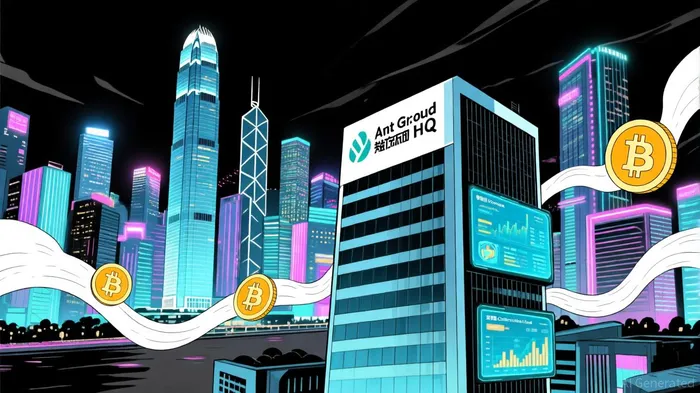
Hong Kong's government has been aggressively courting blockchain startups and financial institutions to establish the city as a "crypto capital." The recent implementation of a stablecoin licensing framework by the Hong Kong Monetary Authority (HKMA) on August 1, 2025, underscores this ambition, according to a Coinotag report. To comply with these regulations and signal intent, Ant Group filed a trademark for "AntCoin" in Hong Kong, covering virtual currencies, blockchain platforms, and digital asset custody, according to a Coinotag filing. This filing is not just a legal formality-it's a strategic signal that Ant Group is preparing to issue fiat-backed stablecoins, likely pegged to the Hong Kong dollar (HKD) and U.S. dollar (USD), to facilitate cross-border transactions, according to a LiveBitcoin News report.
The timing of the trademark filing, just before Hong Kong Fin Tech Week, suggests Ant Group is aligning its blockchain initiatives with the city's broader fintech agenda. Notably, the company has already tested the waters with a pilot project involving Circle's USDCUSDC-- stablecoin to enable cross-border payments via Alipay, as the Coinotag filing notes. This partnership highlights Ant Group's ability to integrate blockchain into its existing payment infrastructure while navigating regulatory boundaries.
Real Estate as a Strategic Lever
Ant Group's parent company, Alibaba, is also making physical investments in Hong Kong to support its digital ambitions. Reports indicate that Alibaba is in talks to purchase the upper 13 floors of One Causeway Bay for HK$7 billion ($900 million), according to a Straits Times report. This acquisition aligns with Alibaba's long-term strategy to strengthen its presence in Hong Kong's financial ecosystem, particularly as Ant Group explores blockchain-driven services. The decision to invest in real estate during a period of low commercial property valuations and high vacancy rates further emphasizes the company's confidence in Hong Kong's role as a crypto and fintech hub, the Straits Times report adds.
Navigating Regulatory Challenges and Opportunities
Hong Kong's stablecoin framework requires entities to obtain a license from the HKMA before issuing fiat-backed stablecoins to local users, as Coinotag reported. Ant Group's trademark filings and pilot projects suggest it is proactively preparing for compliance, which is critical given Beijing's recent warnings about capital flight risks associated with digital assets, LiveBitcoin News noted. By anchoring its stablecoin strategy in Hong Kong-a jurisdiction with both regulatory rigor and business-friendly policies-Ant Group is balancing innovation with risk mitigation.
The company's interest in HKD and USD stablecoins also aligns with its cross-border payment capabilities. For instance, AntCoin could enable seamless transactions between mainland China and international markets, leveraging Hong Kong as a bridge. This strategy mirrors how traditional financial institutions use offshore centers to expand their reach while adhering to domestic regulations.
Implications for Investors
Ant Group's moves in Hong Kong reflect a broader trend: legacy fintech players are pivoting to blockchain to stay competitive in a decentralized world. For investors, this signals a potential shift in the company's revenue streams from traditional payment fees to blockchain-based services, including stablecoin issuance and digital asset custody.
However, risks remain. Regulatory scrutiny from Beijing could escalate if Ant Group's stablecoin operations are perceived as circumventing capital controls. Additionally, the success of AntCoin will depend on adoption rates and partnerships with global stablecoin networks like USDC or Diem (formerly Libra).
Conclusion
Ant Group's strategic investments in Hong Kong's Web3 ecosystem-spanning trademarks, real estate, and regulatory alignment-position it as a key player in the next phase of fintech evolution. By leveraging Hong Kong's regulatory sandbox and its own technological infrastructure, the company is not only diversifying its offerings but also laying the groundwork for a blockchain-driven financial future. For investors, this represents a compelling case study in how traditional fintech giants are adapting to the decentralized economy.





Comentarios
Aún no hay comentarios