
Anduril's UK Drone Push: Balancing Growth Ambitions with Regulatory Risks
Building on Anduril's European expansion efforts, Project Nyx hinges on navigating the UK's newly articulated . The company's pursuit of a £100 million contract for an uncrewed rotary-wing system includes a significant co-funding commitment, covering half the development costs to align with the UK's local manufacturing goals – a strategy mirroring its approach in Australia. Partnering with established UK firms like GKN Aerospace and leveraging an "Anglo-American" identity are key tactics aimed at easing sovereignty concerns and bypassing traditional regulatory hurdles as the UK prioritizes domestic defense spending amid geopolitical tensions according to Bloomberg.
The UK's Defence Drone Strategy provides both a pathway and a set of challenges for Anduril's bid. The strategy explicitly emphasizes accelerating and building a scalable domestic industrial base for uncrewed systems, directly targeting the kind of industry collaboration Anduril is proposing as outlined in the UK government's publication. It also mandates the establishment of new digital integration standards, crucial for operational effectiveness across the Royal Navy, RAF, and Army, lessons learned from drone use in Ukraine driving the push for agility and cost-effectiveness. However, regulatory friction persists. While the co-funding model and local partnerships aim to align with government objectives, the strategy's focus on domestic capability building faces criticism regarding limited actual job creation from such international partnerships. Furthermore, the complexity of integrating new systems under these evolving digital standards remains a persistent hurdle across the European defense market, demanding rigorous compliance and potentially slowing deployment timelines despite the strategic alignment offered by Project Nyx.
Regulatory Hurdles & Market Constraints
Anduril's push into the UK defense market faces significant headwinds from evolving regulations and domestic political pressure. The company's approach of co-funding development and partnering with UK firms like GKN Aerospace aims to meet the government's priority on domestic industrial participation, yet faces direct criticism for delivering limited local job creation despite the £100 million Project Nyx bid according to Bloomberg. This tension reflects a broader UK policy shift emphasizing sovereignty and homegrown capability, particularly after the operational lessons demonstrated by drones in Ukraine. The Ministry of Defence's new procurement reforms, designed for speed and digital integration, now scrutinize foreign technology like Anduril's battlefield-proven systems through a stricter regulatory lens as detailed in the UK government's strategy. While Anduril leverages its "Anglo-American" identity and shared R&D costs to navigate these hurdles, the persistent complexity and emphasis on local economic benefit create ongoing friction and potential delays for its European expansion ambitions.
Financial Trajectory & Expansion Viability
Anduril Industries has generated striking financial momentum in the U.S., . This explosive growth is primarily fueled by significant Pentagon contracts, including the . The company capitalized on this success, . This substantial valuation reflects strong investor confidence in the company's U.S.-focused defense technology solutions, particularly its autonomous drone systems like the Ghost 4 and the Lattice AI software platform.
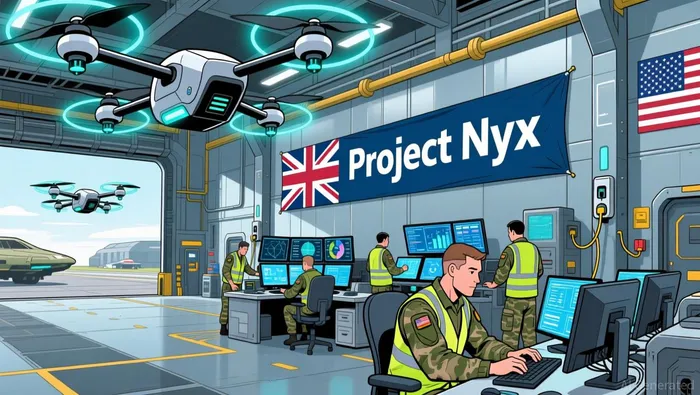
However, extending this financial trajectory into European markets introduces notable uncertainties. Anduril is actively pursuing UK expansion, notably partnering with Rheinmetall and supporting the British Army's Project NYX using its drone and software technologies as announced by Anduril. Despite this strategic push, critical financial transparency is missing for these European efforts. The announcement of the UK partnership provided no specifics on expected revenue, valuation adjustments for the region, or detailed financial projections for 2023-2024 in Europe. This lack of defined European revenue models and financial disclosure creates a significant gap when assessing the sustainability and risk profile of their international growth strategy.
While the U.S. performance is undeniable, . The undefined financials for the UK expansion mean the market valuation may not fully account for the execution risks, market acceptance challenges, and potential delays inherent in establishing new manufacturing and partnerships within a different regulatory environment. Investors should scrutinize how Anduril plans to bridge the transparency gap in Europe to validate the long-term viability of its global expansion beyond the proven U.S. model.
Forward-Looking Signals & Risk Monitoring
Project Nyx represents a critical inflection point for Anduril's European ambitions, with contract progress and regulatory approvals serving as the primary monitoring metrics. . , demonstrating a pattern of shared investment to secure market access.
UK manufacturing investments will be another key indicator of domestic spending alignment. The company's partnerships with firms like GKN Aerospace and emphasis on "Anglo-American" identity suggest strategic positioning to capitalize on UK defense priorities. However, persistent criticism over limited local job creation could complicate regulatory approvals and public acceptance, creating potential cash flow friction if production timelines extend beyond expectations.
Geopolitical dynamics and European competitors present both opportunity and risk. While expanding into the UK market offers access to European defense budgets, competition with established players like Rheinmetall creates commercial uncertainty. Anduril's counter-drone systems like could benefit from rising asymmetric threats, but European regulatory complexity remains a significant hurdle across the continent, potentially lengthening delivery cycles and increasing compliance costs.
The company's remarkable $1 billion revenue run rate and $30.5 billion valuation provide financial flexibility but don't guarantee successful execution in new markets. Any delays in Project Nyx approval or manufacturing partnerships could weaken the orders-to-shipments ratio, while unexpected regulatory friction might increase delivery cycles. Investors should monitor these qualitative signals carefully, recognizing that strong US performance doesn't necessarily translate to European success without addressing local regulatory and competitive challenges.







Comentarios
Aún no hay comentarios