
Analyzing the Surge of Virtual Protocol: A 31.98% Rally and Its Implications for Crypto Investors
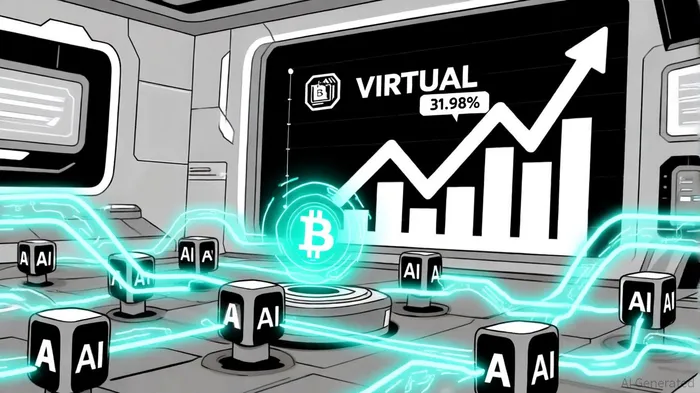
The 31.98% Rally: What's Driving It?
Virtual Protocol's price surge is rooted in its unique value proposition. Unlike traditional DeFi protocols focused on lending or trading, VirtualCYBER-- Protocol combines blockchain with AI agent creation, enabling users to co-own and monetize AI models. This hybrid approach taps into two of 2025's most explosive trends: AI's commoditization and the demand for decentralized infrastructure.
Key catalysts include:
1. AI-Driven Utility: Virtual Protocol's platform allows developers to deploy AI agents on-chain, creating programmable financial tools for trading, analytics, and automation. This aligns with the $1.05 trillion in decentralized perpetual futures volume recorded in October 2025, as traders seek faster, lower-cost execution, according to a Coinotag report.
2. Exchange Listings: A strategic listing on Binance in late 2025 expanded VIRTUAL's liquidity pools and retail exposure. According to a CryptoDaily report, this listing coincided with a 400% increase in daily active users.
3. Gaming and Social Media Adoption: Virtual Protocol's integration into Web3 gaming platforms and social media apps has unlocked new revenue streams. For instance, AI agents now power in-game economies, enabling players to earn VIRTUAL tokens through participation, a point also highlighted by the CryptoDaily article.
On-Chain Momentum vs. Flare Network's Growth
While Flare Network's 37.9% TVL growth in 2025 (driven by XRPXRP-- staking and FXRP liquidity) is impressive, Virtual Protocol's rally reflects a different trajectory. Flare's success is tied to XRP's utility expansion, whereas Virtual Protocol's value proposition is cross-chain and AI-centric.
For example, Flare's TVL of $86.2 million by October 2025 is concentrated in XRP-based staking and lending, while Virtual Protocol's TVL growth is fueled by AI agent deployment and decentralized data markets. This distinction is critical: Flare targets institutional-grade DeFi for XRP holders, while Virtual Protocol appeals to developers and Web3-native users seeking programmable AI tools.
Implications for Investors
The 31.98% rally signals a shift in DeFi's value drivers. Investors must now evaluate protocols not just by TVL or transaction volume but by utility density-how deeply a protocol integrates into real-world applications. Virtual Protocol's AI layer creates a flywheel effect: more AI agents deployed → more on-chain activity → higher token demand.
However, risks persist. The AI-DeFi convergence is still unproven at scale, and regulatory scrutiny of AI-driven financial tools could emerge. Additionally, competition from projects like Mutuum Finance (MUTM), which is launching a DeFi lending protocol in Q4 2025, could fragment the market, according to a Bitcoin.com post.
Conclusion: A New Paradigm in DeFi
Virtual Protocol's surge is emblematic of 2025's DeFi evolution. As the sector moves beyond yield farming and speculative trading, protocols that combine AI, cross-chain interoperability, and real-world utility will dominate. For investors, this means prioritizing projects with clear use cases and defensible moats-like Virtual Protocol's AI agent ecosystem.
The 31.98% rally isn't just a price movement; it's a harbinger of DeFi's next phase. Those who recognize this shift early may find themselves positioned for the next wave of innovation.






Comentarios
Aún no hay comentarios