
American Tungsten's Strategic Move in Viking Mines: A Pathway to U.S. Tungsten Self-Reliance
In an era of geopolitical volatility and critical mineral scarcity, the U.S. tungsten supply chain has emerged as a focal point for national security and industrial resilience. American Tungsten Corp.'s (CSE: TUNG) recent strategic advancements, including its partnership with Viking Mines Limited (ASX: VKA) and the rehabilitation of the IMA Mine in Idaho, position the company at the forefront of a transformative shift in U.S. mineral infrastructure. This analysis evaluates the strategic and financial rationale for investing in American Tungsten, emphasizing its alignment with U.S. policy priorities and the structural dynamics of the global tungsten market.
Strategic Rationale: Securing Critical Supply Chains
The U.S. has long relied on foreign sources for tungsten, with China controlling over 80% of global production. This dependency has prompted urgent action from the Department of Defense (DoD), which has allocated up to $1 billion for critical mineral stockpiling including tungsten. American Tungsten's rehabilitation of the IMA Mine-a historic underground tungsten-molybdenum property-directly addresses this vulnerability. The project, now in the early stages of site remediation and infrastructure restoration, aims to supply approximately 8% of U.S. demand within 12 to 18 months.
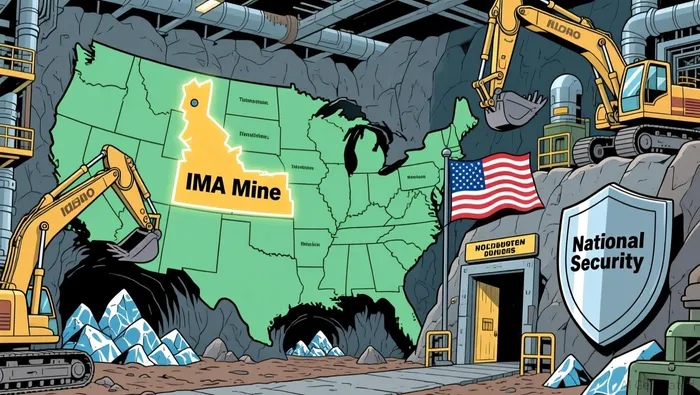 The company's strategic partnerships further amplify its potential. A Letter of Intent with Global Tungsten & Powders (GTP) ensures offtake agreements, while engagement with the U.S. Defense Logistics Agency-which has requested 1,700 tonnes of tungsten ores-highlights the project's national security significance. Additionally, American Tungsten's pursuit of non-dilutive financing from the DoD and Department of Energy underscores its alignment with U.S. policy goals to reduce reliance on adversarial supply chains.
Financial Viability: Capitalizing on Market Dynamics
American Tungsten's financial strategy reflects a blend of private and institutional support. In Q3 2025, the company raised $7 million through a private placement to fund infrastructure rehabilitation, engineering, and permitting for the IMA Mine. This was followed by a significant milestone: a Letter of Interest from the U.S. Export-Import Bank for up to $25.5 million, signaling institutional confidence in the project's viability.
While the company has not yet reported Q3 2025 revenue or EBITDA, industry trends suggest a favorable outlook. The global tungsten market is projected to grow at a CAGR of 7.95%, reaching $11.16 billion by 2032, driven by demand in defense, aerospace, and green technology. In the U.S., the market is expected to generate $431.9 million by 2033, fueled by the DoD's push for domestic production. American Tungsten's IMA Mine, with its high-grade deposits and existing infrastructure, is uniquely positioned to capture this growth.
Geopolitical Context: A Constrained Market with High Stakes
The U.S. tungsten market is characterized by structural tightness, with no active domestic producers since 2015. This has led to a 67% net import reliance, prompting the DoD to impose a 25% tariff on Chinese tungsten imports and fund domestic projects like Golden Metal Resources' Pilot Mountain in Nevada. American Tungsten's efforts align with these initiatives, leveraging U.S. government incentives to diversify supply chains.
China's dominance in tungsten production is expected to persist until the early 2030s, but diversification efforts in Europe and South Korea are gaining momentum. Meanwhile, the U.S. is prioritizing alternative sources, including Canadian and Portuguese projects, to strengthen supply resilience. American Tungsten's IMA Mine, with its strategic location and historical production data, offers a low-risk, high-impact solution to this challenge.
Investment Considerations: Balancing Risk and Reward
Investing in American Tungsten carries inherent risks, including project execution delays and geopolitical shifts. However, the company's alignment with U.S. national security priorities-such as joining the Defense Industrial Base Consortium (DIBC)-mitigates these risks by ensuring access to government contracts and funding. Additionally, the structural tightness in the global tungsten market, driven by sustained military demand and limited greenfield supply, supports long-term price stability.
For investors, the key question is whether American Tungsten can execute its rehabilitation plan within budget and timeline. The company's recent $7 million raise and $25.5 million Ex-Im Bank interest suggest strong capital backing. If successful, the IMA Mine could become a cornerstone of U.S. tungsten self-reliance, generating steady revenue from both industrial and defense sectors.
Conclusion
American Tungsten's strategic partnership with Viking Mines and its focus on the IMA Mine represent a compelling case for investing in U.S.-based critical mineral infrastructure. By addressing supply chain vulnerabilities, leveraging government support, and capitalizing on a constrained market, the company is well-positioned to benefit from the DoD's $1 billion stockpiling initiative and the broader shift toward mineral independence. While execution risks remain, the alignment with U.S. policy and the projected growth of the tungsten market make American Tungsten a high-conviction opportunity in a geopolitically volatile environment.







Comentarios
Aún no hay comentarios