
American Rheinmetall's $31.7M Michigan Expansion: A Strategic Play in the U.S. Defense Industrial Base
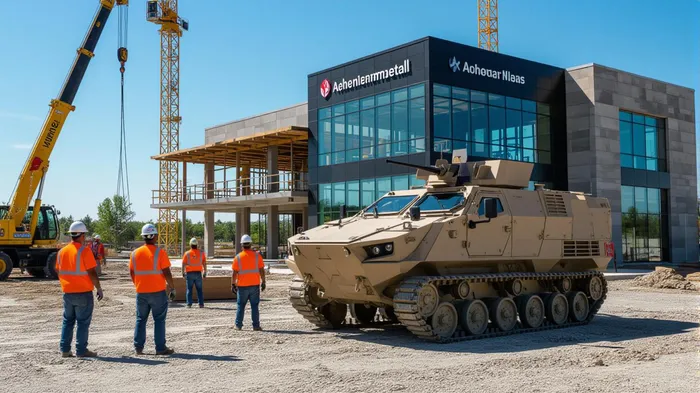
The U.S. defense industrial base is undergoing a transformation driven by geopolitical uncertainty, modernization imperatives, and a surge in federal spending. American Rheinmetall's $31.7 million investment in Michigan, announced in September 2025, represents a pivotal move in this renaissance. By consolidating operations, expanding engineering capabilities, and aligning with critical Department of Defense (DoD) programs, the company is positioning itself at the nexus of U.S. military modernization. For investors, this expansion raises a compelling question: Does American Rheinmetall's strategic bet on Michigan and its parent company's financial strength make it a standout opportunity in a sector poised for long-term growth?
Strategic Alignment with U.S. Military Modernization
American Rheinmetall's Michigan expansion is explicitly tied to the U.S. Army's XM30 Combat Vehicle program, a cornerstone of the service's plan to replace the aging M2 Bradley Infantry Fighting Vehicle. The company's role in this initiative—designing and manufacturing advanced tracked and wheeled systems—highlights its integration into the DoD's modernization pipeline. According to a report by Design & Development Today, the XM30 program seeks to enhance mobility, lethality, and survivability for U.S. ground forces, with American Rheinmetall's engineering upgrades critical to meeting these objectives[1].
The investment also supports the Common Tactical Truck (CTT) program, which aims to standardize heavy-lift logistics vehicles across the military. By consolidating its headquarters in Auburn Hills and expanding facilities in Plymouth, Lapeer, and Lansing, American Rheinmetall is streamlining production for these platforms while reducing supply chain vulnerabilities. This vertical integration strategy, as noted in a Rheinmetall Combat Vehicles article, addresses the DoD's push for dual-sourcing and resilience against single-point failures[2].
Financial Strength and Sector Tailwinds
Rheinmetall AG, the German parent company, has demonstrated robust financial performance, underpinning its ability to fund such expansions. In fiscal 2024, the firm reported a 36% year-on-year surge in consolidated sales to €9.75 billion, with an operating margin of 15.2%—a testament to its pricing power and cost discipline[3]. This financial fortitude is critical for sustaining high-margin defense contracts, particularly as the U.S. DoD's 2025 budget of $849.8 billion fuels demand for advanced systems[4].
The broader defense manufacturing sector is also experiencing tailwinds. A 2025 Deloitte outlook highlights that U.S. defense spending is increasingly directed toward AI-driven technologies, unmanned systems, and space capabilities—areas where Rheinmetall is investing heavily. For instance, the company's partnerships with firms like Anduril Industries to develop autonomous ground systems position it to capitalize on the digital transformation of warfare[5]. Analysts project the global aerospace and defense manufacturing sector to grow at a 2.76% compound annual rate through 2029, reaching $788.35 billion in output[6].
Workforce and Supply Chain Resilience
A key differentiator in American Rheinmetall's expansion is its focus on workforce development. The company has partnered with the Michigan Economic Development Corporation (MEDC) to train machinists and welders, addressing a critical labor shortage in advanced manufacturing[2]. This initiative not only secures the company's production capacity but also aligns with the DoD's emphasis on domestic industrial readiness. By creating 450 jobs in Auburn Hills and expanding opportunities for unskilled labor in its other Michigan facilities, American Rheinmetall is reinforcing the state's role as a hub for defense innovation.
The acquisition of Loc Performance Products, LLC, in August 2024—valued at $950 million—further bolsters supply chain resilience. This strategic purchase grants access to 1.7 million square feet of manufacturing space and a skilled workforce of 1,000 employees, enabling American Rheinmetall to scale production without relying on external vendors[7]. Such moves are essential in an era where geopolitical tensions and trade disruptions threaten traditional supply lines.
Risks and Mitigants
While the investment case is strong, challenges persist. Inflation and supply chain bottlenecks could delay production timelines, as noted in a PwC midyear outlook[8]. Additionally, the defense sector's reliance on government contracts introduces regulatory and budgetary risks. However, American Rheinmetall's diversified order backlog—€63 billion as of Q1 2025—and its focus on high-growth areas like AI and autonomous systems mitigate these concerns[3].
Conclusion: A Compelling Investment Thesis
American Rheinmetall's Michigan expansion is more than a capital infusion; it is a strategic alignment with the U.S. military's modernization priorities and the defense sector's long-term growth trajectory. By leveraging its parent company's financial strength, investing in cutting-edge technologies, and addressing workforce and supply chain challenges, the firm is well-positioned to capture a significant share of the $30 billion U.S. defense market[9]. For investors, this represents a rare confluence of macroeconomic tailwinds, operational discipline, and geopolitical necessity—a recipe for sustained shareholder value creation.







Comentarios
Aún no hay comentarios