
American Farmers Brace for Tariff Storm
Generado por agente de IAWesley Park
lunes, 3 de febrero de 2025, 5:55 am ET2 min de lectura
American farmers are bracing for a perfect storm as President Trump's tariff war with Mexico, Canada, and China threatens to decimate their export revenues and drive up production costs. The agricultural sector, already grappling with inflation and high supply costs, now faces an uncertain future as retaliatory measures from these countries loom large.
The proposed tariffs on Mexico, Canada, and China will significantly impact the export revenues of U.S. farmers, particularly those specializing in soybeans, corn, and wheat. A study conducted by World Agricultural Economic and Environmental Services found that if China cancels its waiver and reverts to tariffs already on the books, U.S. soybean exports to China would fall between 14 million and 16 million metric tons annually, an average decline of 51.8% from baseline levels expected for those years. U.S. corn exports to China would fall about 2.2 million metric tons annually, an average decline of 84.3% from the baseline expectation. This would result in a combined total loss of 2.3 million to 3.7 million metric tons of soybean plus corn exports annually, while Brazil gains an average of 4.6 million metric tons of soybean plus corn exports annually.
Retaliatory measures by Mexico, Canada, and China could lead to a decrease in U.S. agricultural exports to these countries, which could in turn lead to a decrease in domestic prices for those commodities. However, the long-term impact on U.S. farmers and the agricultural industry could be significant, with potential changes in global supply structures and increased competition from other countries.
The increased cost of imported fertilizer, due to tariffs on Canadian potash, will significantly impact U.S. farmers' production costs and profitability. Over 80% of the United States' supply of a key fertilizer ingredient, potash, comes from Canada. Tariffs that increase fertilizer prices threaten to deliver another blow to the finances of farm families already grappling with inflation and high supply costs.
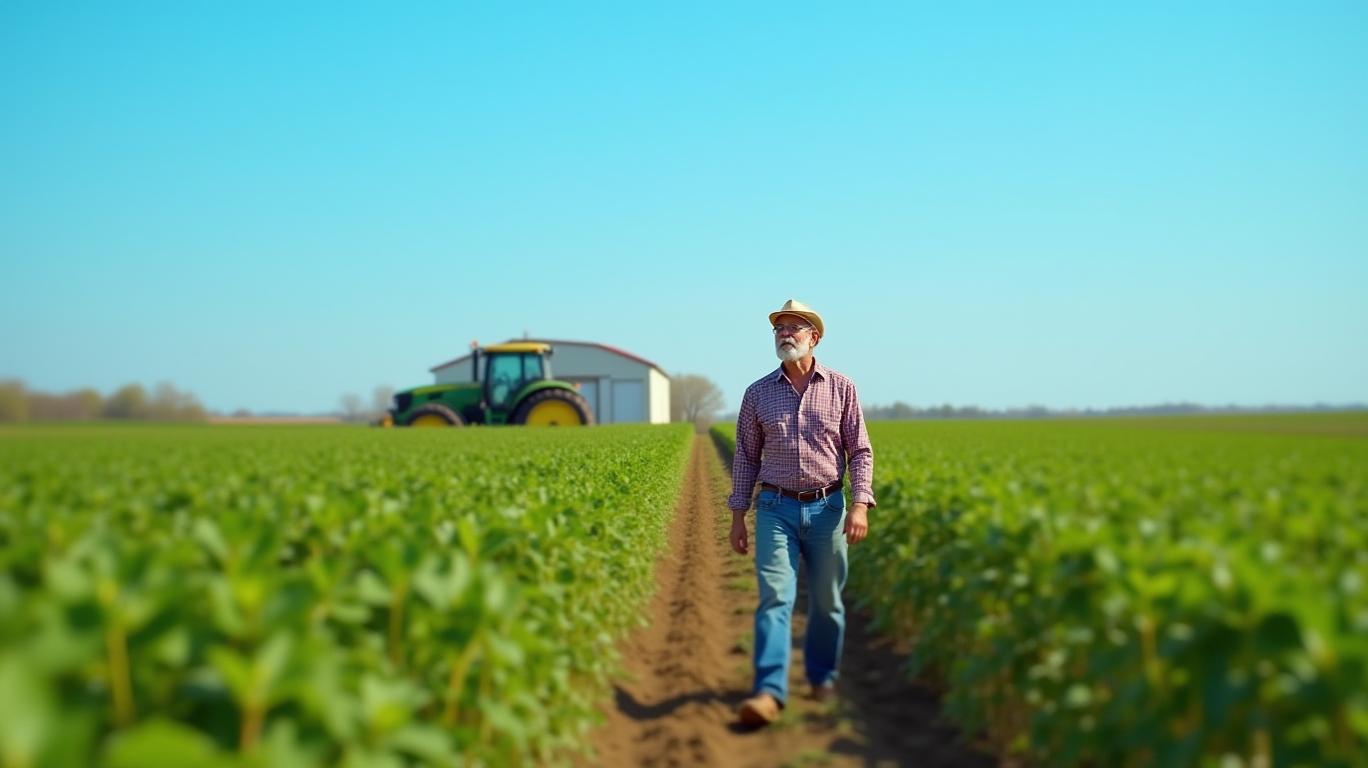
To mitigate the impact of the tariffs on farmers, it is crucial for the U.S. government to work with farmers and rural communities to develop policies that support the agricultural sector and help farmers weather the storm of increased input costs. This may include providing financial assistance to farmers, promoting alternative sources of fertilizer, and encouraging greater efficiency in fertilizer use.
In conclusion, American farmers are facing a perfect storm as President Trump's tariff war with Mexico, Canada, and China threatens to decimate their export revenues and drive up production costs. The agricultural sector, already grappling with inflation and high supply costs, now faces an uncertain future as retaliatory measures from these countries loom large. It is crucial for the U.S. government to work with farmers and rural communities to develop policies that support the agricultural sector and help farmers weather the storm of increased input costs.



Divulgación editorial y transparencia de la IA: Ainvest News utiliza tecnología avanzada de Modelos de Lenguaje Largo (LLM) para sintetizar y analizar datos de mercado en tiempo real. Para garantizar los más altos estándares de integridad, cada artículo se somete a un riguroso proceso de verificación con participación humana.
Mientras la IA asiste en el procesamiento de datos y la redacción inicial, un miembro editorial profesional de Ainvest revisa, verifica y aprueba de forma independiente todo el contenido para garantizar su precisión y cumplimiento con los estándares editoriales de Ainvest Fintech Inc. Esta supervisión humana está diseñada para mitigar las alucinaciones de la IA y garantizar el contexto financiero.
Advertencia sobre inversiones: Este contenido se proporciona únicamente con fines informativos y no constituye asesoramiento profesional de inversión, legal o financiero. Los mercados conllevan riesgos inherentes. Se recomienda a los usuarios que realicen una investigación independiente o consulten a un asesor financiero certificado antes de tomar cualquier decisión. Ainvest Fintech Inc. se exime de toda responsabilidad por las acciones tomadas con base en esta información. ¿Encontró un error? Reportar un problema




Comentarios
Aún no hay comentarios