
American's Centennial BBQ: A Low-Risk Bet on Premium Branding
This isn't a new business model. It's a tactical, low-cost marketing event tied directly to American's 100th anniversary. The airline is using its centennial celebration as a platform to highlight regional Texas flavors with a specific, high-visibility brand play.
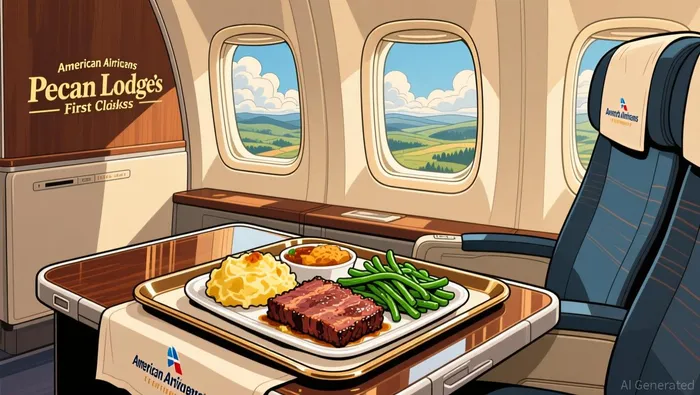
The offering is precise and limited. Starting in February, Pecan Lodge's famous brisket and sausage will be served in First Class on select flights from Dallas to New York. The menu is a curated platter of the restaurant's award-winning smoked meats and classic Southern sides, available for pre-order. This exclusivity is key: the partnership is exclusive to first-class passengers and available for pre-order online and through the American Airlines app. The footprint is narrow, focused on the DFW to NYC corridor.
The connection to the 2026 centennial is explicit. As American's Senior Vice President of Customer Experience noted, the airline is looking forward to delighting our customers in new ways that honor unique regional tastes, beginning right here in our home state. This is about celebrating the legacy of a Texas-born carrier by showcasing a beloved local institution. It's a subtle, branded touchpoint that aligns with the broader centennial theme of highlighting milestones and heritage.
Operationally, the setup minimizes cost and risk. By limiting the service to First Class, American avoids a major operational overhaul or significant food cost exposure across its entire fleet. The pre-order requirement ensures efficient inventory management and reduces waste. This is a targeted brand enhancement for a premium segment, not a fundamental shift in the financial model. The catalyst is clear: a low-cost, high-visibility event to boost brand affinity during a major corporate milestone.
Strategic Rationale: Responding to Competitive Pressure
The catalyst is a direct response to two converging competitive pressures. First, JetBlue has set a clear benchmark for in-flight quality. In the 2025 USA TODAY 10BEST Readers' Choice Awards, the airline was voted #1 for Best In-Flight Food. Its appeal lies in recognizable brands, better ingredients, and thoughtful meal options, proving that food is now a decisive factor in passenger choice. For American, a Texas-born carrier, this is a specific vulnerability on its core domestic routes.
Second, Delta's recent move signals a potential shift in the industry's pricing model. Starting in March, Delta began offering free food in the main cabin on a dozen transcontinental routes, including key markets like JFK to LAX. This strategic test, which Delta says boosted customer satisfaction, challenges the long-standing "unbundled" model where meals are a paid ancillary. It raises the stakes, suggesting competitors may soon match or exceed this offer, forcing a re-evaluation of ancillary revenue streams.
American's centennial BBQ play directly targets this pressure point. By launching the Pecan Lodge partnership on its busiest transcontinental routes-DFW to NYC and LaGuardia-the airline is attempting to enhance premium cabin differentiation where competition is fiercest. This isn't a broad, costly reversal of the unbundling model. Instead, it's a high-visibility, low-cost brand enhancement for First Class, aiming to elevate the experience on routes where Delta is testing free meals and JetBlue is winning awards. The goal is clear: use a celebrated local brand to create a memorable, premium touchpoint that justifies the First Class premium and counters the narrative that American's in-flight experience lags.
The financial mechanics here are a classic low-risk, high-visibility bet. The cost of sourcing and preparing the Pecan Lodge platter is likely minimal relative to the First Class ticket price. American is leveraging an exclusive partnership for a limited menu on select, high-demand routes. The pre-order model ensures efficient inventory, minimizing waste and operational friction. For a premium cabin segment that already pays a significant premium, this represents a marginal cost to enhance the experience.
The primary benefit is clear: reinforcing the premium brand image for a high-spending customer. In a market where JetBlue has been voted #1 for Best In-Flight Food, American is using a celebrated local brand to create a memorable, differentiated touchpoint. This isn't about replacing a core revenue stream; it's about justifying the First Class price premium by elevating the perceived value of the experience on its busiest transcontinental routes.
The key competitive risk is that this tactical move could be quickly matched or exceeded. Delta's recent test of free food in the main cabin on a dozen transcontinental routes signals a potential industry shift. If United or other carriers follow suit with their own branded premium offerings, American's competitive moat could erode without a corresponding price increase. The centennial BBQ is a clever, low-cost brand play, but it doesn't change the fundamental economics of ancillary revenue. In a race to the top on in-flight amenities, a one-off partnership may not be enough to maintain a lasting advantage.
Catalysts and What to Watch
The centennial BBQ is a low-risk brand play, but its true impact will be revealed by a few near-term signals. The first and most critical test is whether this remains a one-off stunt or the start of a broader strategic shift. Watch for any follow-on announcements that expand the offering beyond First Class on the DFW-NYC corridor. A move to include main cabin passengers, other domestic routes, or even a permanent menu item would signal a fundamental change in American's approach to in-flight amenities. That would directly contradict the thesis of a low-cost, limited-time event and raise the stakes for ancillary revenue.
The competitive test is already underway. Delta's recent move to offer free food in the main cabin on a dozen transcontinental routes is a direct benchmark. The key question is whether American's premium food partnership is enough to counter that pressure. Monitor if other major carriers, particularly Delta and United, match or exceed this branded premium offering. If they do, American's competitive moat could erode quickly, turning a clever centennial touchpoint into a costly necessity. The durability of the brand play hinges on whether competitors treat it as a novelty or a new standard.
Finally, track the brand visibility and reaction. The centennial livery and anniversary branding will be visible throughout 2026, ensuring the centennial is present across daily operations throughout the network. Gauge passenger and media reaction to this and other centennial initiatives. Positive buzz around the Pecan Lodge partnership would validate the brand-building thesis. Negative or indifferent feedback, however, would suggest the investment in a celebrated local brand is not translating to customer loyalty or a meaningful premium. The real catalyst here is not the brisket, but the market's verdict on American's centennial branding strategy.





Comentarios
Aún no hay comentarios