
American Battery Technology's Commercial Transition: A Strategic Bet on Lithium Demand?
Strategic Positioning: From Niche to Mainstream
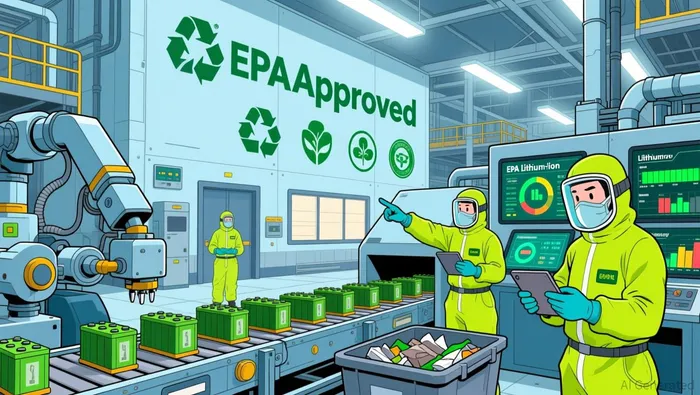
According to reports, . This project, described as the largest battery cleanup in EPA history, not only highlights ABAT's technical capabilities but also its unique authorization to handle CERCLA-classified waste-a critical differentiator in the Western U.S. market. The company's ability to secure such high-profile contracts aligns with broader U.S. policy goals to reduce reliance on imported materials and build a domestic circular economy for critical minerals.
Technologically, ABATABAT-- has developed that recover high-purity lithium, cobalt, nickel, and other metals recognized with the 2025 "Recycling Technology Solution of the Year" award. These innovations, recognized with the 2025 "Recycling Technology Solution of the Year" award, position ABAT to compete with traditional smelting and shredding methods, which are less efficient and environmentally damaging. Furthermore, partnerships with industry leaders like BASF and the launch of the signal a commitment to scaling sustainable operations.
Financial Performance: Growth Amid Challenges
ABAT's financial trajectory reflects the challenges of transitioning from a development-stage company to a commercial entity. In Q1 2025, the company , . By Q3 2025, compared to the previous quarter, though highlight the path to profitability.
Despite a setback-the U.S. . for a second recycling facility and . , bolstered by increased government funding.
Market Share and Competitive Dynamics
While ABAT's exact market share remains undisclosed, its role in the EPA's largest cleanup operation and its expansion into direct-to-consumer recycling via Call2Recycle suggest a rising profile. The U.S. lithium-ion recycling market, , . ABAT's ability to process complex, damaged batteries .
However, the sector is attracting heavyweights like Redwood Materials and Li-Cycle, which have larger capital bases and established supply chains. ABAT's reliance on government grants and its current lack of profitability pose risks, particularly if regulatory support wanes or lithium prices fluctuate.
Investment Thesis: Balancing Risks and Rewards
ABAT's commercial transition hinges on three factors: scaling its recycling capacity, reducing costs, and securing long-term partnerships. and , .
For investors, ABAT represents a high-risk, high-reward bet. Its alignment with U.S. . Yet, the path to profitability remains uncertain, .
Conclusion
. , , technological differentiation, . For investors willing to tolerate volatility, .





Comentarios
Aún no hay comentarios