
American Airlines Plane Collides with Helicopter: Financial Implications and Safety Concerns
Generado por agente de IAHarrison Brooks
jueves, 30 de enero de 2025, 3:42 am ET2 min de lectura
AAL--
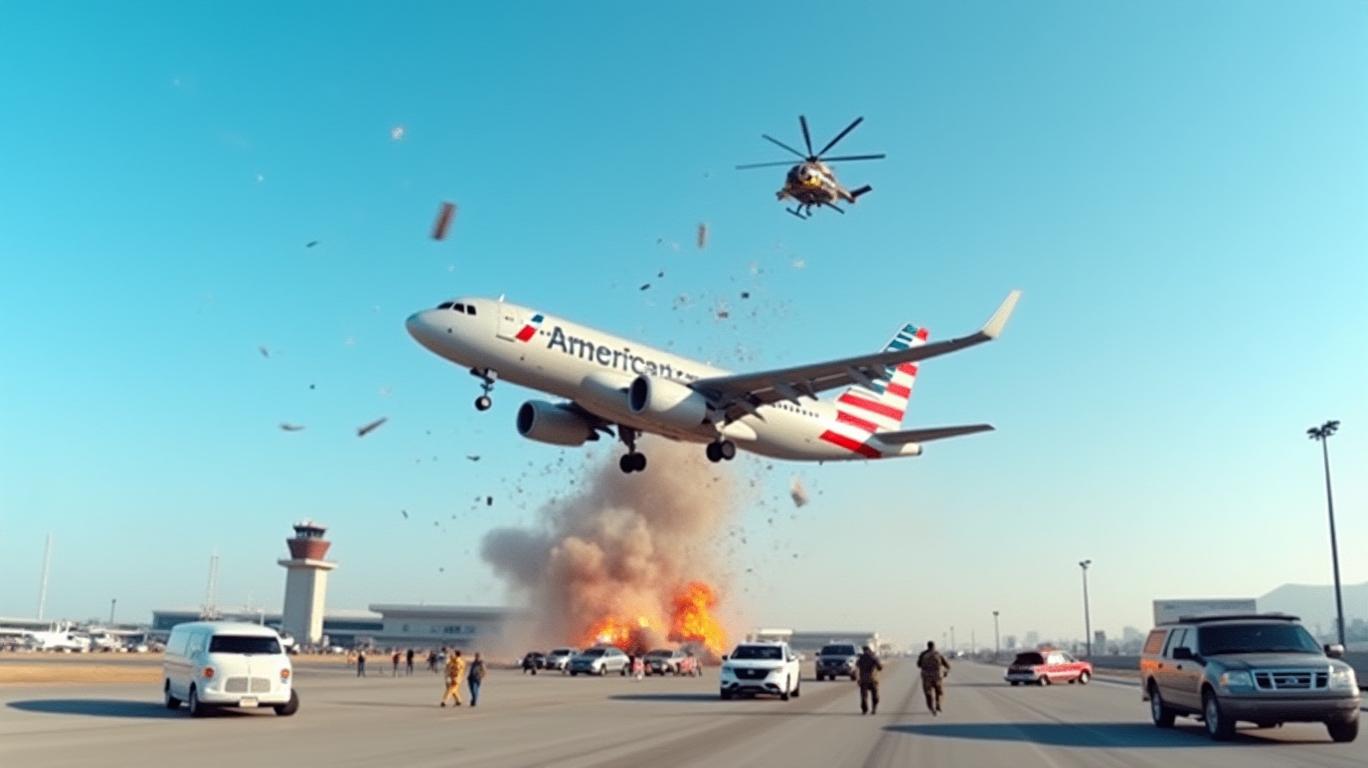
On Wednesday night, an American Airlines regional jet and a military helicopter collided midair near Ronald Reagan Washington National Airport (DCA), according to the Federal Aviation Administration (FAA). The incident, which occurred around 9 p.m. local time, involved a PSA Airlines Bombardier CRJ700 regional jet on approach to Runway 33 at DCA. The plane, operated by American Airlines, had taken off from Wichita, Kansas, and was carrying 60 passengers and four crew members.
The collision has raised significant concerns about air travel safety and has the potential to impact the financial landscape of the aviation industry. In this article, we will explore the potential long-term financial implications for American Airlines, the impact on public perception of air travel safety, and the role of regulatory changes in enhancing air traffic control and safety measures.
1. Potential Long-term Financial Implications for American Airlines
The midair collision could have several long-term financial implications for American Airlines. First, the company may face significant liability claims from the families of victims, survivors, and potentially even the military. These claims could result in substantial financial payouts, which could impact the company's bottom line and potentially lead to a decrease in stock price.
Second, the collision could damage the airline's reputation and erode customer confidence, leading to a decrease in bookings and revenue. This could result in a lower stock price as investors anticipate reduced earnings. American Airlines' stock price has historically been sensitive to changes in customer sentiment and bookings, as seen during the COVID-19 pandemic.
Third, the cost of insurance premiums for the company may increase following the accident, as insurers may view American Airlines as a higher risk. Additionally, the company may face higher operational costs due to increased safety measures and regulatory scrutiny.

2. Impact on Public Perception of Air Travel Safety and Consumer Confidence
The investigation into the cause of the collision will significantly impact public perception of air travel safety and consumer confidence in American Airlines and the broader aviation industry. If the investigation finds that human error or system failures contributed to the collision, it will be essential for the airlines and regulatory bodies to address these issues transparently to rebuild public trust in the safety of air travel.
If the investigation finds that American Airlines or its subsidiary, PSA Airlines, was at fault, it could lead to a loss of consumer confidence in the airline. However, if the investigation exonerates the airline, it can use this as an opportunity to reassure the public about its commitment to safety. The aviation industry as a whole may face a temporary dip in consumer confidence due to the accident, but if the investigation reveals that the cause was unique to this incident, the industry can work together to reassure the public about the overall safety of air travel.
3. Regulatory Changes and Enhancing Air Traffic Control and Safety Measures
Regulatory changes can play a significant role in enhancing air traffic control and safety measures, which in turn can influence the aviation industry's financial landscape. Following the midair collision, regulatory changes could focus on improving safety measures, such as:
* Mandatory use of advanced collision avoidance systems (TCAS) for all aircraft.
* Enhanced training for air traffic controllers and pilots to better manage airspace congestion and potential hazards.
* Stricter enforcement of separation standards and procedures.
These changes could help prevent future midair collisions, improving safety and passenger confidence, which could positively impact the industry's financial landscape. However, these changes may also increase operational costs in the short term, as airlines invest in new technology, train staff, or modify operations to comply with new regulations.
In conclusion, the midair collision between an American Airlines regional jet and a military helicopter has the potential to have significant long-term financial implications for American Airlines, impact public perception of air travel safety, and influence the aviation industry's financial landscape through regulatory changes. As the investigation into the cause of the collision continues, it is crucial for the industry to address any identified issues transparently and work together to enhance safety measures and rebuild consumer confidence in air travel.
On Wednesday night, an American Airlines regional jet and a military helicopter collided midair near Ronald Reagan Washington National Airport (DCA), according to the Federal Aviation Administration (FAA). The incident, which occurred around 9 p.m. local time, involved a PSA Airlines Bombardier CRJ700 regional jet on approach to Runway 33 at DCA. The plane, operated by American Airlines, had taken off from Wichita, Kansas, and was carrying 60 passengers and four crew members.
The collision has raised significant concerns about air travel safety and has the potential to impact the financial landscape of the aviation industry. In this article, we will explore the potential long-term financial implications for American Airlines, the impact on public perception of air travel safety, and the role of regulatory changes in enhancing air traffic control and safety measures.
1. Potential Long-term Financial Implications for American Airlines
The midair collision could have several long-term financial implications for American Airlines. First, the company may face significant liability claims from the families of victims, survivors, and potentially even the military. These claims could result in substantial financial payouts, which could impact the company's bottom line and potentially lead to a decrease in stock price.
Second, the collision could damage the airline's reputation and erode customer confidence, leading to a decrease in bookings and revenue. This could result in a lower stock price as investors anticipate reduced earnings. American Airlines' stock price has historically been sensitive to changes in customer sentiment and bookings, as seen during the COVID-19 pandemic.
Third, the cost of insurance premiums for the company may increase following the accident, as insurers may view American Airlines as a higher risk. Additionally, the company may face higher operational costs due to increased safety measures and regulatory scrutiny.
2. Impact on Public Perception of Air Travel Safety and Consumer Confidence
The investigation into the cause of the collision will significantly impact public perception of air travel safety and consumer confidence in American Airlines and the broader aviation industry. If the investigation finds that human error or system failures contributed to the collision, it will be essential for the airlines and regulatory bodies to address these issues transparently to rebuild public trust in the safety of air travel.
If the investigation finds that American Airlines or its subsidiary, PSA Airlines, was at fault, it could lead to a loss of consumer confidence in the airline. However, if the investigation exonerates the airline, it can use this as an opportunity to reassure the public about its commitment to safety. The aviation industry as a whole may face a temporary dip in consumer confidence due to the accident, but if the investigation reveals that the cause was unique to this incident, the industry can work together to reassure the public about the overall safety of air travel.
3. Regulatory Changes and Enhancing Air Traffic Control and Safety Measures
Regulatory changes can play a significant role in enhancing air traffic control and safety measures, which in turn can influence the aviation industry's financial landscape. Following the midair collision, regulatory changes could focus on improving safety measures, such as:
* Mandatory use of advanced collision avoidance systems (TCAS) for all aircraft.
* Enhanced training for air traffic controllers and pilots to better manage airspace congestion and potential hazards.
* Stricter enforcement of separation standards and procedures.
These changes could help prevent future midair collisions, improving safety and passenger confidence, which could positively impact the industry's financial landscape. However, these changes may also increase operational costs in the short term, as airlines invest in new technology, train staff, or modify operations to comply with new regulations.
In conclusion, the midair collision between an American Airlines regional jet and a military helicopter has the potential to have significant long-term financial implications for American Airlines, impact public perception of air travel safety, and influence the aviation industry's financial landscape through regulatory changes. As the investigation into the cause of the collision continues, it is crucial for the industry to address any identified issues transparently and work together to enhance safety measures and rebuild consumer confidence in air travel.

Divulgación editorial y transparencia de la IA: Ainvest News utiliza tecnología avanzada de Modelos de Lenguaje Largo (LLM) para sintetizar y analizar datos de mercado en tiempo real. Para garantizar los más altos estándares de integridad, cada artículo se somete a un riguroso proceso de verificación con participación humana.
Mientras la IA asiste en el procesamiento de datos y la redacción inicial, un miembro editorial profesional de Ainvest revisa, verifica y aprueba de forma independiente todo el contenido para garantizar su precisión y cumplimiento con los estándares editoriales de Ainvest Fintech Inc. Esta supervisión humana está diseñada para mitigar las alucinaciones de la IA y garantizar el contexto financiero.
Advertencia sobre inversiones: Este contenido se proporciona únicamente con fines informativos y no constituye asesoramiento profesional de inversión, legal o financiero. Los mercados conllevan riesgos inherentes. Se recomienda a los usuarios que realicen una investigación independiente o consulten a un asesor financiero certificado antes de tomar cualquier decisión. Ainvest Fintech Inc. se exime de toda responsabilidad por las acciones tomadas con base en esta información. ¿Encontró un error? Reportar un problema


SOBRE NOSOTROS
Nuestra historiaAutores de noticiasBase de conocimientosPolítica de privacidadTérmino de usoDescargo de responsabilidad de corretaje de tercerosTérminos de uso de AIMEDivulgaciones de riesgos de AInvest AICarrerasCONTÁCTENOS
Email: support@ainvest.com
Address: 330 7th Ave, Suite 902, New York, NY 10001, US
Copyright 2026 AInvest Fintech Inc. All rights reserved.


Comentarios
Aún no hay comentarios