
Ameresco's Solar Project with Chandler: A Model for Municipal Energy Resilience and Profitability
A Blueprint for Energy Independence
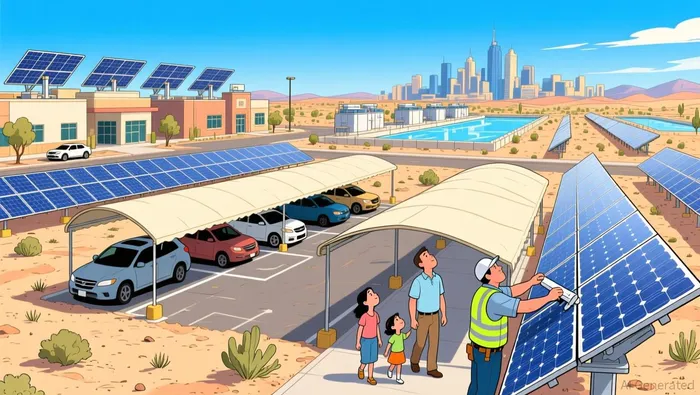
Chandler's collaboration with AmerescoAMRC-- leverages a mix of covered parking canopies, rooftop systems, and ground-mount arrays tailored to the operational needs of facilities like City Hall, fire stations, and the Chandler Nature Center according to Ameresco's website. The project's design not only maximizes energy output but also integrates seamlessly with municipal infrastructure, avoiding disruptions to daily operations. By generating its own power, Chandler locks in predictable energy costs, shielding itself from the erratic price swings of fossil fuel markets. According to a report by Ameresco, this initiative reduces the city's reliance on external energy suppliers by over 60%, a critical advantage in a market where utility rates have risen by double digits in recent years.
Financial Structures That Weather Volatility
The project's financial architecture further enhances its resilience. Partially funded by the Federal Investment Tax Credit for Renewable Energy, the initiative reduces upfront capital expenditures, making it accessible for cash-conscious municipalities. Additionally, the 20-year Master Energy Services Agreement ensures long-term cost efficiency, with cumulative savings projected to exceed $42.4 million over the contract period. While specific clauses like fixed pricing or escalator terms remain undisclosed, the inherent stability of solar generation-unaffected by natural gas or oil price shocks-acts as an implicit hedge against inflation.
Long-Term Profitability and Scalability
Ameresco's broader financial strategy also bolsters investor confidence. The company recently secured a $78 million financing facility with a fixed interest rate and a 2045 maturity date, ensuring stable funding for its renewable energy projects. This long-term debt structure aligns with the 35-year operational lifespan of the solar panels, extending the project's profitability window. For Chandler, the partnership represents more than cost savings-it's a strategic investment in energy independence, with the city retaining ownership of the systems and their associated benefits according to the press release.
Conclusion: A Model for the Future
Ameresco's Chandler project exemplifies how municipal solar partnerships can navigate high-inflation environments. By combining tax incentives, long-term contracts, and self-generated energy, the initiative creates a buffer against market volatility while delivering measurable environmental and financial returns. As energy prices remain unpredictable, such models will likely attract greater investment, offering a blueprint for cities seeking resilience without sacrificing fiscal responsibility.







Comentarios
Aún no hay comentarios