
AMD Shares Climb Following CES 2026 Announcements: AI Chips and Rack-Scale Systems
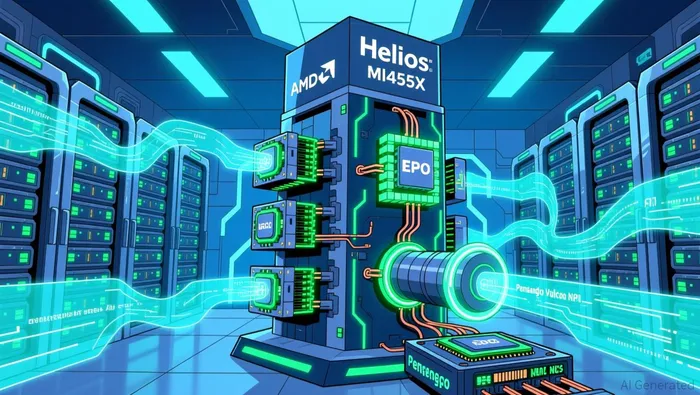
AMD unveiled its 'Helios' rack-scale platform at CES 2026, targeting yotta-scale AI infrastructure .
The company previewed its next-generation MI500 Series GPUs, over previous models.
AMD expanded its AI PC portfolio with the Ryzen AI 400 Series and .
Despite competitive pressures, some analysts see AMDAMD-- as undervalued with potential upside based on AI growth.
Advanced Micro Devices (AMD) made significant waves at CES 2026 with a series of AI-focused announcements that could reshape its competitive position. The chipmaker unveiled new data center and PC technologies designed to accelerate AI adoption across industries. These innovations highlight AMD's ambition to capture a larger share of the booming AI market. The stock edged higher following the updates as investors assessed the long-term growth potential.
How Is AMD Expanding AI Infrastructure with Helios?
AMD's Helios rack-scale platform represents a leap in AI infrastructure design. The system integrates MI455X accelerators, , and Pensando Vulcano NICs to per rack. This enables efficient training of trillion-parameter AI models and supports AMD's vision for open, modular AI infrastructure. The platform aims to address the massive demand for yotta-scale computing in AI workloads.
Helios is part of AMD's broader strategy to make high-performance AI more accessible. By combining hardware with the ROCm software ecosystem, AMD seeks to offer a scalable solution for data centers and edge deployments. The company also introduced the MI440X GPU, a compact eight-GPU solution for enterprise AI workloads. These developments could help AMD capture more market share in the rapidly growing AI infrastructure space.
What Does AMD's MI500 Series Preview Mean for AI Performance?
AMD teased its next-generation MI500 Series GPUs, targeting unprecedented AI performance gains. The new chips are expected to in AI performance compared to the MI300X. This could significantly boost AMD's competitiveness in high-end AI training and inference markets, where Nvidia has held a strong lead. The performance leap addresses the escalating computational demands of large language models and generative AI applications.
The MI500 Series is part of AMD's roadmap to support yotta-scale AI computing needs. While the chips are still in preview, their potential performance leap could disrupt the current AI accelerator landscape. AMD's focus on open platforms and collaboration with partners might accelerate adoption of the new GPUs upon their release. The company also highlighted growing OEM adoption of its Ryzen AI processors across consumer, commercial, and gaming segments.
What Are the Risks and Opportunities for AMD in the AI Market?
AMD faces both significant opportunities and challenges in the AI market. On one hand, the company's expanding AI portfolio and potential undervaluation present upside for investors. , . That gap could narrow as new products like Helios and MI500 gain traction.
On the flip side, AMD must contend with Nvidia's dominance in high-end AI GPUs and potential margin pressures from export controls. These factors could limit AMD's near-term growth despite its technological advancements. To build long-term momentum, AMD announced and is collaborating with U.S. government initiatives like the . These moves could foster broader AI adoption and create new market opportunities.
The company's progress in AI PCs and embedded systems provides additional growth vectors beyond data centers. AMD is showcasing AI applications across healthcare diagnostics, autonomous vehicles, and space exploration at CES. Still, execution risks remain as AMD works to convert its technology pipeline into market share gains against entrenched competitors. The company's ability to scale production and secure design wins will be critical for sustained momentum.





Comentarios
Aún no hay comentarios