
AMD and the Circular AI Investment Bubble: Strategic Valuation in a High-Stakes Semiconductor Sector
The AI semiconductor sector in 2025 is defined by a paradox: unprecedented growth in demand for AI hardware coexists with a valuation model that critics argue resembles a speculative bubble. At the center of this dynamic is Advanced Micro DevicesAMD-- (AMD), whose strategic positioning in the AI-driven chip market has been reshaped by a $100 billion partnership with OpenAI. This deal, which involves supplying 6 gigawatts of Instinct MI450 GPUs and granting OpenAI a warrant for up to 160 million AMDAMD-- shares, exemplifies the circular investment patterns now defining the industry, according to AMD's press release.
The Circular AI Investment Bubble: A Structural Challenge
The term "Circular AI Investment Bubble" refers to a self-reinforcing cycle where AI firms secure funding from chipmakers, then use those funds to purchase their products, inflating valuations and masking underlying economic fragility, as outlined in a Cresset Capital report. For example, OpenAI's $100 billion investment from AMD includes a stock warrant that could give it a 10% stake in the semiconductor company, effectively stabilizing AMD's share price while covering the cost of its chips, according to FourWeekMBA. Such arrangements raise concerns about artificial demand and the sustainability of current spending levels, particularly as enterprise AI adoption lags expectations, Semafor reported in its coverage of circular investment deals by major AI companies (Semafor).
According to a report by Cresset Capital, the S&P 500's forward price-earnings ratio is at its highest since early 2021, with the top 10 companies accounting for over 40% of the index. The Outpost has also chronicled how AI firms like OpenAI and Thinking Machines Labs have raised capital at valuations that require near-perfect execution to justify, while most organizations report no tangible return on their AI investments. This disconnect between hype and reality underscores the risks of a market driven by circular financing rather than proven profitability.
AMD's Strategic Positioning: Growth, Innovation, and Risks
AMD's recent performance highlights its aggressive bid to challenge NVIDIA's dominance in the AI chip market. In FY2024, the company reported $25.79 billion in revenue-a 13.7% year-over-year increase-and a net income of $1.64 billion, up 92.2%, per a Monexa analysis. Its data center segment, which includes AI hardware, grew by 69% year-over-year in Q4 2024, though this fell short of Wall Street expectations, causing a 6% stock price drop, as Forbes reported.
The OpenAI partnership, however, has transformed AMD's trajectory. By securing a multi-generational deal to supply AI infrastructure, AMD is not only capturing a slice of the $827 billion AI semiconductor market projected for 2030, according to FinancialContent, but also leveraging OpenAI's financial commitment to bolster its valuation. Morningstar analysts have raised AMD's fair value estimate to $210 from $155, citing the deal as a validation of its AI roadmap.
Yet AMD's competitive position remains precarious. NVIDIA, with its CUDA software ecosystem and 92% data center GPU market share, continues to outpace AMD in both performance and adoption, as The Outpost has noted. While AMD's MI350 and MI450 chips offer cost advantages, they are estimated to deliver only 80% of the performance of NVIDIA's offerings. This gap raises questions about AMD's ability to sustain its valuation premium, particularly as Wall Street analysts project NVIDIA to grow revenue by 52% in FY2026 versus AMD's 24%.
Valuation Sustainability: A Double-Edged Sword
AMD's current valuation reflects high expectations. Its forward P/E ratio of 44.18 and trailing P/E of 128.52 are among the highest in the sector, according to StockAnalysis. Analysts like UBS's Timothy Arcuri argue that the OpenAI deal could justify these multiples if AMD's stock price rises to $600, making OpenAI's potential stake worth $100 billion, as reported by TechCrunch. However, this scenario hinges on the assumption that AI-driven productivity gains will materialize as promised-a bet that critics warn could backfire.
Goldman Sachs acknowledges that while a full-blown bubble has not yet formed, trends like rising debt issuance and high public offering premiums suggest the potential for one, Investopedia noted. For AMD, the risk lies in its reliance on circular investments to sustain growth. If OpenAI's financial pressures-such as its $2.5 billion net loss in H1 2025-impede its ability to fulfill commitments, AMD's revenue projections could face downward revisions, according to The New York Times.
Conclusion: Navigating the AI Supercycle
AMD's role in the Circular AI Investment Bubble is emblematic of the broader semiconductor sector's transformation. Its strategic partnerships, R&D investments, and financial flexibility position it as a credible challenger to NVIDIA. However, the sustainability of its valuation depends on the resolution of two critical questions: Will AI deliver the productivity gains needed to justify current spending, and can AMD close the performance gap with NVIDIA?
For investors, the key takeaway is that AMD's success is inextricably tied to the health of the AI ecosystem. While the OpenAI deal provides a short-term tailwind, long-term value creation will require navigating geopolitical headwinds, supply chain constraints, and the inherent risks of a market built on circular financing. As the AI supercycle accelerates, AMD's ability to balance innovation with financial prudence will determine whether it emerges as a leader-or becomes a casualty of the next bubble.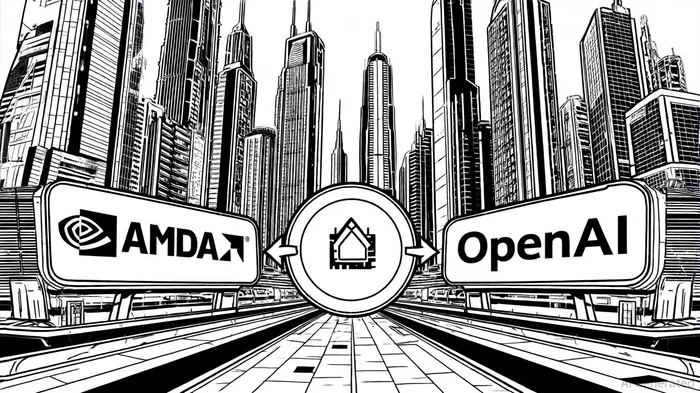





Comentarios
Aún no hay comentarios