
Amcor's Strategic Innovation and Market Position in the Beauty Packaging Sector: A Pathway to Long-Term Growth
Sustainability as a Competitive Edge
Amcor's sustainability initiatives have become a cornerstone of its strategy, aligning with global regulatory pressures and consumer preferences. By fiscal year 2025, the company achieved 96% recycle-ready flexible packaging across its portfolio, a milestone that underscores its commitment to circular economy principles. Additionally, Amcor met its 2025 target of using 10% post-consumer recycled (PCR) plastic, reducing reliance on virgin materials. These efforts are complemented by a 20% reduction in greenhouse gas emissions over four years, demonstrating operational rigor.
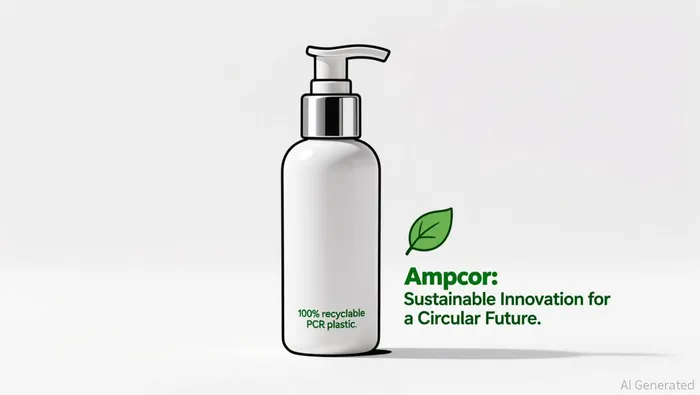
The beauty sector, in particular, is prioritizing eco-friendly packaging, with rigid plastic and recyclable materials gaining traction due to their affordability and versatility. Amcor's AmPrima portfolio of recyclable materials and its focus on PCR integration position it to capitalize on this trend. For instance, the company's recent launch of a new pump actuator head at industry exhibitions highlights its ability to innovate while maintaining sustainability standards.
Customization Capabilities: Meeting the Demand for Personalization
Beauty brands are increasingly seeking packaging that differentiates their products in a crowded market. Amcor's expansion of advanced printing, lamination, and converting technologies enables it to deliver high-performance, customized solutions. For example, the company's 2025 annual packaging design reveal showcased beverage containers that reflect contemporary trends, such as minimalist aesthetics and interactive user experiences. While specific beauty brand case studies are limited in the research, Amcor's participation in exhibitions and its emphasis on "consumer insights driving design" suggest a strong alignment with client needs.
The company's ability to balance sustainability with customization is a key differentiator. By integrating AI-driven design tools and rapid prototyping, Amcor can reduce time-to-market for new packaging concepts, a critical advantage in the fast-moving beauty sector. This capability is further reinforced by its North American joint venture in drinks packaging, which signals a strategic pivot toward scalable, cross-sector solutions.
Market Positioning and Financial Resilience
Despite the absence of explicit market share data for 2025, Amcor's financial performance and strategic partnerships highlight its competitive positioning. In Q1 2026, the company reported Non-GAAP EPS of $0.19, exceeding expectations, while revenue surged 71.6% year-over-year to $5.75 billion. This growth, coupled with reaffirmed fiscal 2026 guidance (adjusted EPS of $0.80–$0.83), reflects robust operational execution.
The beauty packaging market is highly fragmented, with key players including Berry Global, Albea, and TriMas. However, Amcor's dual focus on sustainability and customization creates a moat that competitors struggle to replicate. For instance, its 2025 sustainability report emphasizes a "circular society" vision, resonating with brands aiming to meet ESG (Environmental, Social, and Governance) targets. This alignment with global trends could drive market share gains, particularly in North America and Asia-Pacific, where regulatory and consumer demand for sustainable packaging is intensifying.
Risks and Opportunities
While Amcor's trajectory is promising, challenges remain. The lack of detailed market share data for the beauty sector suggests that its dominance in this niche is not yet quantified. Additionally, raw material price volatility and supply chain disruptions could impact margins. However, Amcor's strategic investments in North America-such as expanding protein packaging capabilities-demonstrate a proactive approach to mitigating these risks.
Long-term opportunities lie in the Asia-Pacific region, where the beauty packaging market is expected to grow significantly due to rising consumer awareness. Amcor's global footprint and R&D capabilities position it to capture this growth, particularly as it leverages its AmPrima portfolio to meet regional sustainability standards.
Conclusion
Amcor's strategic innovation in sustainability and customization, supported by strong financial performance, positions it as a compelling long-term investment. As the beauty packaging sector evolves, the company's ability to align with circular economy principles and deliver tailored solutions will be critical to sustaining its competitive edge. For investors, Amcor represents a rare combination of environmental stewardship and operational excellence-a recipe for enduring growth in an increasingly demanding market.





Comentarios
Aún no hay comentarios