
Amcor's PCR Playbook: Riding Regulatory Winds to Sustainable Packaging Dominance
Amcor Limited (ASX:AMC) is transforming the packaging industry's sustainability calculus. By aggressively scaling post-consumer recycled (PCR) content and locking in partnerships with recyclers, the company is turning regulatory pressures into a moat-building opportunity. With global packaging regulations tightening and consumer demand for circular solutions surging, Amcor's $100M annual R&D investments and strategic capacity expansions are positioning it to dominate a $343 billion market by 2034. This is a stock engineered for the green economy's next phase.
Regulatory Tailwinds: Compliance as a Competitive Weapon
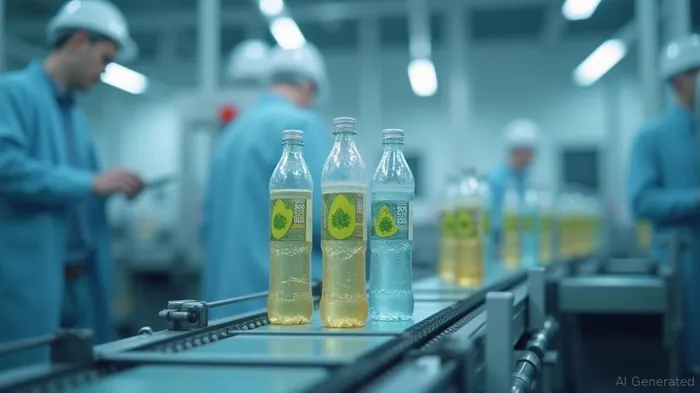
The EU's Packaging and Packaging Waste Regulation (PPWR), effective February 2025, mandates that all packaging be recyclable by 2030. Amcor's 2024 achievement of 9.4% PCR content—nearly hitting its 10% 2025 target—is no accident. By investing $100 million in R&D annually, the firm has pioneered innovations like its 100% PCR carbonated soft drink bottle and AmPrima™ Plus refill pouches for cosmetics. These products are pre-engineered to meet PPWR's requirements for mono-material designs and recyclability.
Meanwhile, U.S. states like California and Washington are advancing Extended Producer Responsibility (EPR) laws that penalize non-recyclable packaging. Amcor's partnerships with recyclers—such as its 2024 agreement to source advanced recycled materials for Asia-Pacific food and healthcare markets—give it preferential access to feedstock. This first-mover advantage creates a compliance barrier for rivals like Tetra Pak and Mondi Group, which lag in PCR integration.
Scalability: From Kentucky Silos to Global Dominance
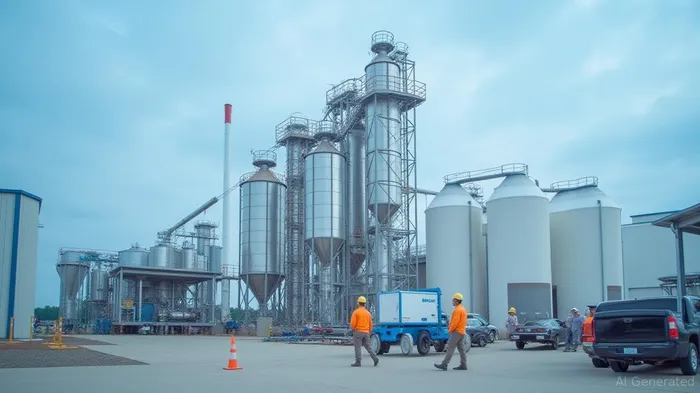
Amcor's $100M+ investment in its Nicholasville, Kentucky facility is a masterclass in operational scalability. The plant now features dedicated PCR silos and blending systems, enabling precise PCR content customization—from 0% to 100%. This flexibility allows AmcorAMCR-- to serve clients across industries: spirits brands seeking eco-bottles, healthcare companies needing recyclable medical packaging, and food manufacturers targeting shelf-stable meals.
The results? Fiscal 2024 saw a 50,000 metric ton year-over-year jump in PCR purchases, hitting 209,000 metric tons. With EU PPWR and U.S. EPR laws driving a 10% annual market CAGR for PCR packaging, Amcor's capacity expansions are primed to capture this growth.
ESG Moat: The Triple Win of Sustainability
Amcor's strategy isn't just about compliance—it's about profit. By reducing virgin resin use through PCR, the company slashes raw material costs (62% of COGS hedged in 2023) and mitigates commodity price volatility. Its Q2 2025 results reflect this: a 40 basis point EBIT margin expansion despite a 0.3% revenue dip, proving operational resilience.
The ESG halo extends to customer relationships. Partners like Cofigeo (French ready-meal producer) now rely on Amcor's PP trays for their circular economy goals. These trays, designed with NIR terracotta masterbatches for easy recycling, achieved an 80% consumer approval rate in pre-launch testing—a testament to the market's demand for eco-friendly packaging.
Investment Thesis: Buy the Green Transition
Amcor's 4.97% dividend yield and P/E of 18.4 make it a rare blend of growth and income. With a projected $900M–$1.0B free cash flow in 2025, the firm has the financial muscle to scale further. Analysts project a 2026 price target of $25–$28 (15–20% upside), assuming 5% annual EBIT margin expansion and 3% volume growth.
Risks & Rebuttals
- Commodity Volatility: Amcor's hedging program and PCR-driven cost savings mitigate this.
- Regulatory Delays: PPWR and U.S. EPR laws are already in motion; Amcor's early adoption reduces compliance risk.
- R&D Execution: Its 100% PCR bottle and Cofigeo partnership prove innovation traction.
Final Call: Buy for the Long Green Run
Amcor isn't just a packaging supplier—it's a sustainability infrastructure play. With regulatory tailwinds, scalable PCR capacity, and a moat built on circular expertise, this stock is a defensive stalwart for the green economy. Hold for 3–5 years to capture margin expansion and market share gains as the world transitions to recyclable packaging.





Comentarios
Aún no hay comentarios