
AMC's Structural Challenges vs. Short-Term Box Office Gains: Can "Avatar" Spark a Sustainable Rebound?
The recent box office surge driven by Avatar: Fire & Ash has reignited interest in AMC Entertainment HoldingsAMC-- (AMC), according to box office data. This performance, coupled with AMC's strategic push for premium formats like IMAX 3D and Dolby Cinema, has temporarily boosted attendance and revenue per patron. However, the question remains: Can these short-term gains catalyze a sustainable stock rebound, or do AMC's structural challenges-mounting debt, dilution risks, and fragile investor sentiment-outweigh the positives?
The "Avatar" Catalyst: A Temporary Boost or a Strategic Win?
The release of Avatar: Fire & Ash marked a pivotal moment for AMCAMC--, with . admissions revenue attributed to 3D formats. This aligns with AMC's long-term strategy to differentiate its theaters through premium experiences, including laser projection and luxury recliners as reported in Q3 2025 earnings. The film's success has demonstrated that blockbuster franchises can drive audiences back to theaters, particularly during the holiday season. For instance, AMC reported , underscoring the profitability of premium formats.
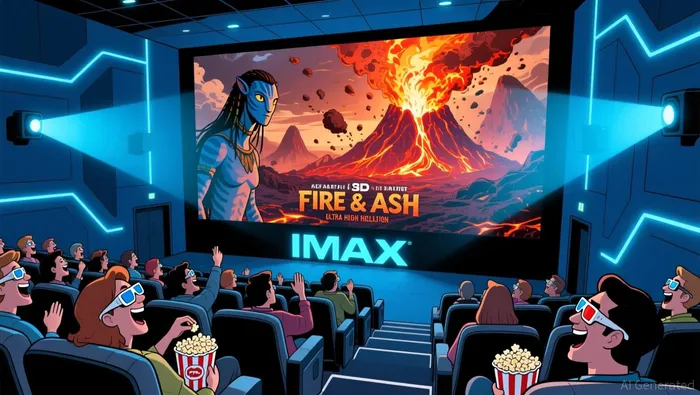 However, the broader box office landscape remains fragile. Despite the Avatar boost, , reflecting ongoing competition from streaming and economic headwinds. While AMC's CEO emphasized that "great movies, especially when seen in premium formats," are key to attracting audiences as per recent analysis, the company's reliance on a single franchise for revenue stability is risky. The long-term success of Avatar sequels will depend on maintaining audience engagement and technological innovation-a challenge given mixed critical reception to high frame rate 3D formats.
Structural Challenges: Debt, Dilution, and Investor Skepticism
AMC's financial health remains precarious. In Q3 2025, the company reported , driven by non-cash charges from refinancing and foreign exchange losses. Its debt load has led to rising interest expenses, with operating profits positive in only two of the last three years according to financial analysis. To manage liquidity, AMC has resorted to equity raises, including a December 2025 shareholder-approved increase in authorized Class A shares-a move that heightens dilution risks for existing investors.
, , according to ownership data. This volatility reflects skepticism about AMC's ability to compete with peers like Cinemark and IMAX as reported in financial analysis. Meanwhile, billionaire 's purchase of 32.75 million shares in late 2025-nearly 4% of his portfolio-has been interpreted as a contrarian bet on a distressed stock according to financial news. Yet Citrone's investment coincided with between December 2024 and December 2025, raising questions about whether this is a value play or a speculative gamble.
The Path Forward: Can AMC Sustain Momentum?
AMC's management has expressed optimism about 2026, citing plans to double XL screens to nearly 300 and leverage upcoming film releases to drive box office growth as detailed in Q3 earnings. The company's focus on premium formats appears to resonate with audiences, as evidenced by the strong performance of Avatar: Fire & Ash and other 3D titles like The Housemaid and Zootopia 2 according to box office analysis. However, structural challenges persist.
A critical factor will be AMC's ability to reduce debt without further diluting shareholders. according to financial reports, the company faces a delicate balancing act between maintaining liquidity and preserving investor confidence. Additionally, the broader box office recovery hinges on the success of future blockbusters and the sustainability of premium format adoption-a trend that could wane if audiences perceive the added cost as unjustified.
Conclusion: A High-Risk, High-Reward Proposition
The Avatar phenomenon has provided a temporary tailwind for AMC, showcasing the potential of premium formats to drive revenue and attendance. However, the company's structural challenges-debt, dilution, and a still-declining industry-pose significant risks. While billionaire bets and institutional buying suggest some confidence in AMC's long-term strategy, the stock's volatility and fragile investor sentiment make it a high-risk proposition.
For investors, the decision to buy or avoid AMC hinges on their risk tolerance. The short-term gains from Avatar and premium formats offer a glimpse of hope, but without meaningful progress on debt reduction and operational efficiency, the road to a sustainable rebound remains uncertain. As AMC's CEO noted, "what brings moviegoers to theaters is great movies"-but in a competitive and capital-intensive industry, great movies alone may not be enough to rescue a sinking ship.





Comentarios
Aún no hay comentarios