
AMC Entertainment's Strategic Pivot: Can Event-Driven Content Reshape the Future of Cinema?
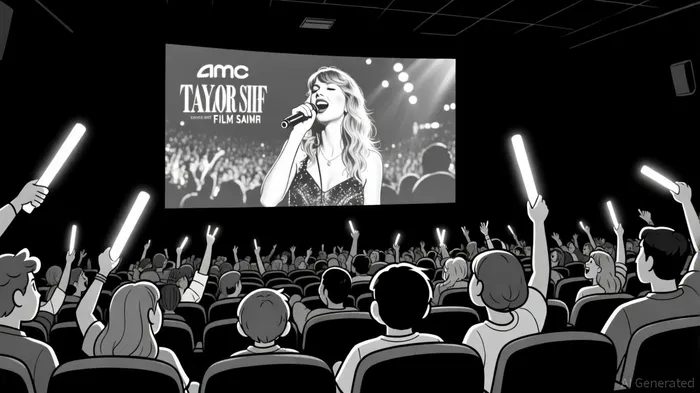
In a streaming-dominated era where cord-cutting and digital convenience reign supreme, AMC EntertainmentAMC-- has embarked on a bold strategic pivot: transforming its theaters into premium event hubs. The latest chapter in this evolution is its collaboration with Taylor Swift for The Official Release Party of a Showgirl, a 89-minute theatrical experience tied to the release of Swift's 12th studio album. This partnership, the second between AMCAMC-- and the pop icon, underscores a broader shift in AMC's business model—one that prioritizes high-impact, event-driven content to compete with the allure of home entertainment. But does this strategy hold long-term investment potential, or is it a fleeting gimmick?
The Financial Power of Concert Films
AMC's previous collaboration with Taylor Swift, The Eras Tour, proved to be a financial blockbuster. According to a report by The Hollywood Reporter, the film grossed $261.6 million globally, accounting for one-ninth of the fourth-quarter domestic box office in 2023[1]. CEO Adam Aron famously credited “literally all” of AMC's Q4 2023 revenue growth to this and Beyoncé's Renaissance: A Film By Beyoncé[3]. The structural innovation here was key: the Swift family directly financed the film with $10–$20 million, bypassing traditional Hollywood studios, and AMC secured a 43% cut of gross revenue (with the Swift family retaining 57%)[4]. This model not only reduced AMC's reliance on volatile Hollywood releases but also created a new revenue stream with high margins.
The upcoming Showgirl event, set for October 3, 2025, replicates this formula. With 540 U.S. AMC locations and international partners screening the event, and ticket prices starting at $12, AMC is leveraging Swift's massive fanbase to drive mass attendance. Given that The Eras Tour generated a 11.5% year-over-year revenue boost for AMC in Q4 2023[1], the Showgirl event could replicate—or even exceed—this success, particularly as Swift's global influence remains unmatched.
Strategic Shift: Premium Formats and Experiential Value
Beyond concert films, AMC is betting on premium formats to differentiate its offering. The company has expanded IMAXIMAX-- and DolbyDLB-- Cinema screens, which command higher ticket prices and enhance the cinematic experience[4]. Q2 2025 financial results highlight the effectiveness of this strategy: revenue surged 35.6% year-on-year to $1.4 billion, with adjusted EBITDA jumping 391.4% to $189.2 million[2]. Dynamic pricing—such as 50% off for AMC Stubs members on Tuesdays and Wednesdays—has also driven attendance without eroding average ticket prices[4].
This pivot aligns with broader industry trends. As noted by PwC's 2025–2029 Global E&M Outlook, experiential entertainment is capturing consumer interest through immersive, location-based experiences[3]. AMC's event-driven model taps into this demand, offering something streaming cannot replicate: communal, high-energy events that feel like live concerts. For instance, AMC has even relaxed traditional theater rules for the Showgirl event, encouraging fans to sing and dance—a move that mirrors the atmosphere of a concert venue[1].
Risks and Challenges: Debt, Competition, and Scalability
Despite these successes, AMC's $4.2 billion debt burden remains a critical risk[4]. While recent refinancing efforts—such as a $244 million debt deal in Q3 2025—have improved liquidity[2], the company must continue deleveraging to avoid financial instability. Additionally, the reliance on high-profile artists like Swift raises questions about scalability. Can AMC replicate the Eras Tour magic with other acts? While Aron has hinted at future collaborations[1], the success of such projects depends on securing artists with similarly massive followings.
The streaming market also poses a long-term threat. As platforms like NetflixNFLX-- and Disney+ refine ad-supported models and hybrid subscriptions, they risk further eroding theatrical attendance[3]. However, AMC's focus on premium formats and exclusive events—such as album-release parties—creates a unique value proposition. According to Deloitte, 46% of global consumers now prioritize live events over streaming[5], suggesting that AMC's strategy resonates with a significant portion of the market.
Investment Potential: A Structural Shift or a Passing Fad?
For investors, AMC's pivot represents a structural shift in the theatrical business model. The company is no longer just a distributor of Hollywood films but a curator of premium experiences. This transformation is supported by strong financial metrics: Q2 2025 saw a 25.6% increase in global attendance and a 35.6% revenue surge[2]. Moreover, AMC's plans to triple the number of premium screens and integrate AI-driven personalization signal a commitment to innovation[4].
However, the risks are non-trivial. The debt load, competition from streaming, and the unpredictability of artist partnerships all weigh on long-term prospects. Yet, in a sector projected to grow to $3.5 trillion by 2029[3], AMC's ability to blend music, cinema, and immersive technology positions it as a potential winner—if it can sustain its current momentum.





Comentarios
Aún no hay comentarios