
Ambuja Cements’ West Bengal Expansion: A Catalyst for Growth Amid Market Volatility
Ambuja Cements, a subsidiary of the Adani Group, has reached a historic milestone by expanding its cement capacity to 100 million tonnes per annum (MTPA) through the completion of a 2.4 MTPA brownfield expansion at its Farakka grinding unit in West Bengal. This achievement, announced in April 2025, underscores the company’s aggressive growth strategy in one of India’s most dynamic cement markets. The project, part of a broader plan to reach 140 MTPA by fiscal year 2028, has significant implications for operational efficiency, investor sentiment, and regional economic impact.
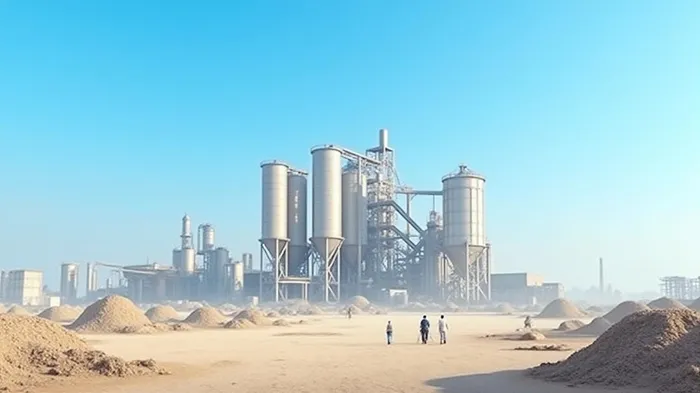
Operational Impact: Capacity Gains and Cost Efficiency
The Farakka expansion is a cornerstone of Ambuja’s FY28 capacity doubling plan, which aims to leverage brownfield projects and debottlenecking across its network. The 2.4 MTPA addition in West Bengal, paired with smaller upgrades elsewhere, has already bolstered production and regional market penetration. Strategically located in eastern India, the plant strengthens Ambuja’s presence in high-growth regions like the North (35% of revenue) and East (21% of revenue), where infrastructure development and urbanization drive demand.
The expansion also incorporates a 42 MW Waste Heat Recovery System, enhancing energy efficiency and reducing carbon emissions—a critical ESG initiative that aligns with stricter environmental regulations. This move positions Ambuja as a leader in sustainable cement production, a competitive edge in an industry under increasing scrutiny.
Financial Performance: Growth Amid Headwinds
Despite rising raw material costs (which doubled year-over-year but remained below estimates), Ambuja reported a 75% surge in Q1 2025 net profit to ₹9.29 billion, driven by higher sales (₹56.7 billion, up 19% YoY). The Farakka plant’s operational efficiency played a key role in this outperformance, mitigating margin pressures. However, the project’s delayed commissioning led to ₹1.2 billion in cost overruns, trimming net profit margins by 2.3 percentage points.
While the stock has faced volatility (a YTD decline of -7.30%), its P/E ratio of 48.2 reflects investor optimism about long-term growth. Analysts remain bullish, with 32 "Buy" recommendations outweighing cautious calls.
Strategic Moves: Internal Funding and Synergies
Ambuja’s low leverage model—funding expansions through internal accruals rather than debt—has insulated it from rising interest rates. The Farakka project, costing ₹1,200 crore, was financed without increasing borrowings, maintaining a robust equity base of ₹25,886 crore. This financial discipline contrasts with peers reliant on external financing, reducing balance sheet risks.
Integration with the Adani Group’s logistics network further enhances Ambuja’s competitiveness. Access to specialized shipping and terminal infrastructure lowers distribution costs, a critical advantage in cement’s highly price-sensitive market.
Challenges and Considerations
Despite the milestone, Ambuja faces hurdles:
1. Short-Term Profit Pressure: Cost overruns at Farakka and rising fuel prices (accounting for 20% of expenses) could strain margins in the near term.
2. Regulatory Risks: While the Farakka expansion secured environmental clearances, delays in other projects (e.g., Bihar’s ₹1,600 crore venture) could disrupt timelines.
3. Market Saturation: Eastern India’s cement market is nearing capacity, requiring Ambuja to balance expansion with demand sustainability.
Conclusion: A Balanced Outlook for Long-Term Gains
Ambuja Cements’ West Bengal expansion is a strategic win that advances its 140 MTPA target, strengthens regional dominance, and reinforces its ESG credentials. While short-term costs and market volatility pose challenges, the company’s financial discipline, Adani synergies, and strong analyst sentiment position it for sustained growth.
With 300 direct jobs created and a roadmap to $8.5 billion in sales by 2028, the Farakka plant is more than a capacity boost—it’s a linchpin of Ambuja’s ambition to lead India’s construction boom. Investors should monitor execution risks, but the data suggests this expansion is a solid bet for those looking to capitalize on India’s infrastructure renaissance.
In the words of Ambuja’s management: “This milestone isn’t just about numbers—it’s about building a legacy of efficiency, sustainability, and growth.” The stock’s long-term target of ₹700 (up from ₹575) reflects this vision, making Ambuja a compelling play in a sector ripe for consolidation.







Comentarios
Aún no hay comentarios