
Amazon's Zoox Recall: A Speed Bump or a Red Flag for Autonomous Vehicles?
The autonomous vehicle sector has long been a proving ground for technological ambition and regulatory scrutiny. Now, Amazon’s Zoox subsidiary has become the latest high-profile player to face a critical challenge after a self-driving crash in Las Vegas triggered a recall of its entire fleet. While the incident itself caused minimal physical damage, it has reignited debates about the readiness of autonomous systems, the resilience of tech giants’ investments, and the broader market implications for companies racing to dominate the robotaxi space.
The Incident and Recall Details
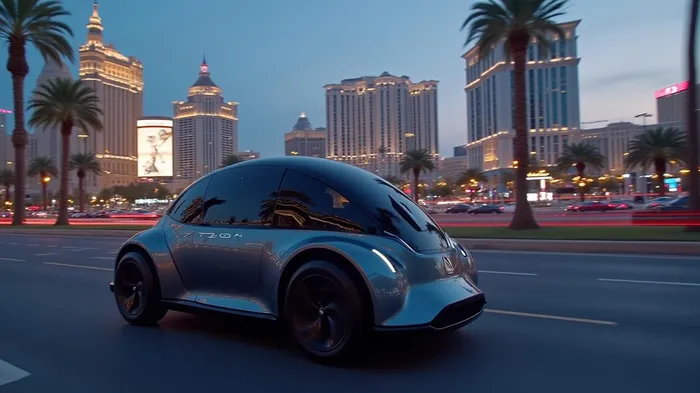
On April 8, 2025, an unoccupied Zoox robotaxi collided with a passenger vehicle in Las Vegas. The crash, which caused minor damage but no injuries, stemmed from a software defect that misread the trajectory of a vehicle approaching perpendicularly from a driveway. Specifically, the system incorrectly assumed the other car would enter its lane, prompting a sudden braking maneuver that proved unavoidable.
Zoox responded swiftly, halting all driverless operations and deploying a software update by April 17—a resolution that averted prolonged disruption. The recall, covering all 270 of its autonomous robotaxis, was voluntary, underscoring Amazon’s emphasis on regulatory compliance. Yet, this incident follows prior scrutiny: the National Highway Traffic Safety Administration (NHTSA) had already investigated two 2023 incidents involving Zoox’s Toyota Highlander-based test vehicles, which abruptly braked and were rear-ended by motorcyclists.
Regulatory and Competitive Landscape
The NHTSA’s role here is pivotal. While Zoox’s recall was voluntary, the agency’s ongoing oversight highlights the tightening regulatory environment for autonomous systems. The NHTSA probe into Zoox’s 2022 self-certification of a purpose-built vehicle without traditional driving controls—a first in U.S. auto history—remains unresolved, adding to the sector’s legal uncertainties.
Competitors like Waymo (Alphabet) and Cruise (General Motors) face similar hurdles. Waymo recalled 670 vehicles in 2023 after a utility pole collision, while Cruise’s 2023 pedestrian incident spurred NHTSA scrutiny. These events reflect systemic industry challenges: software unpredictability in edge cases, regulatory ambiguity, and the high stakes of public trust.
Market Impact: A Muted Reaction, But Underlying Risks
Amazon’s stock (AMZN) had declined 16% year-to-date by May 2025, but the Zoox recall did not trigger a significant sell-off. Retail investor sentiment on platforms like Stocktwits remained “extremely bullish,” despite “extremely high” message volume—a sign that investors are prioritizing Amazon’s core e-commerce dominance over its autonomous ventures.
However, the recall underscores two critical risks for AmazonAMZN-- and the sector:
1. Operational Dilution: Zoox, acquired for over $1 billion in 2020, remains a small part of Amazon’s sprawling business. Yet, repeated recalls divert resources and attention from its primary growth engines.
2. Sector-Wide Skepticism: Autonomous vehicle companies are under pressure to prove safety and scalability. Investors may increasingly demand evidence of profitability and regulatory clearance before backing further expansion.
The Bottom Line: A Sector in Flux
The Zoox recall is less a reflection of Amazon’s strategic missteps than a symptom of the autonomous vehicle industry’s growing pains. While the incident itself was resolved efficiently, it amplifies concerns about the timeline for commercial viability.
Key Takeaways:
- Technical Hurdles: Software flaws in edge cases—like predicting stopped vehicles or cyclist behavior—are recurring issues.
- Regulatory Pressure: The NHTSA’s expanding scrutiny could delay deployment timelines and raise compliance costs.
- Market Dynamics: Investors are willing to overlook isolated incidents if companies demonstrate rapid fixes, but repeated failures could erode confidence.
Conclusion: A Managed Risk, But the Finish Line Remains Distant
Amazon’s Zoox recall is a reminder that autonomous vehicles are still in beta. While the incident itself had limited financial impact—Zoox’s brief pause and quick fix minimized losses—the broader narrative is one of persistent uncertainty.
The data paints a mixed picture:
- Amazon’s Resilience: AMZN’s stock dipped 2% over 12 months, but its core business insulated it from autonomous setbacks.
- Sector-Wide Struggles: Waymo and Cruise face similar recalls, indicating that no company has yet cracked the code for reliable, mass-market autonomy.
- Regulatory Crossroads: NHTSA’s probes signal a shift from hands-off oversight to enforceable standards—a trend that could slow innovation but improve safety.
For investors, the Zoox recall is a cautionary tale. While Amazon’s diversified portfolio limits direct exposure, the autonomous sector’s path to profitability hinges on resolving technical and regulatory roadblocks. Until then, autonomous ventures like Zoox remain speculative bets on a future where self-driving cars are as routine as smartphones—rather than experimental curiosities.
The finish line is still distant, but the race is intensifying. For now, patience—and a tolerance for volatility—are the investor’s best tools.





Comentarios
Aún no hay comentarios