
Amazon's Robotics Dominance: A Long-Term Play for Operational Supremacy and Job Growth
Amazon's deployment of over 1 million robots across its U.S. fulfillment network marks a pivotal shift in how the e-commerce giant is redefining logistics efficiency, supply chain resilience, and workforce evolution. This automation-driven strategy isn't just about cutting costs—it's a multi-decade play to consolidate dominance in retail, leverage intellectual property (IP), and create high-skilled job opportunities. For investors, this represents a compounding advantage with secular tailwinds in automation and domestic manufacturing.
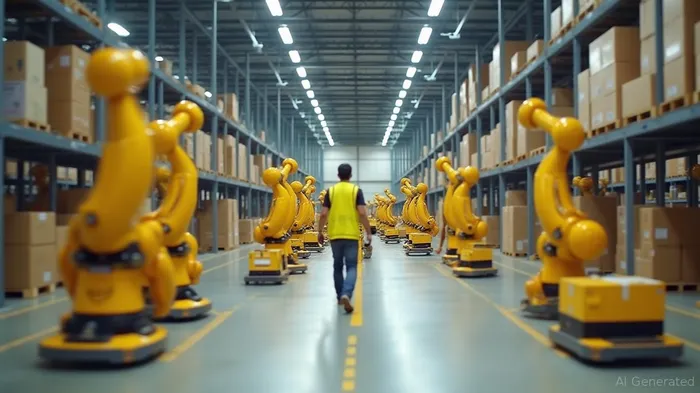
The Robotics Revolution in Action
Amazon's robotics fleet—spanning models like Hercules (heavy lifting), Sparrow (AI-driven item placement), and the tactile-sensing Vulcan—is engineered to tackle every step of order fulfillment. These robots, supported by AI systems like DeepFleet (which optimizes robot traffic like a “digital traffic cop”), have slashed delivery times and costs. For instance, the Shreveport, Louisiana, fulfillment center—a showcase of next-gen automation—uses eight robotics systems to boost productivity by 25% compared to older facilities.
This scale isn't accidental. Amazon's $60 billion+ in annual capital expenditures (as of 2024) prioritizes robotics, AI, and data centers, ensuring it stays ahead of rivals like WalmartWMT-- and Target. The payoff? $2–3 billion in annual savings by 2030, per internal estimates, as automation reduces labor costs and inventory errors.
Strategic Advantages: Why This Matters for Investors
- Supply Chain Resilience: By manufacturing robots domestically, AmazonAMZN-- avoids reliance on foreign suppliers, which reduces geopolitical risks and ensures rapid iteration of its proprietary tech.
- IP Protection: Custom robots like Proteus (fully autonomous navigation) and Titan (heavy-duty lifting) are designed in-house, locking in competitive advantages.
- Scalable Efficiency: The “DeepFleet” AI system cuts robot travel time by 10%, while Tetris-like algorithms optimize warehouse space. These innovations create a compounding feedback loop: more robots = faster delivery = higher customer retention = pricing power.
Job Creation in the Automation Era
Critics often argue automation kills jobs, but Amazon's model tells a different story. While repetitive roles decline, the shift to robotics has spurred demand for high-skilled engineering and maintenance roles, with Amazon adding 30% more robotics engineers in the U.S. since 2020. Wages for these roles average $29/hour (including benefits), far above minimum wage.
Moreover, mini-fulfillment centers (<100,000 sq ft) in urban areas create local jobs while reducing delivery times to under 12 hours. This hybrid model—combining automation with human oversight—positions Amazon as a job creator in tech-driven logistics, aligning with federal goals to boost domestic manufacturing.
Investment Implications
Amazon's robotics strategy is a decades-long moat against competitors. Investors should focus on three pillars:
1. Cost Efficiency: Track metrics like “cost to serve” per unit, which fell by over 45 cents in 2023. Lower costs fuel margin expansion.
2. CapEx Allocation: Monitor R&D spending () to ensure robotics remains a priority.
3. Regulatory Tailwinds: U.S. incentives for domestic manufacturing (e.g., CHIPS Act subsidies) could further lower robot production costs.
Risk Factors: Over-reliance on automation could backfire if robots malfunction en masse, or if labor shortages in engineering roles slow adoption.
Final Take
Amazon's robotics dominance isn't just about moving boxes—it's about owning the future of logistics. With $87 billion in R&D spent through Q3 2024, Amazon is building a system that's faster, cheaper, and more resilient than anything rivals can match. For investors, this is a buy-and-hold story: the compounding efficiency gains and skilled job creation make it a rare stock that benefits both the bottom line and the workforce.
Investment Thesis: Long-term investors should view AMZNAMZN-- as a core holding, given its structural advantages in automation. Near-term volatility in e-commerce demand is a buying opportunity—Amazon's robotics edge will pay dividends for decades.





Comentarios
Aún no hay comentarios