
Amazon's Drone Delivery Resurgence in Arizona: Strategic Implications for the Logistics Sector
Amazon's renewed drone delivery initiative in Arizona, spearheaded by its Prime Air division, marks a pivotal moment in the evolution of last-mile logistics. After a two-month suspension in early 2025 due to technical setbacks-including a mid-air collision with a construction crane and altitude sensor malfunctions caused by Arizona's dusty air-the company has resumed operations with enhanced safety protocols and software updates [1]. This resurgence, underpinned by the deployment of the MK30 drone, underscores Amazon's commitment to transforming delivery logistics through automation and scalability. For investors, the implications extend beyond Amazon's own ambitions, signaling a broader shift in the sector's technological and regulatory landscape.
Technological Advancements and Operational Resilience
The MK30 drone, approved by the Federal Aviation Administration (FAA) in November 2024, represents a generational leap in delivery technology. Smaller, quieter, and capable of Beyond Visual Line of Sight (BVLOS) operations, the MK30 integrates a sophisticated detect-and-avoid system and cloud-based route optimization [3]. These features enable it to navigate complex urban environments while adhering to FAA safety standards. Amazon's recent software updates, which address altitude sensor inaccuracies, demonstrate its ability to adapt to environmental challenges-a critical factor for scaling drone delivery in diverse geographies [4].
However, the path to operational resilience has been rocky. The crane collision in Tolleson, Arizona, and a December 2024 mid-air incident in Oregon exposed vulnerabilities in real-time obstacle detection [5]. Amazon's response-enhanced visual inspections of construction sites and AI-driven predictive modeling-highlights the industry's need for hybrid solutions that combine autonomous systems with human oversight. For competitors, these challenges underscore the technical complexity of drone logistics, which requires not just hardware innovation but also robust data infrastructure.
Regulatory Hurdles and Market Dynamics
The FAA's cautious approach to BVLOS approvals remains a key bottleneck for AmazonAMZN-- and its peers. While the MK30's clearance in 2024 was a milestone, the agency's ongoing investigations into Amazon's incidents suggest that regulatory scrutiny will intensify as the technology scales [1]. This aligns with broader trends in the sector: according to a report by Mordor Intelligence, the global drone logistics market is projected to grow at a 32.44% CAGR, reaching $4.4 billion by 2030, but regulatory fragmentation across regions will remain a hurdle [2].
Competitors are also recalibrating their strategies. Alphabet's Wing, which has delivered over 450,000 packages in the U.S., and Zipline, with 1.4 million medical deliveries in Africa, have demonstrated the viability of niche applications [6]. Meanwhile, traditional logistics players like UPS and DHL are integrating drones into existing networks, leveraging their ground infrastructure to mitigate operational risks. For Amazon, the Arizona rollout is a test of whether its vertically integrated model-combining drones, AI, and its vast fulfillment network-can outpace these hybrid approaches.
Financial and Strategic Implications
Amazon's long-term goal of delivering 500 million packages via drones annually by 2030 is ambitious, but financial hurdles persist. Data from Gartner indicates that drone delivery costs remain higher than traditional methods-$13.5 per package versus $9.4 for electric vehicles-due to maintenance, battery life, and regulatory compliance [7]. However, the company's scale offers a unique advantage: its ability to amortize these costs across a massive order base. With over 50,000 items now eligible for drone delivery in Arizona, Amazon is testing how to optimize density and route efficiency to reduce per-unit expenses [5].
The strategic implications for the sector are profound. Amazon's expansion into Arizona and its planned UK operations in Darlington signal a shift toward international standardization of drone logistics [2]. This could pressure regulators to harmonize rules, accelerating adoption. For investors, the key question is whether Amazon's investments will catalyze a sector-wide shift or if its challenges will reinforce the dominance of established logistics players.
Conclusion: A Tipping Point for Delivery Tech
Amazon's renewed drone initiative in Arizona is more than a technical milestone-it is a bellwether for the logistics sector's transformation. The company's ability to navigate regulatory, technical, and financial challenges will determine whether drone delivery becomes a mainstream solution or remains a niche experiment. For investors, the stakes are high: a successful rollout could spur a wave of innovation in automation and AI-driven logistics, while setbacks may reinforce the status quo. As Amazon and its competitors vie for dominance, the race to redefine last-mile delivery is entering a critical phase.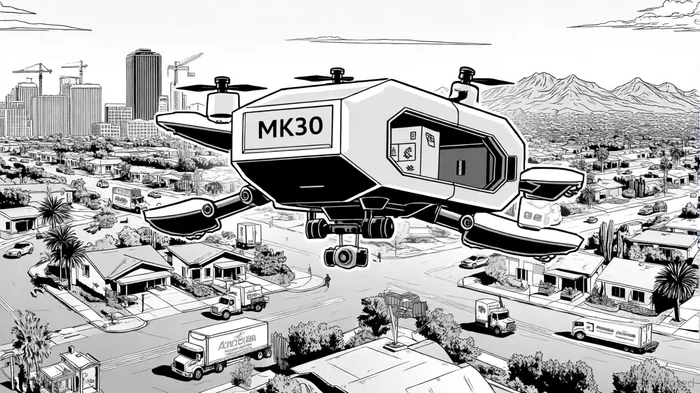





Comentarios
Aún no hay comentarios