
Amazon (AMZN) in 2026: The AI-Driven Infrastructure Play with Margin Expansion and Monetization Catalysts
Amazon.com (AMZN) has long been a bellwether for innovation in e-commerce and cloud computing, but its 2026 trajectory is poised to redefine its role as a global infrastructure leader. With AWS dominating the AI-driven cloud market, aggressive automation reshaping its retail operations, and Project Kuiper advancing into a new frontier of satellite-based connectivity, AmazonAMZN-- is uniquely positioned to deliver durable margin expansion and long-term value creation. This analysis examines why AMZNAMZN-- is a high-conviction buy, underpinned by its strategic investments in AI, infrastructure, and operational efficiency.
AWS: The Engine of AI-Driven Growth and Margin Expansion
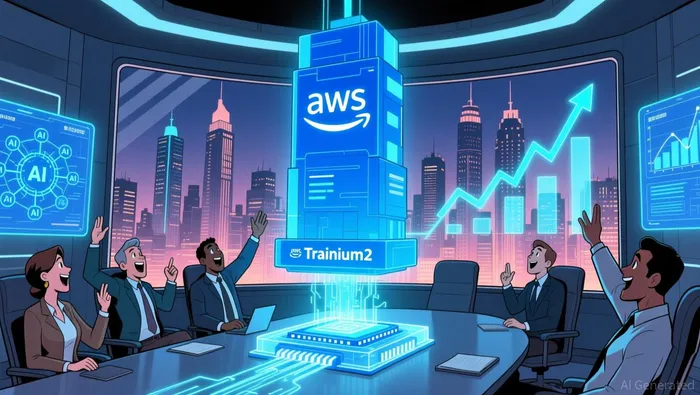
Amazon Web Services (AWS) remains the crown jewel of Amazon's ecosystem, with its 2025 performance underscoring its dominance. In Q3 2025, AWS revenue surged 20% year-over-year to $33.0 billion, achieving a robust operating margin of over 34%. This growth is fueled by a $200 billion backlog and the deployment of 3.8 gigawatts of power capacity in the past year- more than any competitor. Crucially, AWS's custom silicon strategy, including Trainium2 chips, is gaining traction, with Trainium2 revenue growing 150% quarter-over-quarter. These advancements position AWS to capture a significant share of the AI training and inference market, where demand is expected to surge as enterprises scale their AI adoption.
Beyond hardware, AWS is also leveraging agentic AI tools like AgentCore and Kiro to enhance developer productivity and operational efficiency. These innovations not only strengthen AWS's competitive edge but also create a flywheel effect: higher adoption of AI tools drives greater cloud usage, which in turn fuels revenue and margin growth. As AI becomes a core component of enterprise infrastructure, AWS's first-mover advantage in AI-optimized hardware and software will likely widen its lead over rivals like Microsoft Azure and Google Cloud.
Project Kuiper: A New Revenue Stream with Long-Term Potential
While AWS anchors Amazon's near-term growth, Project Kuiper represents a transformative long-term opportunity. The satellite broadband initiative, which aims to deploy 1,600 satellites by July 2026 to meet FCC requirements, is currently in beta for enterprise customers. Though revenue from Kuiper is not expected to materialize until late 2027, the project aligns with Amazon's broader infrastructure strategy. By offering low-latency, high-bandwidth connectivity, Kuiper could unlock new markets in rural broadband, IoT, and 5G backhaul, creating a recurring revenue stream akin to SpaceX's Starlink.
The capital expenditures required for Kuiper- estimated at $17 billion for satellite manufacturing, launch services, and ground infrastructure-are substantial. However, these investments are part of a deliberate strategy to fund AI and infrastructure initiatives, with Amazon projecting continued capex growth into 2026. While short-term margin pressures are inevitable, the long-term payoff could be significant. By 2027, Kuiper could diversify Amazon's revenue base and provide a new avenue for cross-selling AWS services to enterprise customers.
Margin Expansion: AI, Automation, and Cost Optimization
Amazon's margin expansion narrative hinges on three pillars: AI-driven efficiency, automation, and cost discipline. The company is deploying over one million robots in its fulfillment centers, aiming to reduce per-unit costs and accelerate delivery timelines. Combined with AI-powered inventory forecasting and regionalized logistics, these initiatives are expected to boost operating margins in the North America retail segment.
Simultaneously, Amazon is compressing short-term margins to fund a multiyear AI and infrastructure investment cycle. This includes a large-scale restructuring plan targeting 30,000 job cuts by May 2026, primarily in middle management and corporate overhead. By reallocating resources to AI and AWS development, Amazon aims to reduce bureaucracy and enhance operational efficiency. Analysts project that these efforts, coupled with AI-led revenue growth, will yield a long-term net margin profile of 10–12%, a marked improvement from its current levels.
The 2026 Outlook: A Catalyst-Driven Growth Story
Looking ahead, Amazon's Q4 2025 revenue guidance of $206.0 billion to $213.0 billion highlights its momentum, but the real catalysts for 2026 lie in its strategic execution. AWS's continued dominance in AI infrastructure, the scaling of Project Kuiper, and automation-driven retail efficiencies will create a compounding effect on margins and profitability. Additionally, the restructuring plan is expected to streamline operations, enabling Amazon to respond more nimbly to market dynamics.
While challenges such as high capital expenditures and regulatory scrutiny persist, Amazon's ability to reinvent itself through innovation and scale gives it a unique advantage. As AI becomes the backbone of global enterprise operations, Amazon's ecosystem of cloud, hardware, and connectivity will position it as an indispensable player.
Conclusion: A High-Conviction Buy for Durable Growth
Amazon's 2026 story is one of transformation and resilience. By leveraging AWS's AI-driven infrastructure, accelerating automation in retail, and monetizing Project Kuiper, Amazon is building a durable moat around its business. The combination of margin expansion, revenue diversification, and operational efficiency makes AMZN a compelling long-term investment. For investors seeking exposure to the next phase of the AI revolution, Amazon offers a rare blend of scale, innovation, and executional rigor.







Comentarios
Aún no hay comentarios