
Amazon's AI Expansion and Layoffs Ignite Workforce Uncertainty
Amazon's record 14,000-job corporate layoffs and its $50 billion investment in AI infrastructure have reignited debates about the future of work in the age of automation. The cuts, which disproportionately affected engineers and white-collar roles, coincide with leaked internal plans suggesting AmazonAMZN-- could automate 75% of warehouse operations, potentially displacing hundreds of thousands of jobs. Meanwhile, the company's push to build the first government-dedicated AI and high-performance computing (HPC) infrastructure underscores a broader strategy to position itself at the forefront of the AI era according to reports.
The layoffs, announced in October 2025, marked the largest in Amazon's 31-year history, with nearly 40% of the 4,700 cuts in the U.S. targeting engineering roles according to filings. Software engineers, product managers, and even senior executives were affected as CEO Andy Jassy sought to streamline operations and reduce bureaucracy. "This generation of AI is the most transformative technology we've seen since the Internet," wrote HR chief Beth Galetti in a memo, framing the cuts as necessary to prioritize innovation in a leaner, faster-moving organization. Amazon has also hinted at further job reductions in January 2026, following the holiday shopping season.
Simultaneously, Amazon Web Services (AWS) announced a $50 billion investment in government AI infrastructure, including 1.3 gigawatts of compute capacity across classified and unclassified cloud regions. The initiative, led by AWS CEO Matt Garman, aims to provide federal agencies with advanced AI tools for tasks ranging from cybersecurity to drug discovery. Garman emphasized that the move would "remove technology barriers" and bolster U.S. leadership in AI, though critics argue it reflects a growing reliance on automation at the expense of human labor.
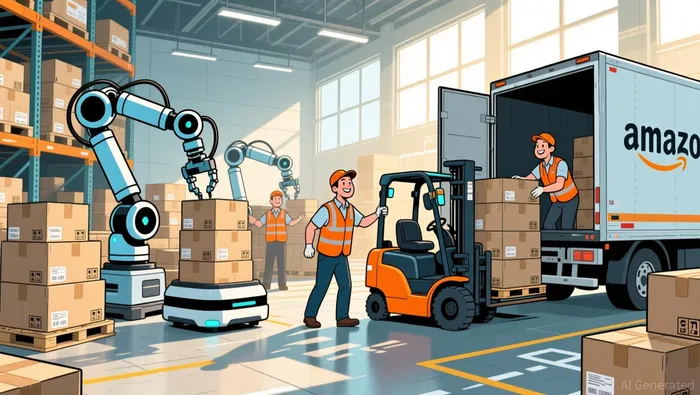
The tension between Amazon's AI ambitions and workforce realignment is further highlighted by leaked internal documents suggesting the company plans to automate 75% of warehouse operations, potentially eliminating the need for 600,000 future jobs. While Amazon Robotics chief Tye Brady insists robots are designed to "extend human capacity" rather than replace workers, the New York Times report sparked widespread concern about the displacement of blue-collar employees. This anxiety is compounded by Amazon's recent cuts to corporate roles, as Jassy has publicly linked AI-driven efficiency gains to reduced headcount in his June memo.
The implications extend beyond Amazon. As AI adoption accelerates, companies across sectors-from Microsoft to Northrop Grumman-are grappling with how to balance automation with workforce sustainability. Northrop's Steve O'Bryan, for instance, anticipates sustained European defense spending even if the Ukraine conflict ends, as nations seek to replenish depleted stockpiles. Similarly, Amazon's $2.5 billion upskilling initiative aims to prepare 50 million people for the "future of work," though skeptics question whether such efforts can offset the scale of job displacement.
For now, Amazon's dual strategy-laying off employees while investing heavily in AI-reflects a broader industry trend. As Bloomberg notes, tech giants are increasingly prioritizing efficiency and speed, even as they face mounting scrutiny over the human cost of progress. The question remains whether AI will ultimately "extend human capacity" or erode it, leaving workers to navigate an uncertain economic landscape.







Comentarios
Aún no hay comentarios