
Amazon's AI-Driven Expansion in the Netherlands: Strategic Investment and European Ripple Effects
Strategic Allocation: AWS and Retail Synergies
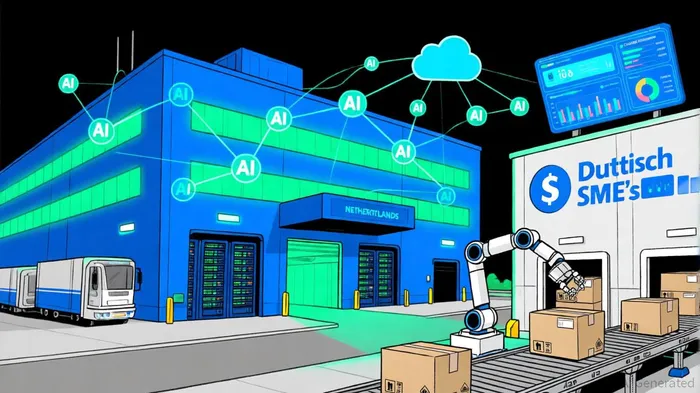
The investment breakdown reveals a clear prioritization of AWS, which will receive a significant portion of the funds to develop AI tools for entrepreneurs on Amazon's platform. These tools aim to streamline operations, improve data analytics, and foster innovation among local businesses, as described in an Investing.com report. For instance, Dutch SMEs will gain access to advanced cloud solutions that enable AI-driven inventory management, customer insights, and global market expansion.
Parallel efforts in retail logistics will focus on accelerating delivery speeds and expanding product availability, leveraging AI to optimize supply chains, according to a Marketscreener report. According to a report by Investing.com, this dual strategy not only strengthens Amazon's market position but also aligns with broader European trends in digital transformation.
Cross-Border Collaborations and European Expansion
Amazon's investment in the Netherlands is part of a larger European strategy, building on similar commitments in Germany and Spain. The company's country manager for Belgium and the Netherlands, Eva Faict, emphasized that the Dutch market is a "strategic hub" for AWS, given its concentration of AI talent and innovation-friendly ecosystem. This aligns with broader European trends: a third of European businesses have adopted AI, and AWS projects that this growth could add €600 billion in gross value added (GVA) by 2030, according to an AWS projection.
The ripple effects of Amazon's presence extend beyond national borders. By partnering with Dutch startups and research institutions, the company is fostering cross-border collaborations that accelerate AI adoption across Europe. For example, Growy, a Netherlands-based agritech firm, is using AWS's AI and IoT capabilities to develop fully automated vertical farms, demonstrating how Amazon's infrastructure can drive sustainable innovation in agriculture.
Innovation Spillovers and Economic Impact
The investment is expected to generate significant economic spillovers. According to aboutAmazon, it will contribute to the Netherlands' GDP and create jobs in construction, logistics, and professional services. Moreover, AWS's commitment to training 29 million Europeans in cloud and AI skills by 2025 addresses a critical digital skills gap, ensuring that the workforce can adapt to AI-driven industries.
The Netherlands' role as a European AI leader-home to 8% of the continent's AI talent despite representing only 2.8% of its population-further amplifies these effects. Initiatives like AiNed and EAISI, which bridge academia, industry, and startups, are accelerating the deployment of AI solutions in sectors such as energy, mobility, and photonics, as explored in a TechFundingNews feature. Amazon's investment aligns with these efforts, embedding Dutch AI innovations into European infrastructure and global supply chains.
Ethical and Regulatory Considerations
A unique strength of the Dutch AI ecosystem is its early integration of ethical and regulatory frameworks, such as the EU AI Act. This proactive approach ensures that Amazon's AI projects are not only technologically advanced but also compliant with emerging European standards, making them more export-ready and globally scalable. Such alignment reduces friction for cross-border deployments and positions the Netherlands as a model for responsible AI innovation.
Conclusion
Amazon's €1.4 billion investment in the Netherlands is more than a corporate strategy-it is a catalyst for reshaping Europe's tech ecosystem. By prioritizing AI infrastructure, fostering cross-border collaborations, and addressing skills gaps, Amazon is not only enhancing its own competitive edge but also accelerating Europe's transition to a digital-first economy. As the ripple effects of this investment unfold, the Netherlands' role as a European AI hub will likely grow, offering valuable lessons for other nations seeking to balance innovation with regulation.





Comentarios
Aún no hay comentarios