
Amazon's 3.5% Fuel Surcharge Rewrites E-Commerce Economics—Sellers Face Margin Compression as Energy Volatility Enters the Model
Amazon's new 3.5% fuel and logistics surcharge is a clear break from the past. This isn't a temporary pass-through of higher fuel bills; it's a structural shift that embeds geopolitical volatility directly into the platform's pricing model. The company is effectively tying the cost of doing business on its marketplace to the price of oil, a variable now driven by war.
The scale of this change is immediate and significant. The surcharge affects 2 million sellers across U.S. and Canadian marketplaces, a group that generates 60% of Amazon's total units sold. For these sellers, the predictable overhead of fulfillment has been replaced with a variable cost that moves with global energy markets. This establishes a new precedent for energy-indexed platform fees, a move that could ripple through the entire e-commerce ecosystem.
The direct catalyst is the surge in oil prices. As the conflict in the Middle East escalated, Brent crude rose more than 3 percent on Monday morning to top $116 a barrel. This spike, which followed a series of attacks by Iran-aligned Houthis on Israel, has priced in sustained volatility. Amazon's timing is deliberate, announcing the fee in week five of the Iran conflict as energy markets reacted.
Amazon is not alone in this response. Major carriers have already introduced steep surcharges for Middle East shipments, with UPS and FedEx applying per-pound demand surcharges of $0.50-$0.70 for the region. In this context, Amazon's 3.5% fee is positioned as a more moderate alternative. The company states it is "meaningfully lower than surcharges applied by other major carriers." This framing is strategic, attempting to present the fee as a necessary, albeit new, cost of doing business in a turbulent world.
Amazon has crossed a threshold. By implementing this fee, it has rewritten the economics of its marketplace, moving from a model of fixed, internalized costs to one where external geopolitical events directly impact seller margins. The coming weeks will test whether this becomes an industry standard, as other platforms like Walmart Marketplace and Shopify are watching closely.
Financial Impact: Margin Compression and Seller Behavior
The immediate financial impact is a direct hit to seller profitability. For a typical seller operating on a 16% net margin, a 3.5% surcharge on a $50 sale reduces net profit from $8 to $6.05-a 24% drop in earnings per unit. This compression forces a recalibration of unit economics for thousands of small businesses that had previously modeled AmazonAMZN-- fees as fixed overhead.
The pressure is far more severe for lower-margin commodity items. For products with 8-10% net margins, the 3.5% fee effectively consumes the entire profit buffer. As noted in the evidence, for products with 10-15% net margins, a 3.5% fee increase functionally eliminates profitability on lower-price-point items. This creates a binary choice: either absorb the cost and operate at a loss, or raise prices to maintain margins.
This dynamic sets the stage for cascading price increases. Sellers will likely pass through the surcharge to consumers, but the mechanism is already in motion at the freight level. Maersk's CEO has explicitly confirmed that increased transport costs driven by the conflict will be passed on to consumers. The shipping giant's own data shows the disruption adds around $200 per container, translating to a 15-20% freight cost increase. This establishes a clear channel for the Amazon fee to feed into broader inflationary pressure, as the cost of moving goods globally is now explicitly tied to geopolitical risk.
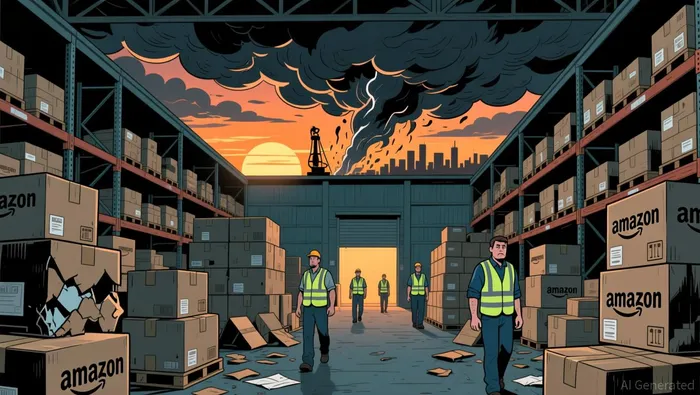
The bottom line is a shift from internalized to externalized costs. Amazon has moved the burden of energy volatility from its own balance sheet to the 2 million sellers who rely on its platform. This structural change doesn't just affect margins; it alters the entire competitive calculus for e-commerce, making the platform's pricing model a direct function of global conflict.
Valuation and Scenario Implications
The investment calculus here is a classic tension between near-term margin protection and long-term structural risk. On one hand, the surcharge provides a clear, immediate buffer for Amazon's Fulfillment by Amazon segment. By shifting a portion of its elevated logistics costs to third-party sellers, the company can protect its own FBA margins during a period of sustained energy volatility. This is a defensive move that preserves cash flow from its most profitable service.
On the other hand, the long-term risk is to the very platform economics that drive Amazon's growth. The company is now directly taxing its core 2 million seller base-its engine for 60% of total units sold. This creates a fundamental vulnerability. If these sellers are forced to raise prices across the board, they may see a decline in unit volume. More critically, the precedent sets a new variable cost for the platform economy, making future earnings more sensitive to geopolitical events and energy markets.
The key scenario hinges on imitation. The evidence notes that Amazon just crossed a threshold that rewrites marketplace economics, and the industry is watching. If competitors like Walmart Marketplace, eBay, or Shopify follow within the next 60 days, it validates the model and spreads the cost burden. This would solidify a new industry standard where platform fees are tied to external shocks. However, it also increases competitive pressure on Amazon to justify its own fee structure, potentially eroding its relative advantage.
The bottom line is that Amazon has chosen a path of externalization. It has moved the burden of energy volatility from its own balance sheet to its seller partners. This provides a near-term earnings lift but risks alienating the small and medium-sized businesses that are the lifeblood of its marketplace. The valuation must now weigh this margin protection against the potential for a slower growth trajectory if seller sentiment sours or if the fee model triggers a broader, sustained price increase that dampens consumer demand. The precedent is set; the market will judge whether the trade-off is worth it.
Catalysts and Risks: The Path Forward
The success of Amazon's new pricing model hinges on a narrow set of near-term catalysts and structural risks. The immediate trigger is the persistence of high oil prices and shipping rates. The evidence shows Brent crude has surged to its highest level in nearly two weeks, topping $116 a barrel, while Middle East-to-Asia VLCC freight rates hit an all-time high of $423,736 per day. Any sustained price above $115 or continued disruption in the Strait of Hormuz will likely extend the surcharge, validating Amazon's move as a necessary cost recovery. The company's own statement frames the fee as temporary, but the precedent it sets could make it permanent.
The most critical variable is competitor response. The model's legitimacy depends on imitation. If Walmart Marketplace, eBay, and Shopify follow within 60 days, it would cement a new industry standard where platform fees are tied to external shocks. This would spread the cost burden and solidify Amazon's position as a cost leader in a new normal. However, inaction from rivals would limit Amazon's pricing power and leave its sellers vulnerable to a competitive disadvantage, potentially undermining the fee's rationale.
The primary long-term risk is seller attrition. For the 2 million sellers who generate 60% of Amazon's units, the 3.5% fee is a direct hit to margins. The model forces a binary choice: raise prices or absorb the loss. If widespread price increases dampen consumer demand, it could trigger a decline in unit volume. More subtly, it may accelerate a shift to alternative fulfillment providers or encourage sellers to build their own logistics, which could undermine Amazon's control over logistics costs and the customer experience. The company has moved the burden of energy volatility from its own balance sheet to its partners, but it now risks alienating the very engine of its growth. The path forward is clear: monitor oil and shipping rates for duration, watch for industry adoption, and assess seller behavior for signs of strain.







Comentarios
Aún no hay comentarios