
Why Altseason 2026 Is Locked In - And How to Position for the Next Wave of Altcoin Gains
The Capital Shift: From Bitcoin to High-Beta Altcoins
Bitcoin's market dominance has fallen below 55%-a level not seen since early 2024-while altcoin ETFs like Bitwise's XRP fund and Solana-focused products attracted $105 million and $23.66 million in inflows, respectively. This shift isn't just speculative; it's a calculated move by institutions seeking higher returns in a low-yield environment. As Bitcoin ETFs face outflows, OTC desks continue to absorb $238 million in inflows, stabilizing prices but diverting liquidity to altcoins.
The macroeconomic backdrop reinforces this trend. With the Fed signaling prolonged high rates, investors are abandoning low-growth assets like Bitcoin in favor of projects with tangible utility and scalability. For example, Solana's DEX volume hit $49.2 billion in early 2025, driven by Orca and RaydiumRAY--, while Grayscale's new staking fund includes tokens like SOLSOL--, DOTDOT--, and TIA, signaling institutional confidence in their infrastructure potential.
The capital reallocation trend is visually represented by the dramatic shift in on-chain activity and inflow patterns. 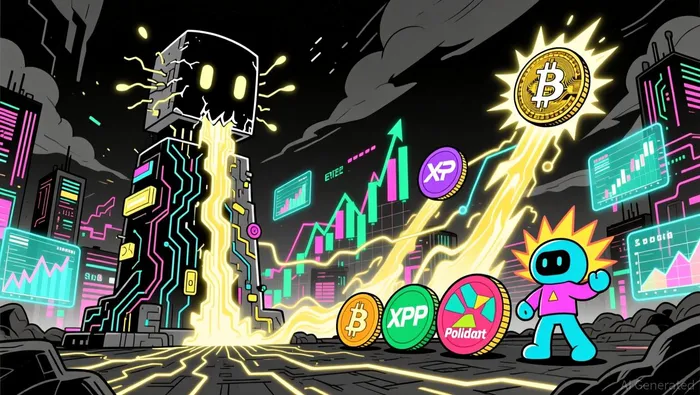
Layer-1s: Solana and Polkadot as Scalability Powerhouses
Solana (SOL) and Polkadot (DOT) are leading the charge in Layer-1 innovation. Solana's recent preconfirmation upgrades reduced block times to 2 seconds, enabling 20–30x faster transactions. This technical leap, combined with its dominance in decentralized exchanges (DEXs), positions SOL as a critical player in the AI and DeFi ecosystems.
Polkadot's cross-chain interoperability and decentralized derivatives infrastructure are equally compelling. In H1 2025, DeFi accounted for 63% of on-chain fees, with DEXs as primary drivers. DOT's role in enabling seamless cross-chain communication makes it a foundational asset for a multi-chain future.
To better understand the performance of these key altcoins, would be a useful visualization.
Modular Blockchains: Taiko (TIA) and the Future of EthereumETH-- Scalability
Taiko (TIA) is redefining Ethereum's LayerLAYER-- 2 landscape. In August 2025, Taiko activated preconfirmations on its mainnet, slashing block times and increasing transaction speeds. This upgrade, part of the Pacaya release, is supported by partners like Chainbound and Nethermind, and it aligns with Ethereum's broader scalability goals.
Institutional interest in TIA is growing. The project's integration with Dune Analytics provides real-time on-chain data, enhancing transparency and attracting developers. With Phase 2 of preconfirmations set for Q4 2025, a permissionless model allowing anyone to become a preconfirmer, TIA is poised to capture a significant share of Ethereum's Layer 2 market.
Given the importance of technical indicators in identifying bullish and bearish trends, a relevant backtest could provide insights into potential performance.
AI-Integrated Protocols: RenderRENDER-- (RNDR) and the Compute Infrastructure Play
Render (RNDR) has emerged as a key player in AI compute infrastructure. With a 10% increase in rendering jobs and 25% higher compute power utilization in Q2 2023, RNDR's real-world adoption is undeniable. Its migration to Solana and the Burn-Mint Equilibrium (BME) model have further aligned it with the AI hype post-ChatGPT.
Institutional validation is also strong. Token Metrics' AI-powered ratings gave RNDR an 82/100 score, with high-rated tokens outperforming the market by 47% on average. As AI-driven investment strategies gain traction, RNDR's role in decentralized rendering and compute infrastructure makes it a strategic buy.
Layer-2 Innovators: Hyperliquid (HYPER) and Liquidity Depth
Hyperliquid (HYPER) is another standout in the altcoin space. In 2025, it gained traction for its product velocity, liquidity depth, and ecosystem revenue-sharing model. As altcoin activity intensifies in Q4, HYPER's ability to provide fast, secure trading on Ethereum's Layer 2 positions it to benefit from increased institutional liquidity.
The Altseason Playbook: Strategic Accumulation Now
The case for Altseason 2026 is built on three pillars: on-chain activity, institutional partnerships, and technological catalysts. Projects like SOL, DOT, TIA, RNDR, and HYPERHYPER-- are not just riding the wave-they're creating it.
For investors, the path forward is clear:
1. Prioritize high-utility infrastructure projects with proven scalability (e.g., Solana, Taiko).
2. Allocate to AI-integrated protocols like Render, which are critical to the next phase of decentralized computing.
3. Capture Layer-2 momentum with tokens like Hyperliquid, which are solving real-world liquidity challenges.
The window to act is closing. With Bitcoin's dominance waning and altcoin ETFs gaining regulatory clarity, 2026's altseason is not a question of if-but how much.






Comentarios
Aún no hay comentarios