
Is Altseason 2026 Imminent? Decoding the Market Signals and Strategic Entry Points
The crypto market is at a crossroads. As we approach the end of 2025, the interplay between Bitcoin's enduring dominance and the surging momentum of altcoins has sparked a critical question: Is Altseason 2026 on the horizon? To answer this, we must dissect the current market signals, historical patterns, and emerging catalysts shaping the crypto landscape.
Market Signals: Altcoin Dominance and Bitcoin's Role
Bitcoin's market dominance, a key barometer of investor sentiment, has dipped to 22% as of early 2025, a stark contrast to its historical highs above 80% during BitcoinBTC-- seasons. This decline aligns with the broader trend of capital rotation into altcoins, driven by robust performance from EthereumETH-- (ETH) and SolanaSOL-- (SOL). For instance, Ethereum surged 66.7% in Q3 2025, hitting a record $5,000, while Solana gained 35% on the back of corporate treasury purchases. The CoinDesk 20 Index, a proxy for liquid altcoins, outperformed Bitcoin by over 30% in the same period.
However, the Altcoin Season Index-a rolling 90-day metric comparing the top 100 altcoins to Bitcoin-remains at 23, far below the 75 threshold required to officially declare an altcoin season. This suggests that while large-cap altcoins are thriving, the broader market (including smaller tokens) has yet to fully participate. Historical alt seasons, such as those in 2017-2018 and 2020-2021, were marked by Bitcoin dominance falling below 54%, a level not yet reached in 2025.
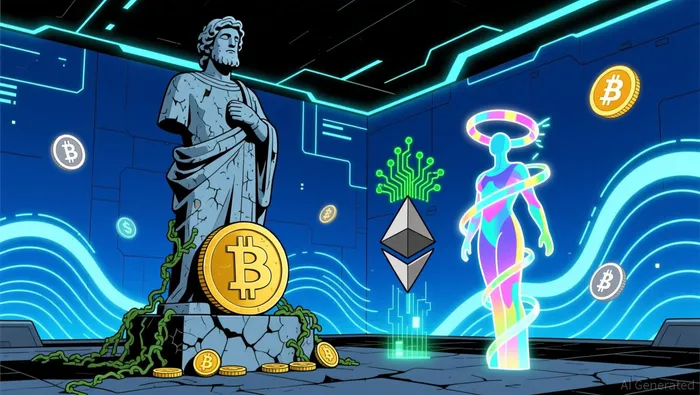
Strategic Entry Points: Catalysts for Altseason 2026
The potential for Altseason 2026 hinges on three critical factors: regulatory clarity, technological upgrades, and macroeconomic dynamics.
- Regulatory Tailwinds
2026 is poised to be a pivotal year for crypto regulation. Grayscale's 2026 Digital Asset Outlook forecasts bipartisan U.S. legislation to clarify crypto market structure, which could unlock institutional capital flows. Such regulatory clarity would reduce uncertainty for investors, particularly in tokenization and decentralized finance (DeFi), sectors where altcoins often lead innovation.
Ethereum's Post-Merge Momentum
Ethereum's dominance in the altcoin space is likely to strengthen as its post-merge upgrades (e.g., sharding, layer-2 scaling) gain traction. The network's treasury accumulation and ETF inflows have already positioned it as a bellwether for altcoin performance. If Ethereum's use cases in decentralized apps (dApps) and smart contracts expand, it could catalyze broader altcoin adoption.Macroeconomic Shifts
Rising public sector debt and fiat currency risks are expected to drive demand for alternative stores of value. While Bitcoin will likely remain the primary hedge, altcoins with real-world utility-such as Solana's high-throughput blockchain or Cardano's governance model-could attract capital as investors seek diversified exposure to blockchain innovation.
Navigating the Altcoin Season Index
The Altcoin Season Index's current score of 23 indicates a fragmented market. Large-cap altcoins are outperforming Bitcoin, but smaller tokens remain under pressure, with indices like the CoinDesk 80 hitting four-year lows. This suggests a "top-heavy" altcoin season, where capital is concentrating in high-quality projects with clear use cases. For investors, this points to a strategy of selective exposure: prioritizing well-established altcoins with strong fundamentals over speculative small-cap tokens.
Conclusion: Preparing for Altseason 2026
While Bitcoin's dominance remains a stabilizing force, the confluence of regulatory progress, Ethereum's technological edge, and macroeconomic tailwinds sets the stage for a more pronounced altcoin season in 2026. However, the path is not without risks. Regulatory missteps or macroeconomic volatility could delay the shift. For now, the data suggests a hybrid market: Bitcoin as the anchor, and altcoins as the growth engine. Investors should monitor Bitcoin dominance levels, ETF flows, and regulatory developments closely, positioning portfolios to capitalize on the next wave of innovation.






Comentarios
Aún no hay comentarios